
The shift to connected device experiences
Products today are no longer purely physical or digital. The line is blurring and mediums are integrating. The most impactful systems blend physical hardware, digital software, and a continuous data layer into a single, evolving experience; the experience we call “phygital.” Phygital products, i.e. wearable devices, connected devices, IoT ecosystems, etc., are impacting a wide range of industries, from healthcare to automotive.
Connected product experiences here to stay

As shown in the above graph, connected IoT devices are projected to more than double from 20.7 billion in 2025 to 46.3 billion by 2035, signaling a decade of rapid, sustained expansion. This scale makes the phygital reality impossible to ignore, and we already see it playing out in everyday products and experiences, with wearables and other devices forming a key part of the broader IoT ecosystem.
Wearables like rings and watches combine sensors with apps and analytics to drive daily behavior, from health monitoring to fitness tracking. Common use cases for wearable technology include healthcare, sports, and security. Software is embedded within these wearable devices to enable advanced functionalities such as health monitoring, augmented reality, and smart interfaces. The display technology in wearables is crucial for presenting notifications, health data, and interface options to users.
In all of these examples, the physical device is only part of the story. The real differentiation happens after the hardware ships.
Product thinking must change
Traditional product models are built for one-time delivery. However, connected products don’t stop at launch; they evolve continuously. Neither does treating hardware and software as separate efforts optimize for shipping, nor for longevity.
Phygital thinking reframes products as living systems. It assumes change and uncertainty as constants, and shifts focus from what ships on day one to how reliably the system adapts and earns trust over time.
The big mistake: Hardware-led thinking
When teams set out to build a connected product, the first conversations usually revolve around sensors, chips, and form factor. These decisions feel final. Tooling is expensive, manufacturing timelines are unforgiving, and once hardware ships, it cannot be changed easily, if at all.
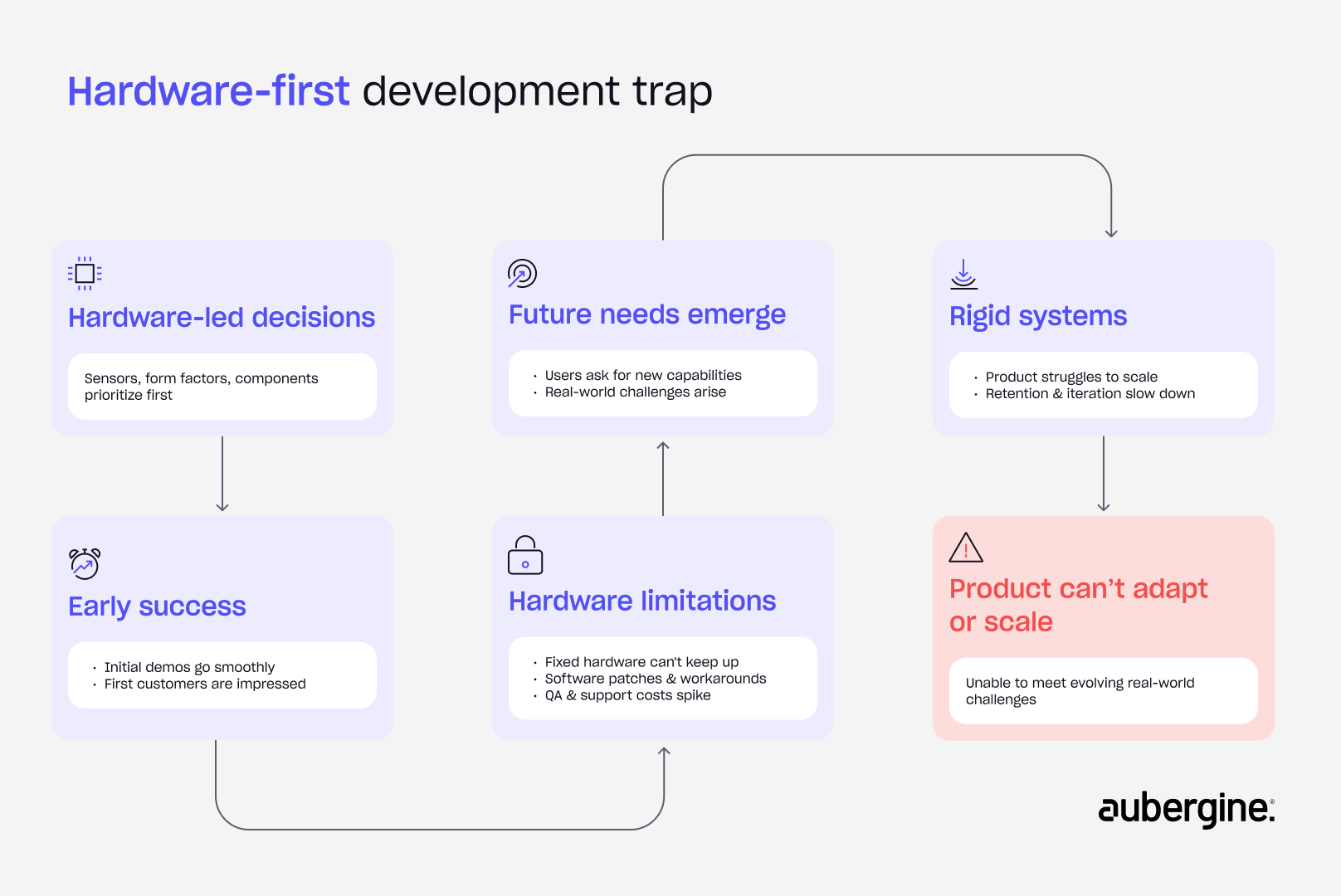
So founders optimize early for what feels safest to lock down. The physical device becomes the center of gravity.
When software is treated as an afterthought
In many products, software comes into play later. It is integrated as an afterthought or a thin UI layer that helps users interact with the device. Roadmaps prioritize firmware stability and industrial design polish, while software is asked to “support” what already exists.
How connected product experiences break at scale
As organizations scale and manage multiple products, these issues compound further. A roadmap for the development team may cover only one product, while a roadmap for executives can cover multiple products, requiring different approaches to align teams and messaging across diverse offerings.
The cost of locking decisions too early
When hardware sets the direction, software inherits constraints that quietly compound over time. QA, support, and maintenance costs begin to outpace usage as teams shift from iteration to caution because each update feels like a risk.
Why hardware needs software-led thinking
The difference between a functional gadget and a truly valuable product lies in what the software enables. One key benefit of software-led approaches in phygital systems is the ability to deliver enhanced user engagement and operational efficiency compared to traditional methods. User trust depends on software-led qualities such as reliable connectivity, consistent syncing across devices and environments, accurate data, clear and intuitive UX, and predictable behavior during updates, failures, or edge cases. Reliable communication between wearable devices and external systems is also essential for secure and efficient data exchange. This ensures device functionality and supports critical use cases like health monitoring.
"Hardware ships once, but software is expected to evolve indefinitely."
- Sarthak Dudhara, CEO & Co-founder, Aubergine Solutions
Software shapes perception and engagement. Effective roadmaps matter because priorities change, and without regular updates, product teams risk building features that is not relevant.
The device is the interface; software is the product
In phygital systems, the physical device serves as the interface to the world, but the product itself lives in the software. Hardware makes interaction possible by providing presence and access, while software determines whether that interaction is reliable, useful, and worth returning to. Without software to interpret data, guide behavior, and deliver insights, the device alone cannot create value.
Software also plays a central role in keeping these products usable over time. It enables monitoring, performance optimization, and ongoing updates that allow the product to adapt as conditions and expectations change. It is what turns a shipped device into a system that continues to earn trust and remain relevant in the real world.
Software is where value is created
The long-term value of phygital systems comes from layers that evolve continuously:
- Apps: Let users interact with devices and data to enable task completion and tailored experiences.
- Dashboards: Turn raw signals into clear, actionable insights through effective visualization.
- Analytics: Surface trends and behavior patterns to support better, data-driven decisions.
- AI layers: Personalize experiences, anticipate needs, and guide interventions as the system learns.
- New functionality: Add features and integrations that keep products relevant as requirements evolve.
- Optimizing usage: Improve efficiency and reliability through real-time monitoring and adjustment.
These layers allow the product to grow over time, responding to real-world behavior rather than static assumptions. AI can also enhance user experience design by providing tools for rapid prototyping and iteration. Software can also anticipate and address service needs by proactively monitoring, predicting, and preventing failures or downtime.
Software drives hardware engagement
When software leads, it enables experiences that hardware alone cannot deliver. A robust companion app can power:
- Personalization engines that adapt to individual behavior;
- Feedback systems that reinforce habits and support behavior change by providing a tailored response to user inputs and real-time data;
- Insight generation that informs user decisions and product improvements.
When software is intuitive, reliable, and secure, it encourages users to return to the product daily. Apple is a clear example. The simplicity, consistency, and security of iOS keep users engaged with the hardware in their pocket. The phone succeeds not just because of its physical design, but because the software experience reinforces trust and habit over time.
Real-world examples
Fitbit is not just a band; it is a fitness ecosystem that evolves with the user, tracking activity, sleep, and health metrics such as heart rate, turning raw signals into insights that inform daily decisions.
Cubii is more than exercise equipment; it functions as a habit-building system, reinforcing consistent movement through personalized feedback loops that guide behavior.
Dexcom goes beyond monitoring blood glucose, providing continuous feedback that helps people stay on course with their health while supporting clinicians with real-time insights.
The hidden challenges of IoT and connected systems
Connected products may look simple on the surface, but they operate as deeply interconnected systems shaped by the background environment in which they function. Factors such as physical setting, network conditions, and user context all influence system performance, introducing constraints, risks, and long-term consequences that must work together for the product to succeed.
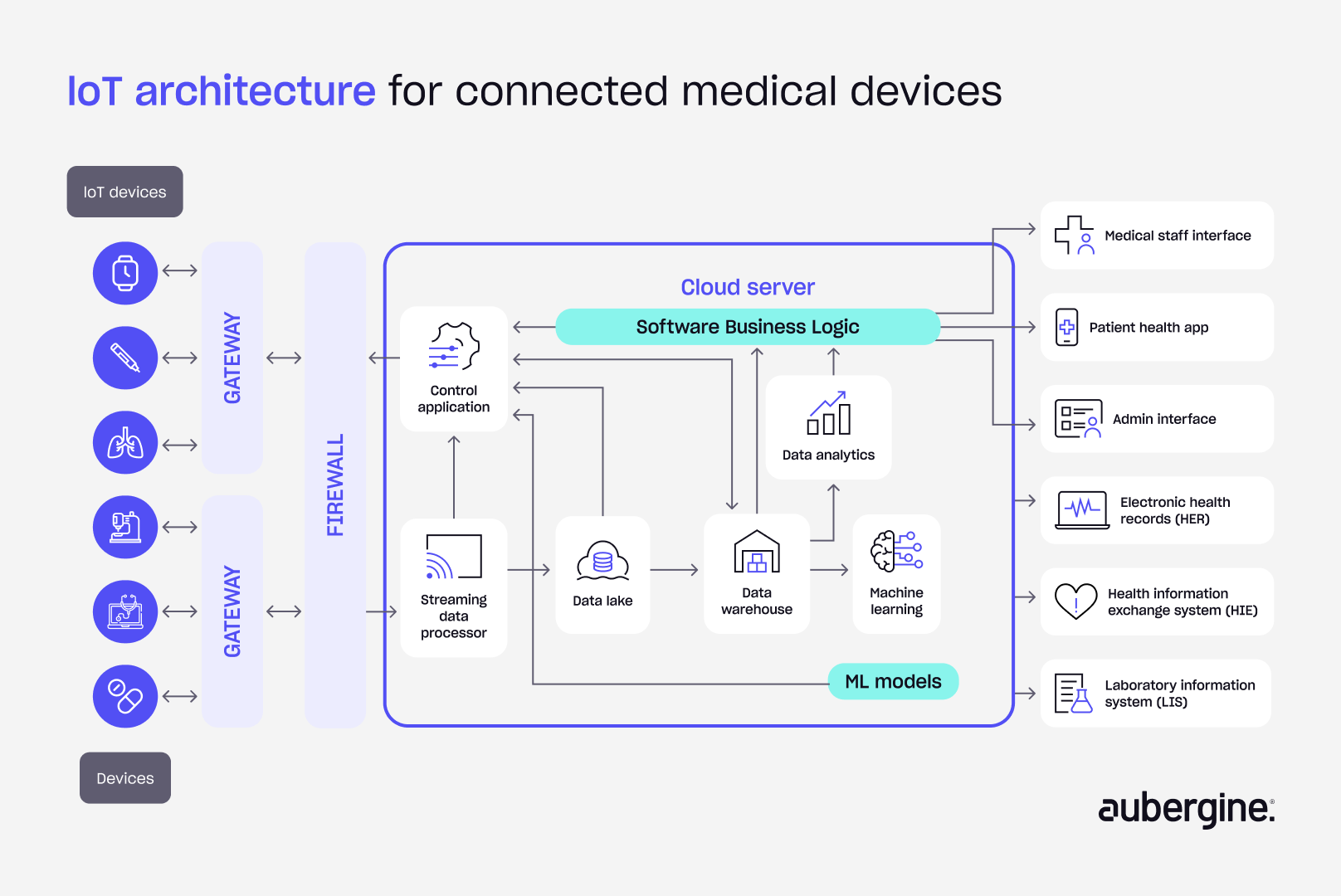
Connectivity (BLE, Wi-Fi, cellular) is one of the most volatile layers. Network quality varies across environments, and even minor drops register as unreliability for users. Battery optimization adds trade-offs between responsiveness, reliability, and latency that rarely surface in lab testing.
Mobile platforms (iOS, Android) are moving targets. OS updates, permission changes, device fragmentation, and app store policies can break stable flows and force teams to adapt roadmaps around constraints they do not control.
Backend systems (APIs, data pipelines) expose early assumptions as scale increases. Latency, retries, and schema changes can cascade across apps, firmware, analytics, and dashboards.
Firmware sits at the boundary of hardware limits and software ambition. Over-the-air updates enable iteration but introduce operational risk, with limited rollback options and slow, costly debugging once devices are deployed.
Analytics and AI add insight and personalization, but also complexity. Models degrade without retraining, real-world data is noisy, and edge cases dominate, requiring systems designed to handle variability and interoperability.
Compliance and privacy shape architecture from the start. Regulations affect data collection, storage, consent, and auditability, and treating them as an afterthought creates costly constraints later.
Together, these layers form a tightly coupled ecosystem. The challenge lies not in any single layer, but in how their constraints compound over time.
Real-world failure modes (where phygital breaks)
Works in demo, fails in reality
Most products are tested under ideal conditions, however, real-world usage quickly dissolves these assumptions. Users move between locations, switch phones, skip steps, and multitask. Connectivity drops, resumes, and degrades without warning. Connectivity can also fail under real-world conditions such as humidity or interference. Subsequently, software designed around uninterrupted flows struggles to recover from these interruptions.
Random disconnects erode trust
Unreliable connectivity erodes trust. When connections fail, users lose confidence in the experience and disengage long before churn shows up in metrics.
Poor firmware maintenance and failed updates
Over-the-air updates promise flexibility, but they introduce risk. A failed firmware update can partially or fully disable a device, with limited recovery options once hardware ships. As debugging becomes convoluted, even resolved issues leave behind a fog of doubt.
Support spikes and silent abandonment
As failures compound, the burden shifts onto support teams. Tickets rise faster than usage, not because the product is growing, but because uncertainty is. As the complaints fade, a silent disengagement ensues.
What software-led product building looks in connected devices
Software-led phygital product building begins with a different assumption. Uncertainty is not a temporary phase after launch; it is a permanent condition of real-world systems. Rather than optimizing for controlled environments, this approach focuses on real-life scenarios when conditions break down. Phygital systems embed computing into physical devices, requiring tightly integrated digital ecosystems.
Disjointed hardware and software drain productivity and resilience, while effective ecosystem management enables adaptation, reduces friction, and supports long-term customer trust. To ensure these strategies are executed effectively, it is essential to train staff in brand standards, customer psychology, and new technologies related to phygital experiences.
Design for failure, not perfection
Software-led systems anticipate moments of failure (connection drops, sync stalls, interruptions caused by updates) and prioritize recovery, retries, and graceful degradation. The product continues to function, even when parts of the system temporarily fail.
Assume humans will break the flow
Users share devices, skip steps, reset phones, change regions, and return after long gaps. Software-led building assumes these behaviors will happen and designs for continuity rather than restart.
Test in the real world, early
Software-led teams sandbox products in noisy environments before shipping, exposing them to weak networks, older devices, and unpredictable usage patterns. These conditions surface architectural constraints early, while change is still possible.
Treat connectivity as a UX problem
Delays, sync states, and failures shape perception more than raw performance. Software-led teams treat connectivity as a core UX concern, designing explicit feedback that helps users understand what is happening and what to expect next.
Make onboarding a moment of trust
Onboarding is not a setup task; it is the first trust test. Software-led systems minimize friction, tolerate interruptions, and succeed even when users step away mid-process.
Plan maintenance and updates from day-one
Resilient connected products depend on how they are maintained after launch. Firmware, mobile apps, and backend services must support safe remote updates, rollbacks, and version compatibility across devices in the field. Monitoring, recovery, and update strategies should be designed upfront so systems can evolve without disrupting users or risking deployed hardware.
Measure what sustains the system
Success is not measured solely by installs or activations. Software-led teams track KPIs such as retention, active usage, update success rates, system reliability, and security incidents, because these metrics directly influence lifetime value, repeat purchases, and long-term trust.
Why this matters more in healthcare, fitness and wellness
The importance of software-driven reliability and trust in hardware systems is particularly pronounced in healthcare, fitness, and wellness. Connected products go well beyond occasional interactions, they integrate into daily routines, influence behavior, and shape decisions over long periods of time.
Smartphones play a central role in health monitoring and data collection, enabling seamless integration with wearable devices and facilitating real-time health insights. Wearable technology can also encourage individuals to be more active and improve their lifestyle choices. For successful implementation, it is crucial to get all stakeholders on the same page and secure buy-in early, ensuring alignment on key goals and priorities. When systems fail here, the impact extends beyond inconvenience.
The role of AI in the phygital future
Until recently, most phygital products have been fundamentally reactive. Devices collect data, software processes it, and insights appear after behavior has already occurred. This model works for reporting, but it limits how much value systems can create in real time. AI changes this dynamic by shifting phygital products from reacting to the past toward anticipating what comes next.
AI allows phygital systems to move beyond static rules and thresholds. Instead of waiting for failures, drop-offs, or anomalies to surface, software can identify emerging patterns early and respond proactively. This shift transforms connected products from passive, reactive observers into adaptive systems that continuously learn from real-world behavior.
What this means for founders and product leaders
At some point, every connected product reaches a fork in the road. One path treats the device as the product. The other recognizes a harder truth: the device is only the beginning.
You are not building a device. You are building a living system.
Living systems age, adapt, and respond to pressure. They improve when designed well and degrade when neglected. This framing changes how decisions should be made, especially early, when constraints feel abstract, and optimism runs high.
In hardware-led ecosystems, software acts as the system of record. It coordinates firmware, mobile, backend, and operations to support immediate reliability while enabling long-term scalability and growth. These ecosystems often consist of interconnected objects, such as electronics, sensors, and effector devices.
Instead of asking whether the product works today, leaders need to ask whether it will still work when conditions change. Consider these questions not as a checklist, but as a stress test for long-term viability:
If usage doubled tomorrow, would the software architecture bend or break?
Scaling exposes assumptions that prototypes hide.
If this product were used in the messiest real-world conditions, would it still behave predictably? Labs are quiet. Homes, clinics, and gyms are not.
If hardware stayed fixed, could the product still evolve meaningfully?
Replacement should be optional, not required.
If a major OS update shipped tomorrow, would the experience survive intact?
External platforms do not wait for roadmaps.
If users behaved in ways no one anticipated, would the system fail gracefully or collapse?
Real behavior always finds the cracks.
The Cubii story: when software leads, habits stick
Cubii’s journey shows how software-led thinking drives lasting impact in connected products. While the device itself is simple, supporting consistent movement across diverse users required more than hardware. Early onboarding and connectivity friction created uncertainty, causing users to disengage before habits could form.
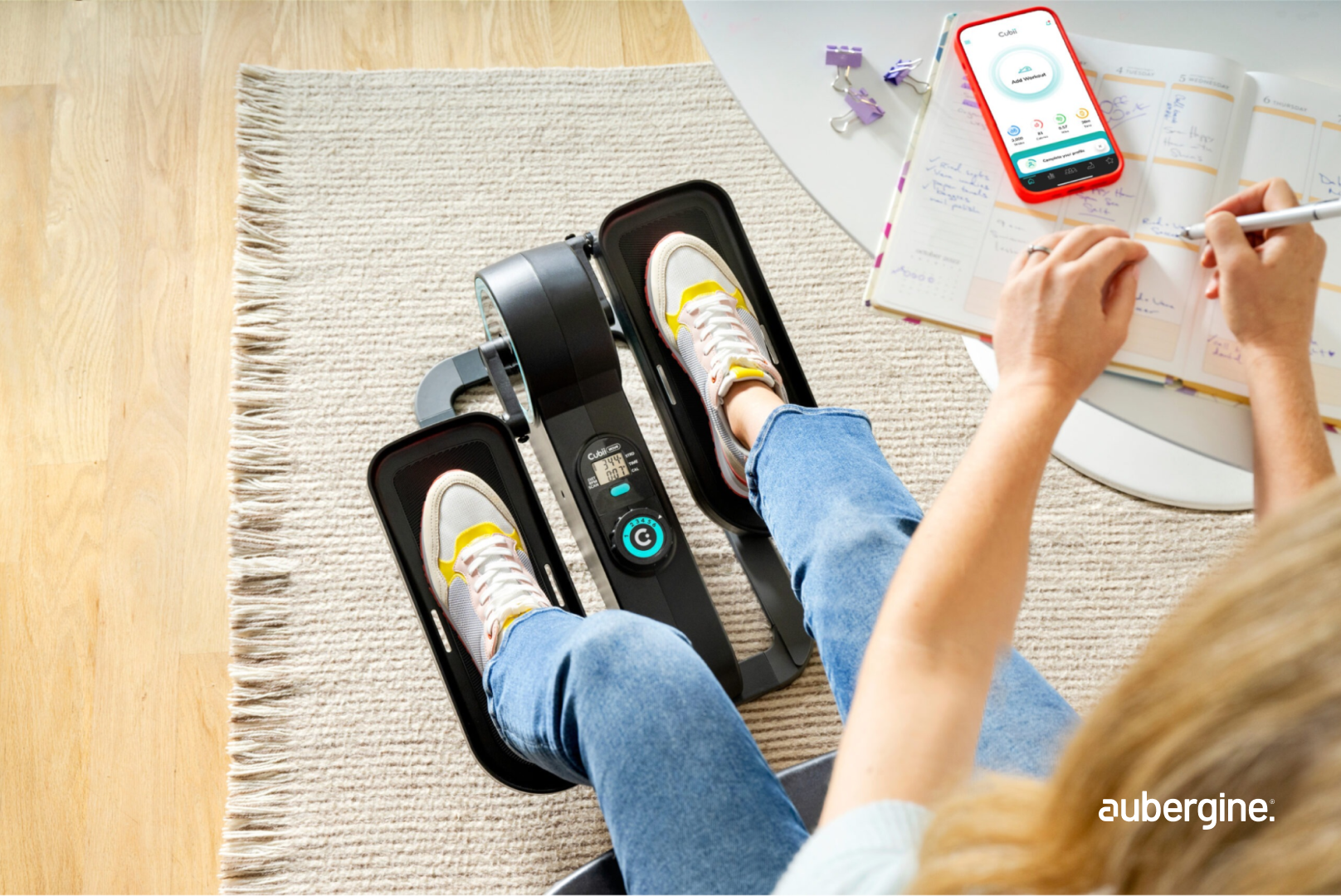
Working with Aubergine, Cubii reframed the product as a living system. Software led the experience; clarifying onboarding, strengthening Bluetooth reliability, and reinforcing progress through clear feedback. Reducing device drop-offs from over 10% to near zero wasn’t just a technical win; it helped more people stay active, return consistently, and build sustainable routines.
Cubii didn’t evolve by changing hardware. It succeeded by letting software earn trust over time.
Build a successful connected phygital product
At Aubergine, we help founders and product teams design, build, and maintain the digital backbone that allows connected products to evolve after hardware ships. Our work spans software architecture, mobile and web experiences, backend systems, and QA, with a strong focus on resilience, scalability, and long-term ownership.
We partner closely with teams in health, fitness, and connected devices, where trust, compliance, and consistency are non-negotiable. From early discovery through post-launch evolution, we help teams test in real-world conditions and plan for maintenance before launch. We turn software into a durable competitive advantage rather than a growing liability. Our focus spans developing both internal roadmaps for executive and engineering alignment, and external roadmaps to communicate product direction to customers and prospects.
Our role is not to replace internal teams, but to work alongside them, bringing experience from complex phygital systems where failure modes are subtle, and stakes are high.
Talk to our connected device experts to shape your connected product roadmap.


Authors

Sarvottam Kulkarni

More ways to listen


Podcast Transcript