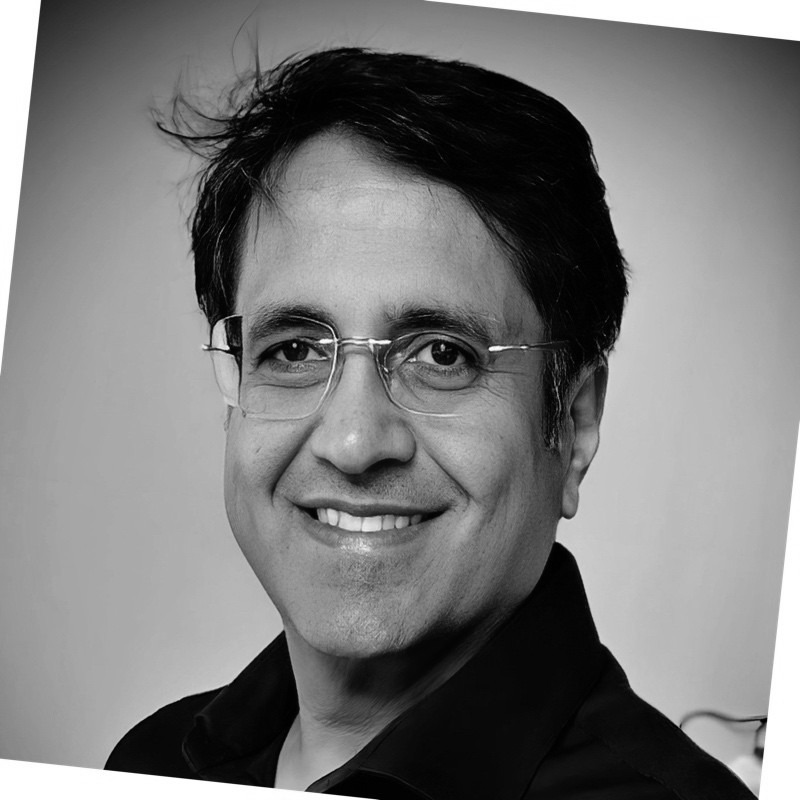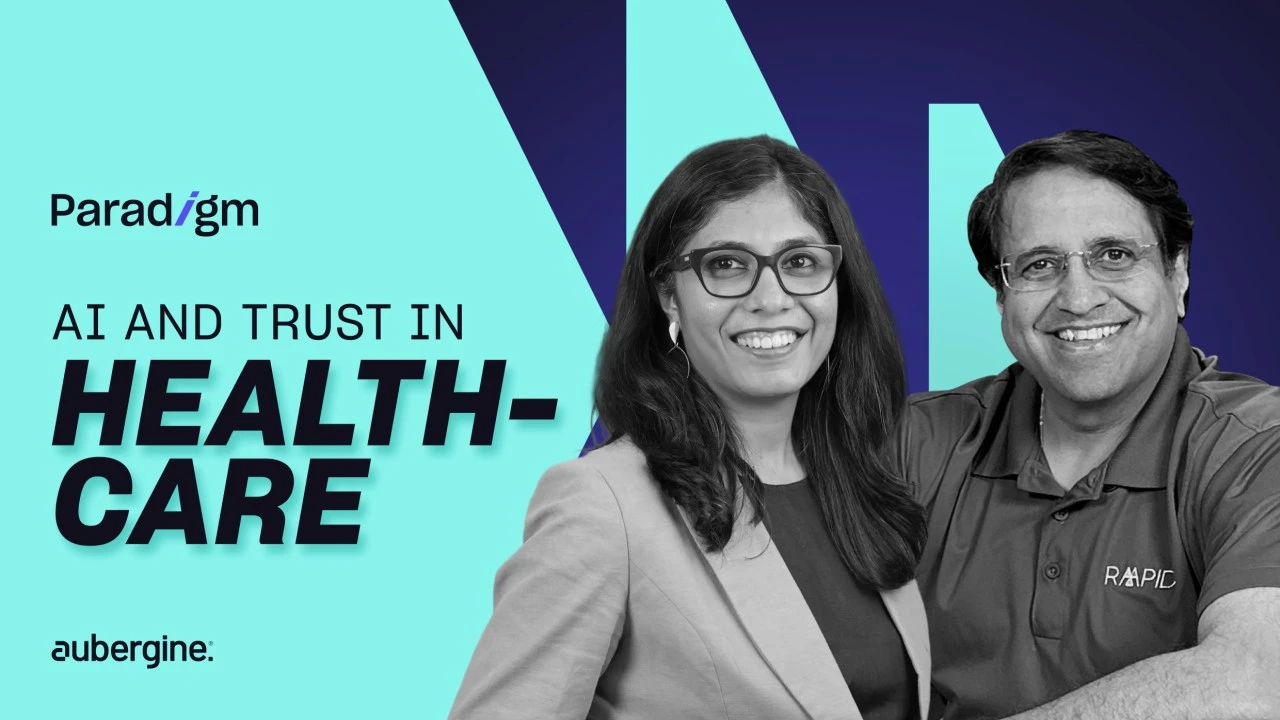

In this podcast episode of Paradigm, we speak with Chetan Parikh, Founder & CEO of RAAPID, whose work sits at the forefront of AI-powered value-based care in the U.S. healthcare system. From his early days as a chemical engineer to building multiple healthcare ventures, Chetan shares how his journey led him to reimagine risk adjustment using advanced NLP, knowledge graphs, and neuro-symbolic AI.
“Trust in AI is built only when users experience it themselves and that trust comes through great design.”
Chetan Parikh, Founder & CEO, RAAPID
He opens up about the shift from fee-for-service to value-based care, why understanding a patient’s true disease profile is the foundation of better outcomes, and how RAAPID is giving physicians, coders, and care teams an intuitive, AI-first experience that cuts work time from 30 minutes to just minutes. Chetan also talks about securing strategic investment from Microsoft, building trust in healthcare AI, and why thoughtful experience design can make or break adoption in clinical workflows.
Packed with insights on healthcare transformation, AI innovation, product design, and founder lessons, this conversation offers a rare inside look at how RAAPID is shaping the future of care delivery.
About Paradigm
Paradigm is a podcast by Aubergine that explores transformative journeys where technology impacts human lives.Through candid conversations with visionary founders, product leaders, and innovators, we uncover stories of bringing ideas to life.


More ways to listen


Podcast Transcript

[00:10.0]
Hi Chetan. Welcome to this podcast. We are super excited to hear your stories today and let's start with a quick introduction about you know, your background, your journey so far. Sure.
[00:26.9]
So again thank you so much for inviting me today. I'm Chetan, I'm the founder CEO of Rapid. So Rapid is a healthcare company based out of us with the backroom operations in India. We are very focused on a very important segment where the US is healthcare.
[00:48.7]
Is transitioning from fee for service to value based care. So we are focused on the value based care. I see. What exactly is the problem space which you are trying to address through this technology? Good question. So US Healthcare so far has been focused on taking care of the symptomatic problems of the patients.
[01:15.3]
And so when a physician sees the patients they would bill the insurance company on the procedures they had done. But there is no accountability per se, which is reflected in the payment models on what the outcome is.
[01:31.2]
And what us is experiencing is though they have a very high expenditure on healthcare, their outcomes are very mediocre. And obviously we have amazing physicians, amazing healthcare infrastructure.
[01:48.1]
So the models are now being modified where the payment models will be aligned to the outcomes and the treatment that the patient is getting, rather than just giving the treatment and not worrying about the outcome. So that is value based care.
[02:05.0]
You are giving care and you are looking at the value it provides to the patient. So what exactly Rapid does and what vision made you launch this product? I'll take a bit digression and tell you about my journey.
[02:24.3]
So by training I'm a chemical engineer and I had no idea I'll ever get into healthcare. But I was always thinking that what is the meaning of what I'm doing? I was working for GE Plastics. I was happy, but something was missing.
[02:39.6]
So, so 20 years ago I dabbled into healthcare and it has been so meaningful. So I started with a services company, a medical transcription company. And then being an engineer, being inquisitive, I saw there was an opportunity. If we can understand all this clinical notes that the physicians were preparing after meeting a patient.
[03:00.3]
If we can extract all the insights from there, we can provide better value to the patient. And so I started dabbling into artificial intelligence, developed our own NLP engine, developed a company by the name of Easydi, which was in the fee for service model that I explained earlier.
[03:20.3]
And then in 21 I exited from that company. But Bhakti, by that time I was very clear. I could clearly see that the fee for service model would not be able us will not be able to sustain that for a long time because the expenses were going up.
[03:36.3]
As the population in US is aging, it was getting out of control. The only way out of it was to implement value based care. And so when I sold Ezdi, I was already clear that my next step in the journey would be in value based care.
[03:53.8]
And so Rapid is the company, it stands for risk adjustment, APIs delivered and that company is focused on value based care. Now within value based Care, what I see is at the core is understanding the disease profile of every patient, understanding what the physician is doing to manage that disease.
[04:18.6]
If we have that understanding, all the workflows start from there and that is known as risk adjustment. So the workflows can be reimbursements that the physicians get. It can be the quality of care that the physician can provide. It can be care coordination, you know, what is the downstream things we need to do.
[04:37.8]
All of that starts from there. So I was so so much interested in doing that, and I had the opportunity to do it on my own. So I started Rapid. That's beautiful. You know, how did you go about, you know, taking your first step, steps in this, you know, it's, it's your second big venture apart from so many others you have done.
[04:59.5]
Right. So how did you go about building Rapid? Tell us more about the journey. Since I was already in the AI space I had never, we had developed a amazing NLP technology which was infused with knowledge graphs. When we sold the company we did not sell certain assets or IP that we, we were developing but was not productized.
[05:21.6]
And I was able to retain a few people in my team because the buyer agreed not to hire them and let me keep them. So I got a running start with a core AI as well as researchers who had worked on similar product.
[05:39.6]
So that was very helpful to me. Now what we decided to do this time is become AI. First we said that we have this large knowledge graphs, we have the understanding of the healthcare space, particularly the medical coding space.
[05:55.7]
We need to purpose build the technology for risk adjustment which is also medical coding but more focusing on the disease codes rather than procedural codes. So that gave us a good running start. That's amazing to know. It's easier to start second time because or third time because you already know what works, what doesn't work.
[06:18.2]
I think Bhati, it's not only that but you make so many mistakes every time that you eventually learn not to repeat them. Absolutely, absolutely. So tell us more about the recent funding we received at Rapid from Microsoft.
[06:36.5]
Tell me more about that. How did that whole conversation go? Oh I just keep on smiling when I have to answer that question. So we were very clear that this time all my other businesses, I have bootstrapped them.
[06:52.0]
But Rapy, I want to grow that because I think there's a huge opportunity particularly the market is wide open, the competition is not there at all. It's a wide space and there are a lot of tailwinds from the government and healthcare is a highly regulated market.
[07:09.5]
So that has put us in a great situation to really disrupt the space and become a category leader. So I was looking, I had decided I'm going to raise capital this time but I wanted very strategic and key partners or investors. And one of the best companies who I could have gotten is Microsoft because they know AI.
[07:31.8]
They are a large tech company. And what we were able to show to them is while they have an amazing infrastructure, an AI infrastructure, the last mile is what we can bring to the table at scale.
[07:47.3]
And we have the understanding, the technology and the team in place to deliver on that. So when we approach Microsoft they truly were very interested in us and what we were doing with our AI is going to not only utilizing the large language models and our knowledge graphs, we were really working on what is known as neuro symbolic AI where you take the neural networks, which is the large language models and embed large language knowledge graphs into it so you stop the hallucination, you can make it very explainable and the precision and recall, the accuracy is far better than what you can see with conventional NLP or deep learning models.
[08:28.2]
So that combination between Microsoft and Rapy was a dream come true. Because we can now deliver at scale, we can also leverage all the connectors that Microsoft has to reach out to the customers and provide them with more value.
[08:45.9]
Not just our technology and the product but being on the Microsoft ecosystem and on Azure, what it'll do is it'll help our potential customers keep their data on their infrastructure behind their firewall, still use our technology so that data will be highly secure.
[09:04.1]
So it's a win, win, win all the way. Super exciting times for us. That's really something you should be so proud of. And I'm sure everybody at Rapid is supercharged with this new synergy right? Because building anything is not at all easy.
[09:21.8]
And if you have partner like Microsoft, nothing like it. I'm sure. Congratulations. Thank you so much. Thank you. All right, so how do you see the healthcare industry being different? Because rapid is in the picture. So if I look at US Healthcare in particular, it has been lagging in good technology adoption.
[09:44.6]
It is slow. Does not mean. It does not. It absolutely does. And it's growing very quickly. So I think one of the biggest shifts that are happening is the access to highly advanced technologies like generative AI will really help the healthcare industry.
[10:02.7]
And within risk adjustment, we are trying very hard to position Rapyd to be at that cutting edge and become a category leader so that we can bring the best technologies using the large language models, using our knowledge graphs, and solve this real problem at scale.
[10:21.1]
So, it'll be a while, but my goal is to make Rapid as the category leader in this space. We, do have amazing, algorithms where our accuracies today out of the box are north of 90%. And our goal is to go to, autonomous kind of a coding situation which we will achieve within the next, year or so.
[10:44.0]
I see. That's, that's great to know. So let's, transition this conversation to a little bit of who are the people? You know, ultimately, technology is made for people, right? So who are the people who use this technology and what difference does it make in their lives when they use this?
[11:05.5]
So you're, you're so right, Bhakti. At the end of the day, it's all about people. Right? Means technology is built by and for people. Processes are set up by and for people, and the fruits of those should be beneficial to the people. So in our world, we have a brilliant logo our marketing director Mayur came up with, which is like caring for the caregivers.
[11:30.6]
And who are the caregivers? Not only the physicians, but their entire staff. Because a physician is only as effective as the support he or she can get from his staff. Right? And those could be the nurses, those could be the billing people, those could be the administrative staff.
[11:47.9]
And so our product essentially touches multiple people. Physician is at the core and we have point of care solutions. So we want to make sure that the physician has an amazing experience where they are able to get to the right information at the right time without any hassle, without having to do any extra work, actually try to reduce the number of clicks so that they can focus more on the patient rather than on the computer, which has been a big problem in the US now, other than the physician, there are other team members, such as the CDI clinical Documentation improvement person who is essentially looking at the information that is going to be presented to the physician and making sure that it is curated properly so that the physician is not, it's not a waste of physician's time.
[12:40.5]
We want to make sure that their experience is immaculate. And it only happens through two things. The core AI has to be accurate so that they can trust it. And the second is the UI has to be seamless. It should be something that is intuitive.
[12:57.4]
So the user experience has to be amazing. Then we have medical coders who do a lot of work because they are the people who are going to understand the healthcare data, convert into billable codes and submit it for reimbursements. And they are working on these day in and day out.
[13:14.7]
We want to make them very productive. And the last that we look, a typical AI system takes about, anywhere from 22 to 32 minutes to code a chart. We were able to do the same chart in 14 minutes.
[13:31.1]
So we already have brought it down significantly and our goal is to bring it to less than five minutes. So that is the power of AI, that is the power of user, experience. So that is what we are trying to do. So let's zoom in on the experience part of it because, the human and the tech interact through the user interface that they are talking to with each other.
[13:56.1]
So the UX design or the UI design of the product, in your experience, what role has experience design played in successfully making difference in the life of the people who are using the technology that you are building?
[14:12.6]
So it's, it's a very important aspect. And you know what I feel is if the person is working on our software, our product and they don't give any feedback, they are just focused on the output, whether they were accurate or not, what was their productivity, that is the perfect ui, that's the perfect experience.
[14:45.5]
What I have seen is only when it is out of the norm, when they are frustrated, they would voice it and say, this is not working, this sucks. Again, one thing that is so important, Bhakti, that I have to bring it out, one of my mentors who I respect a lot, she gave me an opportunity to be in a part of an RFP process.
[15:10.9]
She wanted to do a POC with us. And our UI was not set for the experience and the past workings of their workflow. And the feedback I got is we were giving them a lot more information, on the screen which they did not need to process.
[15:35.0]
So it was taking their mind share in the wrong direction, which affects both, which affects their productivity as well as their accuracy. Because you know, if they are focused on one thing, they can focus on it, get it done. But if there are three other things showing up, then they are confused or we could really bring a lot of noise.
[15:54.4]
And I take that at heart. You know, I've made myself and my team has been working relentlessly on that, that within the next two to three weeks if possible. But again, I don't want to rush it. I want to make sure we are going to go back to them and not only make sure that we understand and meet, but exceed their requirements.
[16:17.6]
Because the last thing I want to do is we have a perfect AI which is giving highly accurate results, but the experience is what is like taking them away from it. And so I think that user experience is one of the most important IPs of any company today.
[16:38.0]
It is more important than the core AI in my eyes because you can make slight errors in the AI, but the coder will catch it. But if their experience is not good, you know, they are not going to enjoy it. Wonderful. And you know, me myself building so many products and designing experiences, I can relate this because I have seen many users trying to use products.
[17:03.1]
But if the design, actually any product design has a invisible layer which has to match the mental model of the users. And that's where all the magic happens. It's not only the UI and the interface that you see, but there are these whole mechanics of how the system is structured to match the expectations of the way in which the users are thinking.
[17:27.1]
Let me interrupt over here because you know, being an engineer, you know, I want to make sure that all the right information is in front of my user. Right. And that is what we did. But what information to present at what time, in what manner and how they would move to that information so that they could make it actionable and go to the next step.
[17:53.4]
It's not an engineering feat, it's a, it's a design aspect. I did not know it till we started working together, what 14 years ago, on in the easy di days, right. My previous company and what I have that gave me the true appreciation of a good designed product.
[18:15.0]
To give you a couple of examples, we at that point in my last company were competing with two large companies like 3M, Optum Health. And if you look at the class report, all our users were very happy with our design, which was designed by your team.
[18:36.5]
And because they said this is seamless, you know, you don't need any kind of user manuals. It's intuitive, you know, and it's all three clicks. We get to where we want to get to in three clicks and get to our solution, which was amazing. Which was amazing.
[18:51.5]
And that set the foundation for our entire team. So all my other ventures, we have used the right approach. We have worked with your team to make sure that we get to that point. Chetan, building so many products and working with so many founders.
[19:07.1]
I have often seen founders are in so much rush. They shortcut design and they skip a few steps. In your experience, have you seen a difference which has been made because the design step was either missed or there was a shortcut.
[19:24.9]
And how did that come out? No, never. We don't do that. I'm just kidding. Absolutely not. It's a part and parcel of running any company. Right. So, there are times where we would get a request from the customer, and usually the requests are yesterday.
[19:42.5]
They wanted yesterday. Right. So in that case, our engineering team would jump on it, do the modifications on the feature functionality, and, usually we would go back, work with the design team, work with your team to make sure that we go back into the understanding and specs of the design so that the user experience is not compromised ever.
[20:06.8]
However, as a matter of fact, very recently, one of my mentors who has been very gracious, she gave me the opportunity to, do a pilot with their team. They were very happy with our AI. They said our AI is better, it's more accurate.
[20:24.3]
However, they were disappointed with our UI because they found that a lot of information was being displayed and on the screen, which was really, noise rather than the signal. And so, that was one of the issues that came up.
[20:40.8]
The other issue that came up is they wanted certain, computations to happen, behind the scenes so they don't have to deal with it. So all those understanding of their requirement was missed out in the rush of delivering something.
[20:58.1]
But we have made a commitment. My entire team is focused now on delivering what they are looking for. And better than that. But, yes, it does happen that sometimes because of the rush, we miss out, but we always go back in. My understanding is as long as your core technology, which is in our case the AI engine, is sophisticated, highly accurate, these, can be improved upon, but you don't want to wait till your customer gives you the feedback you need to be proactive in it.
[21:33.3]
That's a beautiful story because, you know, in my Experience. We have worked with hundreds of product owners. They all think very differently, but when they are aligned on design and give it a priority, I have seen that change the way the whole success of the product is driven.
[21:53.5]
You know, design has the power to make measurable impact. You can literally, you know, reduce the coding time for your users from, let's say 10 minutes to three minutes. It's possible only through experience design. Right. So.
[22:08.7]
And there's quite a lot of, things that go in this whole equation. You know, in past when I have worked with many different product owners, they all are in different stage of the company and a different stage.
[22:23.9]
Sometimes the product is not there, sometimes it's already there in the market. So many people are using it. You keep getting feedback from, the buyers and the users, and those feedback also sometimes confuses you. And you are like, okay, what should I prioritize in terms of what feature to build?
[22:40.9]
Whether should I prioritize the experience or the tech part? And in the way, we have also evolved by building the same formula we have started using because with so many years we have mastered our process.
[22:57.9]
True. Right. So the thing we bring to the table in such, equations when we work with many different tech companies is we understand the nuances of adapting the process. Yes. Because it is not a, one size fits all process.
[23:16.1]
While design thinking is an approach, it is very, very possible to adapt that to whatever stage the company is. And it is possible to make measurable real impact in the experience which will actually, you know, achieve, strategic goals.
[23:31.7]
It can create an innovative product which doesn't even exist. It can help you sell like anything and become your USP in the competition and in the market. The user themselves will become your advocates. You won't have to tell them to use it. They will love it so much.
[23:47.8]
The, I mean, you're building it for them and they'll themselves start using it and it will become like exponentially contagious. That, okay, this is actually making a difference in my life, so I should, I should use it. So. Sorry to interrupt, but I think one thing that, or, two things you mentioned which is very, very important.
[24:04.7]
You know, the, the, the recent example that I just cited, it's the rush that, hey, we need to do this, this, this, that really derailed us. But your experience is what we need to do now.
[24:21.4]
We need to capture on, we need to capitalize on because we need to now steer it back and not only meet, but exceed. Correct. Also what I saw is we had done a decent Design, but it was not capturing all the corner cases.
[24:40.2]
We were able to do the generalization because most of my customers wanted a certain information to be displayed. Now there is a segment of customers who might not want it and we were not prepared for it. So with this design thinking and your intervention of your team at the right time, I think it helps a lot for companies like us, who already have an existing product which is being used in the market.
[25:06.7]
So without, you know, making other customers get upset, how can we bring the right experience to all users and kind of a universal utilization of the design? By the way, a lot of time people don't understand what design is.
[25:21.9]
You know, they just feel that. People feel that what you see is design. But design is also about how it works. So quite a lot of, energy of a designer goes in defining the problem statement correctly and ensuring the architecture of the system is built in a way that it addresses the problem statement.
[25:47.0]
And then we kind of add layers of unfolding the information in a storytelling format so that it doesn't overwhelm people. The users get the right information at the right time. So I have a question over here. You know, when we find such corner cases where, you know, we have a design that is kind of accepted by the majority, and then when we find this, is it beneficial for your team to interact with those corner case, know, customers to learn their requirements, or can you generalize it from, by mere subtraction that, hey, you know, so how, how do you do that?
[26:31.6]
How do you make that happen? So this is a classic balance in any profession. You need to cultivate that judgment more like the 8020 rule. Right. So you can never focus all your energy on something which only 1%, you know, use case is going to come across.
[26:56.1]
Because if you go that route, you will spend a lot of time and effort and money in something which may or may not be used so many times. It's more of an edge case. However, you know, the way any design solution should be ideally approached is in a framework form format.
[27:15.9]
Which means you are designing Lego blocks first. And then you are adding the layer of mixing those pieces in a way that it is addressing the most common use case, the next most common use case, and the next most common, and so on and so forth.
[27:33.3]
And you keep on adding those layers one by one by one. It will unfold to a substantially. What's the right word? Customizable. Yeah, Substantially, usable product which will take care of most scenarios. Okay. The Beauty of tech world is you can always adapt.
[27:51.5]
Makes sense, right? We talked about use case where you saw like if attention to design was not there as much as you wanted. But share the story where, you know, you actually, you know, you and I have worked together for three plus years designing eZDI a few years ago.
[28:10.2]
And you know, what was that experience like? What was the moment in that engagement that made you feel that, yes, I can actually see design doing its job and making the difference?
[28:25.2]
You know, one thing is, as I mentioned, when I don't have customers complaining, that is a beautiful design because now they are, you know, because very rare, rarely have I seen customers come and say, wow, what an amazing design. However, I've also experienced that in ez, we were collaborating with Google and nine people from Mountain View flew to India to meet with my technical team and we gave them a demo of our product.
[28:55.2]
And their engineering team who had come over there were blown away with the design because when they saw it they, they could see the seamlessness. They could see how the mouse was moving from one to the other to actually close an action or intent that the user had.
[29:13.1]
Rather than click multiple times or go in all haphazard directions. Even, you know, the color schema that you had put together was something that was not hitting your eyes but was more kind of inspiring.
[29:28.5]
I don't know the right word. It wasn't calming you down, it was not making you aggressive, but it was inspiring that okay, this is how it was. So I think overall the best compliment I got from Google at that time was, you know, we have worked with so many companies, but a company at your size having this level of sophistication in the design is they have never seen.
[29:51.8]
So we did a lot of work with Google, but that was a big pat on the back for us. And then when we, after that were looking at what other companies, like bigger companies had on their ui, we were like, okay, this is definitely an engineering, spreadsheet they have put together.
[30:09.9]
It's not something that is meant for the coders who have a different set of eyes, different set of Persona. I remember a conversation, that Neil was summarizing once to me. If you can share something around that, he was like, we were trying to do this sales pitch and more or less what we did was we just demoed the product and the difference it made in the life of the coder and that itself was the pitch and it was impactful enough to sell itself.
[30:45.8]
I vaguely remember that conversation. I Don't know. So I think that is the common normalization that when we saw it, do a demo, our user should feel, feel empowered, inspired, confident. Those are the terms, the words that should come to the mind rather than confused, unsure.
[31:07.1]
We don't want any of those emotions to come up. So it's very important and that is the norm. But now what comes out, where we feel that we need to improve further is the frustration. And we are now measuring it through the productivity, the accuracy and seeing what can be done to really improve on it.
[31:30.1]
As I mentioned, the most important IP in my eyes now, is going to be the user experience. If you can make sure your user is highly productive, highly accurate in our world, you have won the game. Because AI absolutely has to do its job.
[31:47.4]
Without that they are not going to be accurate. So how was your experience, you know, when we, we have worked together in many products. When it comes to design, you know, according to you, how did you find our approach in terms of solving a problem statement, you know, what really, you know, clicked when you were trying?
[32:08.1]
It's multiple things. Bhakti, you know, one is. And, and I think you can generalize this for most of the founders who are who are new to this game kind of. And you know, if you work with a lot of tech founders, you may experience this. We all believe that the most important thing is the product and its performance, that it solves a problem.
[32:32.9]
We take design and the experience as yeah, it's important, but it's secondary. I think what you have clearly demonstrated and helped us learn is it cannot be secondary. It is in parallel, if not slightly ahead of your product.
[32:50.6]
So I think for us and for a lot of people, you being that coach, that guide who really helps us understand the importance of design through your experience, through your other founders or other customers.
[33:08.9]
And then we implementing it and seeing, seeing the results has been very helpful. So once we did it, it became natural, you know, all like de facto. Don't let engineers design. It means they are good. Don't get me wrong, they are amazing.
[33:24.1]
But when it comes to those that you said, two things, you know, there's the artistic side as well as the functional side. You know, we can do the functional side, but as my customer experience, we do it too functional. Too much information, what to pare down. So it's great to know that you understand the importance of design, but you always have this choice to hire in house.
[33:46.2]
You can always think that okay, maybe I'll just hire A team and build my own team and stuff. What made you strive for such a decade plus long partnership on this expertise that why would you choose having a partner in this field instead of building a team in house?
[34:08.9]
So the, you know, I'll break this down into multiple reasons. One reason is my personal experience that as a company we can focus on one thing which is our core competency.
[34:27.3]
And that we have to be the best in the world. All the rest we don't have to be the best, we need to partner with the best. Right. So our core competency is AI is to understand unstructured clinical data and combine it with the structured data, identify what are the disease with the patients, what is the provider doing and present it to the customer.
[34:54.0]
So I need that expertise in the research form, in the engineering form. Now whether it is putting it on Azure cloud and what is the architecture, whether my accounting system is the best, I don't need to deal with it.
[35:09.2]
I want to make sure that I am dealing with the best who can really augment my core competency. So that's one example or one reason why we decided to partner. The second thing is assuming that I have access to the talent, which is very difficult because this talent is not the regular talent.
[35:32.2]
You know, if you want to hire the best accountant you have accounting firms. If you want to hire the best, you know, design, you have the best designers. So rather than trying to find that talent where you have little experience, why don't you work with the partners who have that? Yeah, because their core competencies design.
[35:50.3]
So they are going to make sure it's the best. So the combination of the two can be synergistic. So those are the two reasons. Speed of access to the talent as well as, you know, what is my core competency? Let's focus on that. The rest are peripheral for me which are important, but we don't need to work on that.
[36:09.1]
Yeah. If you can share some thoughts on, you know, working with aubergine over so many years, you know what has been consistently true when you have worked with us and what brings that value when it comes to the difference we are making through this partnership.
[36:28.0]
So I think it's the ease of working with you guys where it's not that we are going to throw a problem across the wall and it's a different silo. The way I have experienced it is it's one team sitting in different location and that is how we want our customers to perceive us, that hey, we are one and the same.
[36:52.8]
Team, you are giving us a portion of work that we need to complete for you and we are going to do it as if we are your company. And I've seen that with Aubergine. So we work almost as one integrated team. So does this help in terms of like when, when, when you work as two different teams and then club together and become one team.
[37:15.6]
Right. Sometimes you face challenges in terms of the speed, the turnaround time or you know, the quality and those aspects. Right. So how has your experience been around those aspects when working as partners with us?
[37:33.6]
So I think if it is project based, those frictions would come to play where we again have to bring you to the level where we are and then you have to input. Now you don't know what are all the other implications.
[37:52.6]
But if it is a long term relationship and you are a part of that continuum, I think it helps tremendously with both speed, execution and accuracy, all of those. So I think with Aubergene I have worked on both and I would prefer kind of a retainer where we are working together and you are continuously involved.
[38:15.2]
Also what I feel is with your experience working with so many people, so many different companies, you have built that kind of empathy where you can understand where this founder is and at their stage, both from the speed to market, the maturity of their product, the stress of acquiring new customers, the stress of building feature functionality and very importantly is the finance.
[38:43.4]
You know how much it's going to cost in house versus outsourced. I think majority of the time if you work with the experts who are the best in their skill, the cost is definitely going to be lower than your internal cost.
[39:01.9]
It's just a fallacy to believe that, hey, I'm going to save money. Let's say your team is charging me 100 and I believe that we can do it in 50. No, we will end up spending 150 and not be where you can get us in that hundred.
[39:17.4]
So that thing is very important for, for leadership to understand. Very, very insightful. So any advice for other tech founders on how they should approach design, product strategy and partnerships? So I think you need to again as I mentioned, figure out what is your core competency and where you want to play, and what you want to outsource.
[39:41.2]
Now again, we all believe that we have to spend in a certain manner. We have a certain budget. But if you don't have the budget, don't try to shortcut and do mediocre things because the customer of today is highly sophisticated.
[39:58.4]
You take shortcuts and it can backfire. So you need to figure out what your financial situation is, what your appetite for risk is. But the risk on hiring a new set of people, they getting acclimated to your company culture, product and then they starting to deliver and is a long term process while your bhakti, your team has been doing it for years.
[40:23.8]
So you can, you know, we can really leverage that very quickly. So Chetan, I think, so many products are built using AI these days, but then AI has a huge connection with trust. So what is your take on how industry is handling the situation and how, you know, what role are we playing here in terms of ensuring the trust is not coming in between the solution itself and the technology?
[40:52.7]
Oh, I think that's a brilliant point you bring up. AI has been discussed amongst every layers in healthcare now. And now they have reached a point where they are confused.
[41:09.2]
There's so much noise that people are confused, like is this hype or real? And how much can we trust it? Because there have been issues, known issues of bias in AI. There have been known issues where the AI has been hallucinating and giving extremely wrong results.
[41:28.7]
So AI needs to be developed and that is what we are extremely focused on in removing the hallucination and building trust. Now, trust can be built only when the user uses the AI and the user will use AI and become comfortable through an amazing design.
[41:50.4]
You want to inculcate that kind of confidence. You know the words I was using? Confidence inspiring. That AI cannot do by itself. It is only through the user interface. So design and the quality core are so intermingled for trust building in healthcare that they cannot be separated out.
[42:10.2]
Okay, to give you an idea, if I want my coders to say, okay, whatever the AI has automatically suggested. So let's say there are 10 codes and AI is confident that here are eight codes which do not need to be reviewed by a human in the loop.
[42:30.7]
And you just focus on these two. How can I give them the confidence that the other eight are not to be worried about? That UI can do? Because if they want to test it, if they want to double check it, all they have to do is click on any one of those eight which are automatically accepted by AI and then it should present in a very concise but compelling manner the evidences.
[42:56.5]
So if they see, aha, yes, AI did the right job. Okay, open up the next one. Yeah, AI did the right job. You do it on a consistent manner, then they will have the trust however, think about a design where they click on something and they are still scratching their head so they have to go deeper, you know, peel the onion more and more.
[43:16.1]
It's not going to help so many nuances to those design choices. You know, what is in it for, for the user to just review and approve versus actually pay attention to, you know, bridging that gap between what technology is doing on behalf of the user and then user is just trying to validate versus actually trying to do the same thing, which is not the point here.
[43:41.4]
So that interaction is supposed to be careful. Yeah. So trust is very important and though the core AI is important to build that trust, but the UI can change the game. Amazing, amazing. So, when we design, See design is a very open ended kind of field because unlike coding, whether the technology will either work or not work, it's very black and white.
[44:12.0]
Not AI, but yeah, a lot of time it will work or not work. But for design it is very, very subject. There is no right and wrong and you are trying to solve for something, you are trying to figure out on the way, more or less right.
[44:29.5]
However, there is a power in this design process which helps you actually innovate and find a solution which is not even there out. You know, nobody has solved a given problem in that way. So share a little bit around that, you know, in terms of your experience of innovations design.
[44:48.7]
So rather than share the past where we clearly saw in Easydi that the design was highly innovative, it was an aha moment for anybody. We showed it because they were more used to seeing screens with kind of spreadsheets. Now they were seeing, you know, a beautiful layout which was intuitive to work, even in the current, rapid.
[45:12.2]
What we are working towards is measure the impact of design, with multiple, variables. One is productivity means can we reduce the time the coder takes to code a chart?
[45:30.9]
Second is accuracy. Now if we can show improvement in both or at least in one while keeping the other one constant because see, the coder is accurate. Let's say the coder is at 98%. Okay, you cannot improve it any further because there is some degree of subjectivity.
[45:48.5]
But can you now what was taking them 30 minutes, can you do it in 14 minutes? Can you do it in 5 minutes? And while maintaining that 98% accuracy, you have really impacted through design because the AI is still the same. AI has not changed.
[46:04.0]
Maybe there is some learning happening, automatically with a lot of the feedback too, but that is very important. The other is having a very subjective but questionnaire on design experience of the user experience. So we are going to implement all of those to understand the impact of design on the product as well as the productivity and accuracy.
[46:26.4]
So when we talk about innovation, one of the things that is very important, that I mentioned earlier, our product needs to create the least amount of friction for, for our users, particularly with the logo or the tagline of caring for the caregivers.
[46:42.8]
If you look at the medical coders, the CDI will be working on our platform so the UI is completely in our control. However, most of the physicians will be working within the ehr and so we need to make sure their experience is immaculate.
[47:03.1]
And within the physician group there is a certain segment we'll be showing it on a, on some kind of a ribbon technology where there will be a small window that will pop up with all the care gaps which the physician has to you know, close or say accept or reject the innovation that Bhakti, your team is working on is to make sure that that look and feel of that ribbon is very similar to their ehr.
[47:33.1]
So it becomes intuitive. There is no abrasion or extra mind share they have to give to first understand the ui. Correct. And how you can imagine, you know, Epic. You know, most of the our customers are on Epic. So easy. But then even if there are Other EHRs, you and your team are going to ensure that the physician abrasion.
[47:54.8]
So that is innovation. Making sure it's not my ui, you take it or leave it. We are going to bend over backwards to make sure that they're abbreviation. It is about making it seamless. Yes. And ensuring that you know, the experience is not impacted.
[48:12.5]
You know, it's not about how you unveil the experience. It's about how you figure out how you want to unveil the experience. Right, right, right. And I, I think the again, I hope some physicians appreciate it but if they don't complain, that is appreciation for us.
[48:28.7]
So that's what I want to see. Wow. Zero complaints. Zero complaints. And make their life easy. You know, like it should be intuitive. I use this analogy all the time. You know, if you are in a smooth highway, you never complain, but suddenly there is a bump. And why the hell there is a bump here.
[48:46.2]
Exactly. You realize somebody made a mistake here in a. So let me. You know, this is very exciting. Bhakti, you know, for you know, again, we know our product and you know, typically since you are the vendor, we are the customer, we usually you know, have this framework that this is how we will operate.
[49:10.1]
What is an ideal way in which you would like to operate so that you can bring the best benefit to a vendor like us? Because I want to implement it, you know, in, in our projects. This is such a nice question and thank you so much for asking this question. You know, we get so many people, so many.
[49:29.4]
A lot of them are tech founders or anybody dealing with some sort of technology. The way they come to us is wide spectrum. Some are absolutely unclear versus some are very, very clear and very, very strict and very, very specific also.
[49:48.0]
So we get all sort of things, the ideal combination of, you know, engaging is a space where first of all, you know, there is a trust.
[50:03.5]
First of all, you know, you need to know that you are coming to an expert who knows what to do. Right? So instead of having a lot of reservations, open yourself up and see the magic we can bring to the table.
[50:18.6]
First of all, because if you give us too many restrictions, you know, you end up telling us what to do, which is not the best use of the expertise you are hiring us for. So it's better you tell us like a problem statement or a ambition or a vision or a goal you want to reach.
[50:39.4]
There a lot of pieces. We will be able to figure it out. Makes sense collectively. Also we do quite a lot of product strategy. We do workshops with multiple stakeholders from business, marketing, product all angles. And some of these workshops even include actual users, customers, everybody.
[51:00.2]
Through those activities we try to absorb the reality as it is right now. Then we study the market that, you know, what other people are doing and how we are different from them. Market study, by the way, is not for copying competitors.
[51:18.2]
It is for understanding what others are doing and how we are different from them and then bringing that out in the product. We understand how we are unique only if we study what other people have. Makes sense. So we do that groundwork which people feel that where is my screen and where is my UI and you know, where is my wireframe?
[51:38.8]
You know, you get that, but if you don't do this, you won't, you don't get that in the most innovative possible way. Makes sense, right? So the best thing we can do in any search partnership is, you know, come to us with this open mind, give us a goal that you want to achieve.
[52:00.2]
Let us do a lot of heavy lifting in terms of what we need to do. Help us with the right resources, help us find the answers to the questions. You know, we have a process, but then we are not Strict like for example I can always say we have to absolutely do user interviews but during the process if we feel user interview is not needed or we just need three interviews or we actually need a month full of hundred people to be interviewed, all three could be valid answers.
[52:33.0]
We only know when we dig a little deeper and then we request right. And then we can always negotiate in terms of what makes sense practically from time, cost, all perspective. And that's where we add our layer of experience That we usually end up adapting the process and giving a suggestion of practically speaking.
[52:55.3]
These are the minimum possible things we should absolutely do to reach the goal you want us to reach. I had a meeting with Microsoft recently and we are now a part of Microsoft Pegasus program which is like by invite only.
[53:13.5]
It's it's a way where we get into the Microsoft community and go onto the Azure marketplace, become transactable and then all the doors open up for scaling the business. And so I had a talk with the leader of that Pegasus program and the advice she gave me is exactly what you.
[53:35.3]
So I asked her so what is the advice that you can give me to so that we become successful? She said keep an open mind, be coachable because we know how the program works, we know what it takes for you to become successful and grow.
[53:51.5]
So trust us. And I think trust is such a commonly or cliched word but such an important word in partnerships. That word has the power to make 1 plus 1 greater than 2. True, true. If you keep doubting it will be 1 plus 1 less than 2 makes sense.
[54:09.4]
Right. Any partnership you want to flourish and bring out more than what an individual person or company can do. So trust is that bridge. When we partner with our customers like this we end up building synergies which end up exceeding expectations for the customers and customers are our customers.
[54:34.2]
Oh, thank you. We look forward to exceeding many things ahead together. Thank you so much for your time. I appreciate all the help and thank you for inviting me once again.
Host
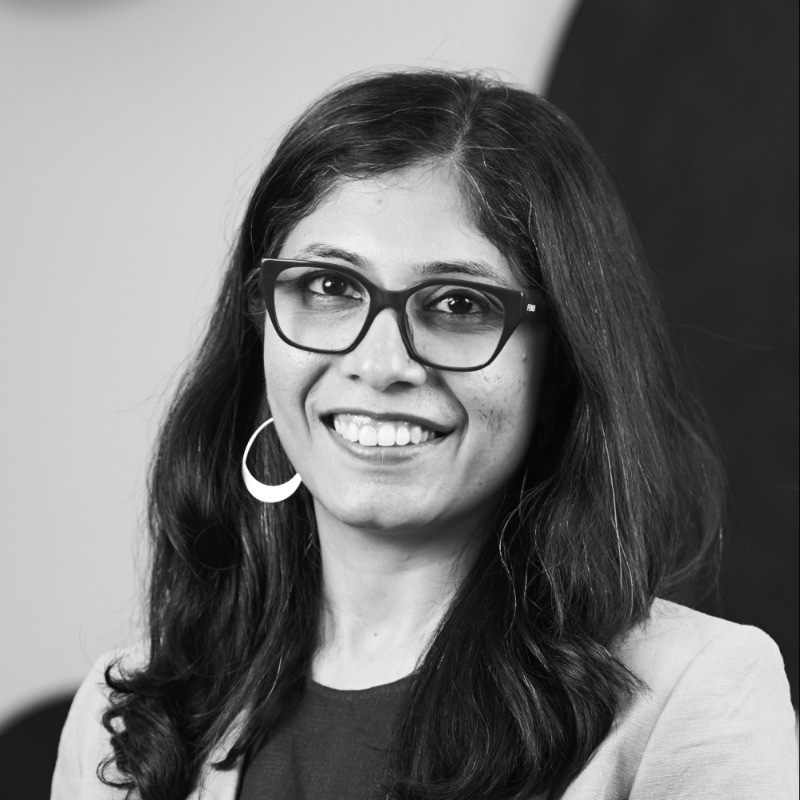
Bhakti Dudhara

Guests