
In this episode of Paradigm, we sit down with Mohit, a digital and product leader at Stolt Tankers, who has spent close to a decade inside global shipping across container, dry bulk, and chemical tankers. His journey spans Maersk, Swire Shipping, BHP, and Stolt, giving him a uniquely end-to-end view of maritime logistics across continents, cultures, and commercial models.
Unlike fintech or e-commerce, shipping is still early on the digital maturity curve highly regulated, process-heavy, and deeply reliant on manual workflows, paperwork, and legacy systems. Mohit breaks down why he stopped calling it “digital transformation” and instead reframed the journey as “digital evolution”, a more human, patient and realistic path for an industry that resists abrupt change.
“Technology is the easy part. The real work is bringing people along at the pace they can run.”
Mohit Kumar, Global Director Business Technology and Innovation, Stolt Tankers
From customer portals and “ship-to-customer” platforms to crew self-service apps and multimillion-dollar fuel optimization systems, Mohit shares how his team built digital products that actually ship, get adopted, and move the bottom line. He discusses how design thinking, domain literacy, product ownership, data structuring, and change management all play a bigger role than code in maritime innovation.
The conversation explores:
- Why shipping digitizes slower than other industries
- How to build tech for customers and crews across continents
- Why design and product ownership came before engineering
- How Stolt introduced measurable digital ROI via fuel optimization
- Why change management beats technology in transformation work
- Why storytelling & pace-setting matter more than tools
- The three stages of digital evolution (Digitize → Extend → Transform)
This episode is a rare look at how innovation happens in legacy industries, where transformation isn’t about AI stickers, dashboards, or buzzwords, but about aligning ships, crews, customers, regulators, and business incentives around a future state that actually works.
About Paradigm
Paradigm is a podcast by Aubergine that explores transformative journeys where technology impacts human lives.Through candid conversations with visionary founders, product leaders, and innovators, we uncover stories of bringing ideas to life.


More ways to listen


Podcast Transcript

[00:11.2]
Welcome everyone to the next episode of Paradigm. Today as a guest we have Mohit from Stold. Mohit, thank you so much for joining us today. A warm welcome to you. We look forward to forward to an amazing conversation today.
[00:29.3]
Let's get started with a little introduction about yourself. You have been in this industry of shipping since a long time. Let us understand a little bit of your journey so far. What have you been doing in the tech space all these years? First of all Bhakti, thanks for having me here.
[00:46.7]
And specifically being in Ahmedabad, flying down all the way from Rotterdam. It's it's nice to be here. Let me say that I joined shipping back in 2016. So it has now been almost going to be close to 10 years.
[01:03.0]
Next year I joined at Maersk first, where I was a part of the process and technology team and we looked at of course a lot of work that we wanted to do on the inland side. So that's when then we kind of laid the foundations for must, let's say go into their own logistics, area that they wanted to go to because I was responsible for all the inland work in process and technology there.
[01:27.7]
Then from there I got a chance to work in Mumbai, and then a brief stint in Rotterdam, and then after that I moved to Singapore to work for Swire Shipping. And Swire Shipping does a lot of container shipping into all the Pacific islands in the world.
[01:46.8]
So he heard of all the beautiful highlands of Fiji, Papua New Guinea. Yes, we have all heard of, of them. That's where Swire Shipping does. It's a very niche business, but inside shipping, inside container shipping itself. Then I got to actually work with bhp, that's an Australian mining company, within their maritime division, based in Singapore itself.
[02:11.6]
Okay. But that's where I learned the tricks of the dry part of the, of. I see. And then I moved to St almost five years back. So this was in February 21, where again I was kind of asked to look at what can digital do for stall tankers?
[02:30.8]
Wow, that's like a lot of area you have covered within shipping in almost a decade worth of time. And as you all know, shipping is not a very tech first industry. Right. And you are trying to build digital transformation initiatives in this industry.
[02:50.2]
What are the challenges that you face? Because not many people even understand the role of tech over there. Right. So help us understand how you even navigate this landscape of making a difference through technology in this industry.
[03:05.9]
Yeah, so first of all, I have stopped calling it digital transformation because I think people get scared with the word transformation. We call it digital evolution. I think it's a little bit easier for people to understand. It's not sounding like a big change. It does not sound like a big change.
[03:21.5]
Yeah, because I mean humans resist change. Right? I mean that, that's so true. That's, that's normal for us. So the word transform means that something has to change. But evolution probably comes a little bit easy for people to understand. Yeah, it's natural, slow.
[03:37.1]
So from my perspective I started calling it evolution rather than transformation. But you're right, right. I mean if you look at the whole digital maturity curve and you can pick up any, you know, any of these magazines that talk about digital maturity. Yeah. Generally you will see the fintechs of the world and the E commerce of the world in the, in the far right, you know, at the top saying that these are the ones that lead ahead of the curve.
[03:58.4]
And then it's an S curve essentially. And towards the left of that S is where shipping and you know, a lot of you know, traditional industries. Right. And in my view if you now double click into, into shipping, you will see that the likes of Merce for example which are container are on the far right.
[04:15.6]
I think they've done a lot of good work over the last few years on, on specialization and, and when you start coming into the stool tankers world which is a parcel chemical tankers, just to explain the audience here, we essentially ship hazardous liquid chemicals in small tanks across the world.
[04:34.1]
But of course we have these tanks in a ship. Wow. And we have to move you know, different cargoes for different customers at any point of time, in those, in those tanks. And that industry is pretty, was pretty much you know, at the, at the, at the, at the left of that shipping maturity curve itself, the S curve itself.
[04:55.2]
So when I started back in 2021, it was interesting that then the president of stoltankers said that and stole tankers was, was, is a, is a very interesting, you know, company if you study, you know, its history. Of course it was formed more than half a century back.
[05:12.6]
And we were one of the we are still one of the pioneers in liquid chemical shipping. Then President Lucas Vos, when, when, when he hired me, his ask was very clear. Digital needs to make money. Right. So he does not want another IT organization which just keeps on, keeps the lights on of course that's an important part of the business.
[05:35.8]
I see. But he really wanted to understand how can digital change the bottom line of the company. It has to make a measurable impact. Absolutely. I was then asked, where do you want to start? Right. Because of course it was. I was given a blank sheet of paper.
[05:51.6]
They said or Lucas said, I don't know what I can, what I want you to do. So here's a white sheet of paper. Go figure out what you think, you know, you can do in the digital space. In a way it was very entrepreneurial. Yes. For me to have that opportunity. And personally for me, I always start with the customer.
[06:10.9]
Right. Because at the end of the day. Absolutely. So that's the person who pays the bills. So for me it was important that we start understanding from the customer side, what are their pain points or challenges that they have in working with stolen tankers.
[06:27.2]
And we looked at that part to say, okay, what can we do on the digital side there? I see. But you cannot really create a digital interface towards the customers with a very manual process internally. So as we started peeling that onion, we figured out that there were many layers both towards the customers but also operationally, that we needed to look at to really make digital stick in stored tankers.
[06:53.1]
And then of course as Stoltankers, we also have a part of we have our own assets or ships, that we run and eventually ship is the shop flow. Customer is the person who pays for the cargoes to get to move.
[07:08.7]
And therefore it's important that we are able to link the ship to the customer. So that's why we actually call our customer platform, a ship to customer platform. So we actually make the ship available to the customer and then all the aspects of, of the work that is happening on the ship, in the office or on the shore as we call it that the customer needs to know is linked through a digital framework.
[07:34.8]
How was the process building this huge team? I'm sure it must have happened over this past five years. But what type of roles you needed when you were trying to build this team? Yeah.
[07:50.8]
So I remember the first person that I hired was actually a design person. Right. And hopefully that's music to your ears because I do believe that having the right design principles in place are super important for any product success.
[08:10.1]
I have always said so whenever people ask me for training manuals or software products. And I say this in Stolt also multiple times. That and of course credit To Steve Jobs that I say that an iPhone never comes with a manual. And I think in the previous work that I was doing at Swire and I found a person where, we thought the same way.
[08:33.1]
So, he's Aries. He does not work for us anymore. I think he's taken all professional. He was a gym trainer also. So probably that's the direction that he wanted to go. But he used to say that if my design needs a training manual, then it's not a good design.
[08:50.1]
So. True. Right. And that kind of stuck with me because of course when you're trying to do something in an industry that has not seen it, if you make things very complex for people to use, you will turn away a lot of people. So we got a lot of inspiration from airports and how airports push their information, for example, to customers.
[09:11.8]
And all the stuff in the physical world took all the effort to explain that to our people internally to get that buy in. So for me, having that design person who really understood how to connect logistics and shipping, but then have the view that I don't need a training manual to train people was super important, to make these products.
[09:31.9]
Then of course we needed a lot of technology people. So we got in technical architects, etc. Etc. But then over a period of time we also felt that, the understanding of product ownership is also not very, you know, very well known in this industry.
[09:48.1]
They did not really understood what is a product owner supposed to do. So we started hiring a lot of product owners, we started hiring a lot of design team members. And then finally the piece that was missing was the data piece.
[10:03.4]
Right. Because again, we are not an E commerce player or we are not, you know, in fintech, etc. Etc. We have very, you know, big customers who have certain needs and a lot of data that needs to flow. So structuring that data in the right fashion so that it can be made available to the customer or to whoever who needs it, is super important for our success.
[10:23.1]
So then we also ended up building a, data science and analytics team. Wow. With multiple members. So nice. You are thinking like way ahead of time and trying to have the right people before you need them. Correct. And then, and then one thing that I made sure that we do is that we hire a very diverse team with different backgrounds.
[10:40.5]
So I'm proud to say that I have a team based in, Manila, a team based in Singapore, a team based in Netherlands, and a team based in Houston. So, so we kind of also cover different time zones, global team, many different time zone. Very diverse. And of course we have a lot of our development that happens with agencies like yourselves in India as well.
[10:58.5]
Right. So, so we try to build that diversity so that we can also get a lot of ideas from, from different people. Ye. To make things better and make our processes better and make products. Finding business knowledge externally is going to be super difficult in an industry like ours.
[11:13.9]
Yeah. Right. To be very Honest, before 2021 you could argue that I had worked for five years in shipping. But when I came to Stol Dankers it was a different world. We, we are, as I said, we probably have taken the worst of both the worlds. Yeah. So to really understand how it works, you need to spend a lot of time.
[11:32.8]
Correct. But then I think, with the aspiration that, you know, today anybody can download an app from an app store and you click on it and it starts working. That's what, that's what the users expect and you don't have a lot of Runway to be able to, you know, build that knowledge in an extended team.
[11:50.9]
Yeah. So we said that what are the rules where we think having long term business knowledge would help us create that snowball effect in this digital evolution and those roles we hired internally and therefore a product owner who needs to sit down with the business teams and with the different stakeholders and really understand their processes and their pain points and really create value for them has to be internal.
[12:18.1]
So it's a great mindset here where you are trying to navigate and focus more on the right person and the core quality instead of any other fancy parameters. Yeah. And that's also what's important for you to at least in my view, when I worked in now in multiple shipping companies, I think the two things that you need to take into account.
[12:39.6]
One is make sure that you run at the pace at which your stakeholders can run. Right. Oh wow, that's, that's super important for me simply because otherwise you'll end up scaring the stakeholders and you don't want that. I mean eventually they have to be successful in what they are trying to achieve.
[12:59.6]
My job and my team's job is more an enablement job. Right. So, so making we run at a very fast pace, leaving them behind. It's not going to work. You will never get success. Work in tandem, but make sure that you adjust to their pace and then bring them slowly along on, on that journey with you.
[13:17.3]
Right. Because then you can run fast if, I mean a child cannot start Running. From day one, they have to go through the process of creeping, crawling, walking and running. Right? So you cannot just shortcut. You cannot. There is no shortcut. Go and run. There is no shortcut in life. So it's important that we kind of go through that process, even in this whole digital evolution.
[13:35.8]
And that's the first thing that I, that I try to do. And then I think the second thing that is going to be super important is create that safety environment where it is okay to fail, because we will make a lot of mistakes. Right. We'll have to do a lot of rework.
[13:51.8]
And that's okay till you learn from those and you make sure that, you know, you're moving forward. So trying to experiment a bit, even if it fails, learn through it, try something new. Because there are a lot of moving pieces, I think, and you don't know all the pieces.
[14:10.4]
Right? I mean, like, so to me, in the classical IT world, you will go to a stakeholder, ask them for a requirement, go and build something, show it to the user, and the user might say, well, you know, I don't know, whether I wanted this or not. Yeah, I think in the design thinking world, we start with the concept that customers don't know what they want anyway, and we should not give them what they want.
[14:32.8]
We should give them what they need. Exactly. And that takes a lot of time and a lot of iterations to really figure out, you know, what is it that the customers or the users really need. So if you don't create that safety environment for people to iterate, make mistakes, et cetera, et cetera, then they also stress your people out to a certain extent.
[14:50.9]
Let's talk a little bit about running the operations of this whole initiative. There are so many team members now trying to understand processes across different geographies and functions. People facing customers or internal crew members, so many of them right now.
[15:11.7]
What's the ideal process? You usually strive to ensure that, okay, this is the process we would like to follow to ensure there is some accountability outcome, the measurable bottom line is achieved.
[15:28.3]
You know, how do you go about setting up the process? Yeah. So, for example, I can talk about stuff that I did personally. I don't want to take away credit from my team, but what I did, for example, was four years back, since I was the only person and we had to start this work with my, with my design head.
[15:46.1]
We spoke to 15 different customers, and there were probably four or five people from each of the customers who joined so close to about 60 people. And this was of course during COVID times. So it was all remote. And remember Aries, and I, were in Singapore and we used to do calls at like midnight because of course the clients were in Houston or in the US etc.
[16:07.0]
Etc. And we have three kinds of customers. So we have customers who produce products. Those are the manufacturers, we have customers who are acting on behalf of those manufacturers. So those are brokers. And then you have people who are trading the goods, but they don't produce it. But there's this trading. Right.
[16:22.3]
So, so we spoke to also all three different. We also figured out what are our customer segments at the end of the day and made sure that we had, we're speaking to each of those customer segments and enough size within those customer segments to then summarize what is that common problem or common point that we're trying to get at common pain point that we're trying to solve.
[16:43.7]
Yes, right. And, and that was super important for us to really understand because you also wanted to create a product and the first code that would appeal to most of the customers, if not all. So of course that was where the value creation for the user happens. But then the other access that we also put, which again is a little bit, I think specific to our own company is we see how difficult it is going to be to execute it.
[17:10.5]
And I think, in today's world with artificial intelligence and with so much of help available online, while of course writing code and developing products is complex, for us that was not the biggest deal breaker.
[17:26.8]
I think for me the biggest deal breaker was is this data even available in the digital format? Oh yes, of course. Right. Because still digitizing. Because you talked about the crew, if you go onto a ship, there's so much of paperwork that actually gets generated and some of it always remains in paperwork.
[17:43.1]
Oh, is it? Right. So we then had to look at and say, okay, is there really a digital data version of this data that you really want to make available to the customer? Because if not, then you have to first digitalize. Sorry, that process, you have to digitalize that process. Before you even make that data available to the customer.
[18:00.8]
So why, why do they have so much paperwork in the shop? It's a traditional industry, it's regulated. You know, there are surveys that happen, et cetera, et cetera. And also sometimes it is the customer requirement. Right. So a lot of our customers have been working like this for a very long time also.
[18:17.4]
So In a way, if you look at the digital world, we didn't have only had to change storage tankers. We had to actually actively work with our customers to also change the ways of their working at the end of the day. So we kind of changing that ecosystem to a certain extent. If I can take that leap of thought and say that work with customers, make sure that you understand their or users and make sure that you understand their pain points very well.
[18:43.8]
But make sure that you also sample them very well. So even today, for example, when we do internal development. We will speak to our team in let's say if our three major commercial offices are Singapore, Rotterdam and Houston, we make sure that we speak to all the three offices or have representatives from all the three offices so that we also understand their local nuances.
[19:03.4]
And then how does it translate from the process standardization to the actual building of the product? Yeah. So that's where the magicians of my team come into play. Right. So I think the design teams first, you know, get involved where they come up with wireframes.
[19:22.3]
And there's a lot of iteration that happens on those wireframes with the end users. In one of the works that we're doing, we're actually working with the end customer also. I see. And really, you know, figuring out whether what we're building makes sense. Yeah. Because again, I'm also a little bit a big fan of continuous improvement and lean.
[19:41.3]
And if you, you know in that philosophy we say that we spend 70% of the time in why and the 30 was in time in what and how. Right. So the more time you spend up in, you know, before you come to the development process to really understand whether what you're building makes sense.
[19:58.4]
Correct. Iterate that with the users before you come to something that really works, then the rest of the process is easier. I'm not saying is, is can be accomplished in a much smaller time frame. Otherwise you end up doing a lot of rework later on. So I would rather you know, iterate a lot in the, in the why phase, before going into the development phase.
[20:16.4]
So build the right thing and then build the thing. Right? Correct. Tell me a little bit more about any success story. You know, you built so many of these products, you know, anything that comes to your mind which made an actual impact like in the end user, like you know, they really saw the difference this solution or this product made in their lives.
[20:43.4]
Yeah. So as a shipping company, and I'm sure any Logistics company. Fueled is the most important expense item. Right. So, so even like when you're running your car, for example, on a daily basis, cost per mile. Cost per mile is, is super important.
[20:59.6]
And for. Of course it is, you know, so of the total expenses that we have, fuel probably contributes 40 to 50% of our expenses. So the better we manage fuel, or bunker as we call it in our own industry, the better our borderline can be nice.
[21:18.1]
Now when a ship is going through multiple ports. Right. As I said, you know, we follow the routing as a container shipping line. So it is possible that, let's say a ship that leaves Houston, goes via Panama Canal, goes into Japan, China, Taiwan and comes all the way down into Singapore.
[21:35.3]
So there are multiple port calls it is going to do. And we of course need to make sure that there is enough fuel for it to do this entire routing. I see. There are no fuel stops. And of course every port can give you fuel. But you don't also want to carry a lot of fuel because if you carry a lot of fuel then you carry less cargo.
[21:55.7]
Right. Because a ship only has so much of capacity. So if you put more fuel in, then you put less cargo in. Yeah. But if you put less fuel in balance, then how do you make sure that it reaches the ports? Right. Because at the end of the day you want to buy the cheapest fuel that's available. Yeah. And that's the problem we wanted to solve with our business stakeholders.
[22:13.4]
So we said that on any voyage, how can we make sure that we plan the fuel in such a way. That eventually I end up buying the cheapest fuel possible on that voyage without compromising the amount of cargo that gets loaded on the ship.
[22:31.9]
Excellent problem statement. Yeah. Because at the end of the day cargo brings me the money. But of course I also want to minimize my fuel cost cost as much as possible. Nice. And this is where while the fuel gets planned on the ship. Sorry. On the shore side. So in the offices.
[22:48.1]
The actual consumption happens on the ship. So there was also a lot of ship and shore communication. Yes. That, that we also needed to manage. Right. And. And I think actively working with what we call bunker planning and purchase team and also with the ships, we ended up creating a product that actually helps us create a better plan of what that fuel expense expenditure, should look like.
[23:14.0]
I see. It tries to alert the shore side when we see deviations which are not making sense, which will then lead us to buy fuel at an expensive port. On that voyage. And it also then creates a, feedback mechanism between the ship and the shore to make sure that the fuel is planned equally by the ship and the shore because ship needs to execute it.
[23:36.9]
So while the shore might sometimes say that, oh, you should not buy fuel there. Yeah. But the ship might say that I'm going to run out of fuel and I cannot make the next bits. Wow. Communication. So, so we actually, this was a completely manual process done over emails. Wow. And phone calls and you know, calling the ships, et cetera, et cetera.
[23:54.7]
In the last one year we've completely now digitized that process. Wow. Which has led to actually close to about 2 to 3% savings on our fuel costs. Wow. Right. And so this is, this is a, this is a clear case where you created a bottom line impact.
[24:12.2]
And what's amazing is that today 75% of our fleet is on this platform. And it's actually being managed by just one person. Nice. So there is a lot of measurable impact.
[24:27.5]
Correct. So this one person is creating the plan for almost 75% of the fleet. Whereas earlier it was a operator working with four to five ships which was doing that. Of course the operator is still involved because they need to make sure that everything works well. But the fact that you centralize the entire planning system, you create that visibility and timely alerts for this planner to say, okay, which are the ships that are most important that I need to work with?
[24:51.5]
Because yesterday probably they were working with all the ships. Yeah. Today they automatically look at ships where you can potentially run into problems and they only focus on that. And that saves a lot of time for them, also helps them, you know, plan these things effectively. So there is some predictive, analytics happening as well.
[25:10.0]
So the alerts are based on the fact that, which are the most high risk alerts? That, that the user should be informed. The whole system is proactive rather than reactive. Correct. And through this human communication channels, I think we are also saving on the time, probably miscommunications and misalignments, I guess.
[25:30.8]
Yes. That's fantastic. So saving time, fuel, establishing clarity, being more proactive rather than reactive. Yes. And there's just one place that people need to go instead of individual mailboxes.
[25:46.8]
Right. Which was happening. So I think top solution. Yeah. So you can clearly measure the impact here and really see the the value that it brings to story, but then also the value that it brings to to the users. And how did you see people adapting to it. Were they resistant or did they kind of, you know, readily accept this change in the way of working?
[26:08.9]
The technology team or the digital team, as I said, is an enabler. It can create the right products that need, that meet the needs of the user. But the change management journey is a shared journey at the end of the day. But we cannot lead that change management journey. That's why the business anchor is super important to lead that change journey with the shifts with the shore staff.
[26:30.2]
To make sure that it essentially gets done. Huge difference in the way you think technology and other product owners who might be more in the tech industry itself, you know, somebody who is, let's say a CTO in a tech company, they don't have to convince people why tech is important.
[26:49.8]
Right. But for you, it's a very different, you know, audience and a very different set of stakeholders. You know, what is, what are those nuances or skills which are unique that comes with a role like yours where you are trying to enable a digital world for a traditional non digital space like this?
[27:10.2]
You know, I'm sure some of these skills nobody taught you in colleges or you know, real world ends up teaching you some of these. So what are those few, skills that you end up having to need in order to play this important role?
[27:27.0]
Yeah, so I think one is storytelling I think is super important. Right. So people like stories, they understand stories more than technology. So painting that vision of what would their world look like once they have adopted all your products or whatever products you're working with.
[27:50.9]
I, think is, is one thing that is going to be super important for a leader in this space or even a product owner in this space, to be honest. The second thing that becomes important again in my view is explaining how the product does what it does.
[28:07.4]
So if I take an example of what we've been trying to do and of course now with this whole AI thing, not the AI thing, but with AI being talked about in probably every boardroom that you enter into and every meeting room that you entered into. Again, if you were a tech player and you've been working in E commerce and you know, in, in, in fintech, maybe this is very easy for you to explain.
[28:31.7]
Yeah. But for a person who again has been doing this work for so many years, if you now want to put AI on that process. Yeah. The first question is, it's going to ask you, so how does it do what it does? Yes. And a lot of our, lot of the products that we have out there.
[28:49.5]
Don't explain that. They say the input comes in. Then there's a black box, the magic happens and then the output comes out. Right. But what does the black box really look like? Because that's what people want to know, to be comfortable with, you know, the output per se.
[29:06.1]
Because a lot of times the output will not be the same as the output that they were expecting in their minds. Yeah. But for them to accept that new output, they need to really accept the process of transformation of that information input. So your product really needs to open up the hood and make them see how the data is flowing, what's important, what's not important, to arrive at that decision, which is really, I don't think important in a, in a, in a tech first industry because people will accept it that yes, this is a good output.
[29:36.4]
Right. So a lot of our products therefore, and a lot of our time is actually spent in making our stakeholders understand how it, how it really works, what is really happening under the hood, what kind of transformations we do on data to be able to generate this this output that you're seeing.
[29:55.5]
And maybe the final thing that, that I think you need is is the business sponsorship at the end of the day. Right. So can all of us look into each other's eyes and say this is what we're trying to achieve. If achieved, this is the value that we will create and we will stand behind this idea no matter how many times we will fail.
[30:19.8]
So the business reason for whatever tech you are doing has to be very clearly defined and aligned. These are great skills and I think tech first journey transition into something like this.
[30:35.2]
There are so many skills that kind of keep building and growing into. You mentioned AI. So I'm curious to kind of zoom in into that aspect. How are you trying to leverage AI in this industry and processes inside?
[30:53.4]
Yeah. So I think AI also has multiple layers. Right. And I think for people who have been in the tech world, we will say that we've been doing this for a very long time. Yep. So if I try to again peel the onion on AI, there are aspects of machine learning, deep learning, gen, AI, etc.
[31:12.5]
Etc. And to me we've taken the same approach as we have taken previously with all other technologies. Right. So I think it's important to be aware of what's happening in the AI world. But you still need to look for the right problem to be solved.
[31:27.8]
Correct. I personally believe, and I think this is on me personally. I think if you look at the Harvard Business Review lately that came out on the success of AI programs and I might have the number incorrect, but somewhere in the upwards of 80% to 90% of the programs don't give you the return on investment that is promised on those programs when AI was introduced in those programs.
[31:53.2]
So our approach still has been is this the most important problem to be solved and if AI is the right solution to it, we will bring it in and not the other way around. Not the other way around. I want to use AI. Let me figure out where to use it. Right. And of course like there are a lot of tools available with chat, GPT and Copilot and you know, perplexity and of course I use them on a day to day basis to improve my personal productivity.
[32:17.3]
Yes. But from a business context perspective, the problem is important to be solved. Right. And, and when they from that problem, if AI will help you solve the problem. Absolutely, go ahead and do it. But if AI is not going to solve that problem for you, then also don't try to force fit the solution also.
[32:34.3]
Right. So sometimes simple digital workflows will, will be the answer. Yeah. And sometimes of course AI enabled workflows will be the answer. So interesting. So, so to me, wherever we can, you know, save human labor, save a lot of time for our users to do what they need to do using gen AI and other technologies, we put that into our plan and say okay, that's how we will do it.
[32:56.0]
But then we also do other programs which are also simple digital workflows like the, you know, the bunker saving fuel that we talked about. It has zero AI on it. Yeah. But it saves multimillion dollars for the company and we'll still pursue that. Now in my view, what is also important in, in the work that we've done with AI is you can build the best AI solutions.
[33:17.6]
But if you don't have the right data feeding those solutions, those solutions will not work. It will be garbage in garbage. Correct. And I can say with one show. One thing that I can say with Shorty is that in all the companies that I worked in. Whether as a consultant or you know, as a part of the teams, data is the most challenging part in all these companies.
[33:38.2]
And you don't know if it's accurate. Correct. If it's not accurate, the outcome of AI is not accurate. Correct. If the outcome of AI is not accurate, you can't trust the outcome. Not trust the outcome. So therefore first get your fundamentals Right. So for me, any AI, program has to first start looking at your data landscape and say which data can I trust and which data can I cannot trust?
[33:58.9]
I see. And then you start on that AI journey. If you build that AI journey AI product but then as you said, put the wrong data in. People will lose faith in in AI very quickly. And they said either this company does not know how to do it, or this does not work for me, etc.
[34:14.3]
Etc. So we have never run behind technology. Yeah, right. We have always run behind problems that create the biggest value for us, and then bring in the right technology and the technology partners to solve. I'm glad you keep people first at the center of your problems.
[34:31.0]
Awesome. Mohit, let's talk a little bit about, you know, innovation. You know, we are not just trying to transform from some manual processes to digital processes. What example comes to your mind when you know, you have tried building something which nobody else has done before.
[34:51.9]
You know, how have you approached innovation in the industry? So one of the things that probably I've not touched on is the hardware side of our, of our business, which is the ships. And of course to run the ships you need people.
[35:07.2]
So of course I'll always come back to people, at the end of the day. But ships is where the magic happens in our industry, as such. And the crew, which is probably spending six months on board the ship away from their families, and sometimes even more is the most important piece in how we really move the, or create value for our customers.
[35:29.9]
And for a very long time, the process for bringing crew on board, managing you know, all their documentation and even managing their expenses or advances or everything that, that the crew needs to do to essentially work with Stold was a highly manual process in a sense that you know, emails would go out and you know, copies of certificates would get courier, etc.
[35:55.7]
Etc. Passport information had to be literally paper courier, paper courier, etc. Etc. Or of course, you know, scan them and then email them. And then somebody had to put it in one place and then go and coordinate with the crew by giving a phone call or an email, etc.
[36:12.2]
Etc. On, you know, what's really going on. I think in the work that we have done in the last few years, we've completely digitized that process and we were actually ahead of some of our vendor partners in building the solutions. And being one of the first in the market to be able to completely build something.
[36:31.3]
What we call As a crew self service app, where essentially a lot of work, that the crew had to do whether on board the ship or away at their homes, but trying to get on board the ship, from a manual process to a complete, completely digital workflow.
[36:49.3]
And one of the things that I think we've solved brilliantly is how we manage advances through the system. So of course in a crew when they come to a port, they want to take some advances and go and buy some things for their family members. So that's a petty cash that the captain keeps and then he kind of gives them to the crew to spend it.
[37:10.6]
But then of course it needs to be recognized and reconciled at the end of the day. Day, because you know, it's an expense to the company. And that was an extremely painful process earlier on. And at the end of the month when the payroll process used to run for the crew, all those things had to be taken into account to make sure that the right amount is reimbursed to the crew.
[37:30.3]
I see. So the captain was maintaining an Excel file. You know, people used to, you know, reconciliation was difficult because sometimes you forget, sometimes you don't forget. There was no approval workflows, that could be properly governed. And now we have completely made this process online through the system, where the advances can be requested, they can be approved by the captain.
[37:52.0]
It automatically syncs through our payroll teams, to be able to make that process much easier. So earlier if the crews were not, the crew members were not getting paid on time because all this advances information was not making sense. Today, with the work that we have done, and specifically thanks to you and your team in building the right workflows, on that, now most of our payrolls crews are paid on time, which is, which is.
[38:17.5]
And of course we do the best to pay on time. But given that the numbers don't match, then a lot of, you know, discrepancies happen and it adds to the work and has to the delay. So given that that payment is super crucial because of course, most of the crew members will send money home to, you know, to their families, etc.
[38:33.8]
Etc. Making sure that that process takes out the stress from both the crew, but also from the people who need to process it was something important for us. And I think now we have a lot, much, much more happier crew with the new designs that we did.
[38:49.3]
Recently there was a lot of positive feedback from the crew that they find it very, very easy to use and it's not complex and it works. There are no issues that we have in all the uploading of documents and these advances. So we have a much happier crew than what we used to have previously.
[39:08.6]
So powerful. Because I see there are too many complex manual processes we are trying to understand, streamline, digitize and pretty much innovate because we are trying to do something nobody has done before. Right. Still creating something which has a very emotional connect that you.
[39:26.8]
To pay the core team members on time. Because of this solution. Mohit, I want to touch base a little bit on our partnership. You know, it's been many years now that we have been working together and I wanted to understand what made you think of partnering with us and how did you see value in working with external partners walking hand in hand for a long period of time trying to solve such complex problems?
[39:56.4]
Help me understand, you know. Yeah. So I, I probably go back to the first few interactions that we've had. And this was probably a couple of years ago. And, and I think when I spoke to you specifically, I think we kind of connected at the same level.
[40:15.2]
Right. Where we said that, what's really important is that you spend as you said. You know, first you build the right. No, you, you. What did you say? Can you repeat what you said? Build the right thing and build the thing right. Yeah. So you first build the right thing. And I think that kind of, you know, stuck with me because that's the way I also think about how you develop products.
[40:35.1]
Yeah. And the more I worked with your people, I realized that all of them think like that. So I think it's great. Kudos to you and, and all the work that you've done over the last 12 years and running this firm that everybody is BTI in in many ways.
[40:51.2]
Oh my God. And, and, and the fact that each of your team members follow a very, a very similar process and how do they look at design thinking and ask a lot of open ended questions to really understand the needs of, of the user.
[41:08.8]
Is something that I've not seen in, in probably in other agencies, that I've worked with. A lot of people are like product owner, tell me what you want and then they will go and design it. Right. And that's where probably the design team stay. But if you look at all the work that we have done with your team and even I can speak on behalf of all the product owners that I have in my team that I work with, your team members, they're very comfortable with you with Your team having discussion with end users even without the protocol being involved.
[41:41.2]
So we never think of you as an external partner. You are a part of our, our company in many ways. An extended arm. Yeah. And we always look out for you, you know, to augment our staff whenever there is peaks that we have in our, in our work. And I think with, with some of the team members, they have been with us for so many years now.
[41:59.1]
It feels like they've always been stoled. So sometimes. Yeah, so, so they're more stolen than Aubergine Fin. But maybe that's a, that's success to you in, in wrong ways. That's what partnership is. Right. Any example that comes to your mind, you know where any of the Aubergine team member was part of a meeting with a lot of stakeholders and you know they were able to actually explain the business value as well of the work they are trying to do.
[42:27.7]
Anything that comes to your mind? Recently we are having a discussion with one of our key customers on how they can start planning their supply chain within our own ecosystem. And I had actually your UX or your user experience architect lead that discussion from what is the problem we're trying to solve?
[42:53.1]
Why is the problem important? What value does it really create? And kind of take the client through you know all those designs that, that that person had done. And for a moment I felt like I should have not been in this meeting because a person can run this independently without me.
[43:10.8]
And the fact that you're not even speaking to store people. Yes, you're speaking to stores customers and you can actually have that conversation exactly like a stored personnel would have is, is, is kudos to you. And the fact that at the end of the day when the meeting ended the, the both the client teams and the store team said that yes, this product will create value for us because this will take away the friction that we have or the lack of transparency that we have in the, in the information that gets shared.
[43:37.7]
And, and that was something that was. You need a person, you know, with that caliber to be able to execute those calls properly. Yeah. Thanks. Thank you. Thank you for this beautiful observation. I sometimes don't have visibility into nuances and it's great to know this.
[43:57.0]
I think we recently also started partnering for some tech solutions and technical architecture level discussions. You know how have you seen that playing a role in the whole team and the equation?
[44:15.8]
Yeah, so I think we started on the architecture work recently. I think it's just been probably, and I generally get these things wrong, but maybe a year or so, that we've now been working together and I think there are two things that I see.
[44:33.0]
I think your technical teams are very proactive in finding areas and opportunities to improve the product, which was probably not the case, previously. So again, that comes from that aubergine culture that, you know, you build the things.
[44:49.9]
Right. So the fact that the person takes the initiative on his own, to be able to go and find, you know, ways to improve is, is something that is great. And then I think the second thing that I find is, I don't find your teams worried about speaking their mind, which I think is super important in building the right things.
[45:11.5]
Again. Right, because. Or, making sure that the right things are built because at the end of the day some partners might think of themselves as vendors and say that, okay, let's just do what the client says, right? And then we will do a change request thing that this is not what you want, etc.
[45:27.5]
Etc. Which is of course stressful for the client. Yeah. But then also there's a lot of, you know, money going down the drain from, from my perspective. Yeah. But the fact that we can sit down and have a very open conversation. Conversation and without having any, you know, worry about getting implicated for what you're saying, etc.
[45:42.6]
Etc. I think is, is again a culture that, again, kudos to you that you built within the organization that really helps us make sure that we are building the right things at the end of the day from, from day one. That's so nice. Actually, what I am taking away here is having a partner like you also is important for this whole equation too work, you know, providing that environment for people to speak their mind.
[46:06.9]
You know, I'm grateful the team is taking forward the legacy and trying to, you know, eat, sleep, breathe the values that we have here. But then they also need the right environment. And as, partners, whenever we are working with any client, if they provide that right environment, as I usually say, it's one plus one greater than two kind of an equation where we are actually able to work together as a team and build something really nice.
[46:37.6]
So I really appreciate the environment you are providing to them where they are able to speak their mind. Right. Without, the fear of getting judged or, you know, that environment is very critical. And you know, thank you for doing a great job having that team and environment, the world can work.
[46:59.5]
So let's, let's go a little Bit into the future. I know you said you don't think five years down the line, but let's take maybe a year or so down the line. What does the future at Stole look like when it comes to the tech aspect? So again, this is again my view and of course I'll probably, I've forgotten all the authors that I've read, but they've influenced how I think about these things.
[47:24.2]
Things. So in any digital evolution there are three stages of evolution, right? So the first stage is primarily digitalization where you essentially digitize the workflows, right? But they are as is workflows that you take from a manual process to the same process but working digitally.
[47:45.4]
Then the second stage is extension. So you essentially start looking at adjacent processes and making them slightly better. Right? So for example, if I look at the crew self service app, yes it was an app meant for interaction with the crew, onboarding, offboarding and let them do what they need to do, through forestalled.
[48:03.8]
But then the advanced management that we just talked about as a challenge to make sure that the payrolls happen on time was a natural extension to the app. Right. So we took a manual process, digitized it, but then we really extended it by bringing in other functions, functions that were not really a part of this process, but it was great to have them on the same platform.
[48:24.1]
And I think we have done that for quite a lot of our areas. Internally we are now at that stage where we can truly transform the business. That's where then the digital transformation really starts kicking. Right. So I think if you've heard of the analogy of that, you know, how a caterpillar becomes a butterfly.
[48:41.9]
Yes, I think we are at that stage now where, where we have a lot of processes that are digitized and extended and now we are working with our business stakeholders to really find, you know, what would that butterfly look like. I think in some areas we have that idea. In other areas we are still finding those ideas.
[49:00.8]
But I think that's the journey that we are on. Eventually. For example, if I can take the customer portal. Now the question really becomes now that we have looked at most of the post fixture process, right. And post fixture essentially is post a contract is signed.
[49:18.0]
What are the various data points that the customer needs and what does that user journey looks like? And we've tried to bring, digitize and extend that process as much as possible. I think the next question that we're really asking ourselves is how can we then start connecting with customers even more right.
[49:33.3]
To kind of then look at what does the customer do? Where does store fit in that piece? Or how can we start really looking at solving the problems from the customers where Stolt does not get involved? How can we just go up the value stream and really find out how we can start involving Stold from day one?
[49:50.2]
So that's how we are thinking of some of our ideas to really transform the processes that we have. I think the vision itself is evolving and transforming. That's quite a lot. I think five years. Close to. To five years, right?
[50:06.0]
Yes. That's a great journey to witness this caterpillar to butterfly transition. And I'm sure like in the next couple of years we'll see this butterfly version of, Stol. Nice.
[50:23.0]
So all of these are great takeaways with which I'm going to conclude this conversation today. It was such a wonderful time talking to you today. Thank you so much. Yep. Thank you for having me, Guzman. It was a pleasure.
Host
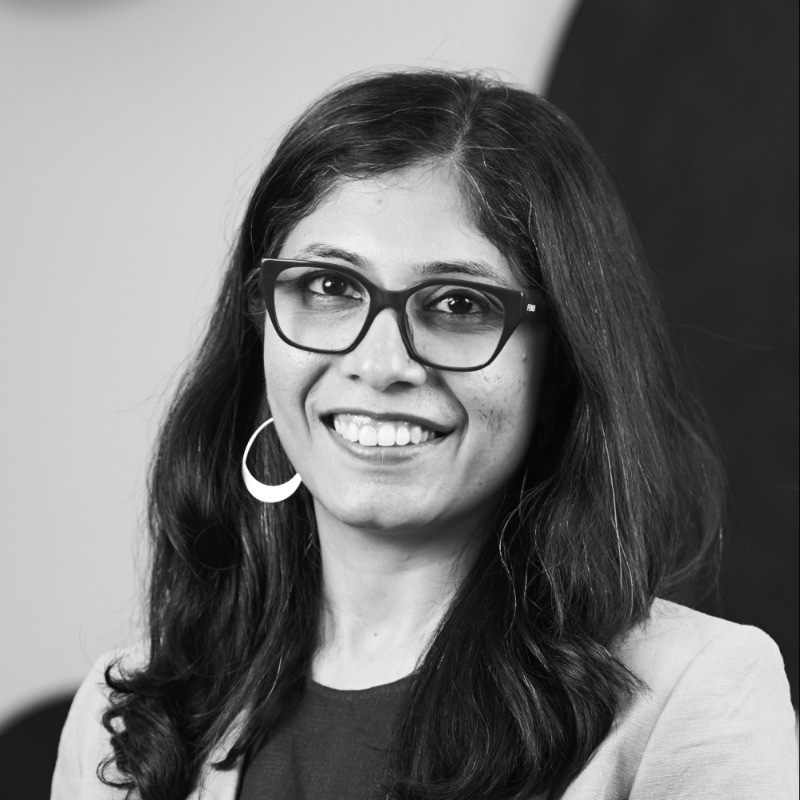
Bhakti Dudhara

Guests