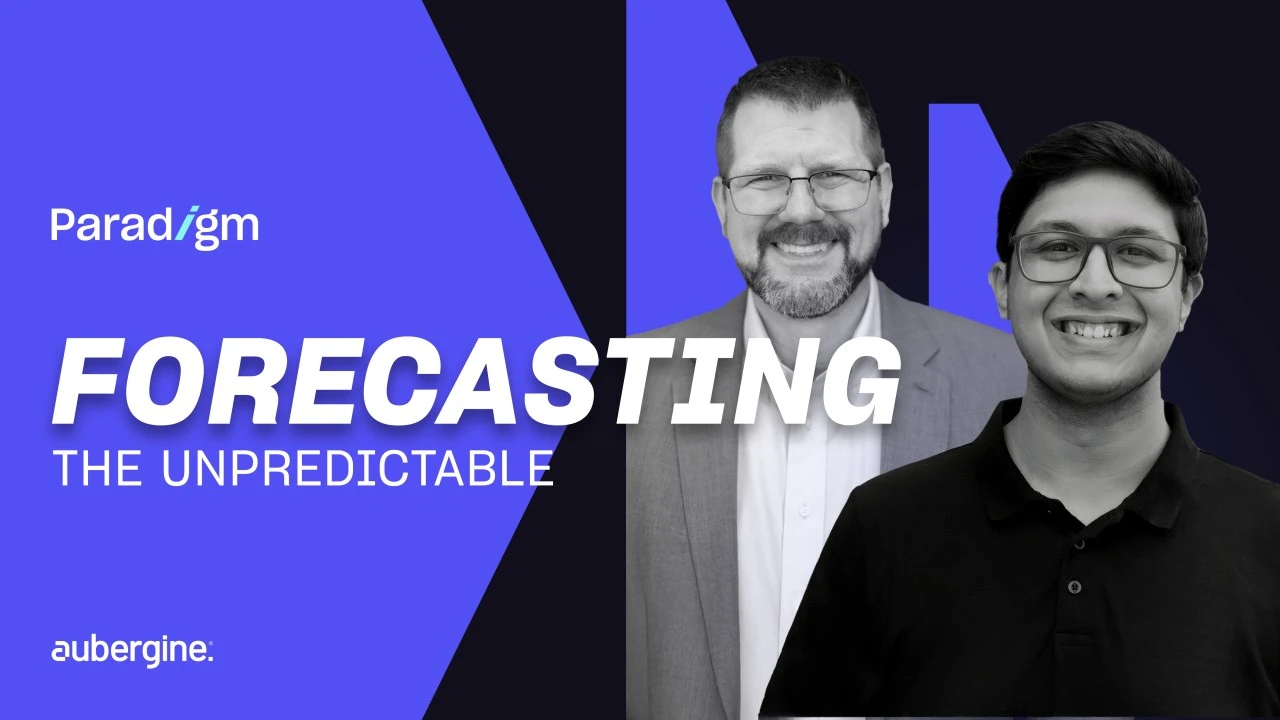

In this episode of Paradigm, we sit down with Jonathan Starks, CEO of FTR Transportation Intelligence, one of the most respected forecasting and market research firms in North America. With over 24 years inside the same organization, Jonathan has seen the U.S. transportation system evolve from cycles of capacity crunches to AI-era efficiency battles and has spent decades helping railroads, carriers, OEMs, suppliers, and analysts prepare for what’s coming next.
“I see AI helping companies run their own risk scenarios. Imagine asking, ‘How will a housing market crash affect transportation demand?’ and getting instant insights.”
Jonathan Starks, CEO and Chief Intelligence Officer at FTR Transportation Intelligence
He breaks down why trucking capacity is the single biggest blind spot in freight analytics, why holistic intelligence beats tactical dashboards, and why FTR is one of the few companies that can model trucking, rail, pipeline, waterways, and air cargo in one integrated view.
We also explore how manufacturers and carriers use intelligence for operational planning, capital allocation, pricing resilience, TAM sizing, and scenario planning across 6–18 month horizons.
The conversation dives into:
- The shift from observational data to predictive transportation forecasting
- Why real-time visibility is overrated for strategic decision-making
- How to measure utilization, velocity, and loads—and why they matter more than rates
- The rise of OEM forecasting cultures inside trucking and rail
- How AI will influence the intelligence industry (and where it won’t)
- Why financial markets care about freight signals
- Preparing for tariffs, volatility, and demand shifts before they hit
Packed with rare industry knowledge, cross-modal insights, and a pragmatic look at forecasting systems that actually work, this episode is a masterclass for anyone operating at the intersection of freight, economics, equipment manufacturing, and market strategy.
About Paradigm
Paradigm is a podcast by Aubergine that explores transformative journeys where technology impacts human lives.Through candid conversations with visionary founders, product leaders, and innovators, we uncover stories of bringing ideas to life.


More ways to listen


Podcast Transcript

[00:10.1]
So, Jonathan, thank you so much for joining our call today and we're very, very excited to have you. From our last conversation, we've been dreaming of, what new we will get to learn from you today. And we're very, very interested to understand, how all of this happened.
[00:25.6]
So, genuinely, grateful that you agreed to join and, and very happy to see how this conversation takes us. Why don't we start with a quick background of you. How did you end up in FDR? And you complete almost 24 years in FDR this year.
[00:41.5]
What an achievement. So talk a little bit about that journey. So the very first thing I ever did at FTR was my brother called me and said I need to burn some CDs for some marketing material for the rail industry. I was just out of school.
[00:58.2]
I had a dual CD burner that tells you how long ago that was. And, the first thing I ever did for ftr and ever since then I've done a little bit of everything within the organization. So like you said, 24 years, the last few years as the CEO.
[01:14.4]
But I've held a number of roles within the organization. Now we're a small organization. So, you know, any person wears many hats as you tend to have with a small organization. So that gave me an opportunity to learn a lot about different areas of business, but also different areas of the markets.
[01:31.5]
And so it's given me a lot of broad knowledge of understanding what's going on in the different marketplaces and how that's impacting other different portions of the market as well. So FTR stands for Freight Transportation Research. What we started out doing was really to understand the heavy equipment market in the United States all the way back in the 1970s and 1980s, to understand what the production environment was going to be for heavy trucks.
[01:57.9]
That's the sort of the progeny of FTR was understanding freight. So we could understand what the demand for equipment was. And then we've expanded that capacity over the years to better understand not just the trucking market, but the rail market.
[02:14.5]
We keep tabs on what's happening with the barge and waterways, what's moving through pipelines, what's going through air cargo. We want to have a broad based perspective what's happening throughout the U.S. transportation system. Right. So then we can hone in and really identify what does that mean for commodities, what does that mean for different modes of transportation, and then focusing in even further what's happening within surface transportation.
[02:40.5]
So what's really happening within trucking, carload, in intermodal. What's happening with capacity, rates, service, what does that mean for a carrier, a shipper? And then fundamentally, again, we always get down to that end result of understanding what does that mean for capacity in the market, what does that mean for equipment that needs to go into the market.
[03:02.3]
So that's kind of the broad sweep of what we do. We understand what's going on in the economy, so we can understand what does that mean for transportation demand and freight, how does that impact capacity and carriers, what does that mean for rates and equipment? Got it.
[03:17.6]
Wow, that is super useful. How do companies typically come to you? For what sort of use cases do companies typically come to you with? So there's a handful of key ones. I'll probably just focus on two key aspects, of particular clients that might come to us.
[03:35.9]
One would be somebody oriented to the production environment for either rail cars, heavy trucks, trailers and the supply chain and the tier one, tier two, tier three suppliers that are feeding into that production.
[03:51.9]
Right. So because they want to understand what is the demand for new equipment that's going to need to get put into the marketplace because that then affects their operational planning in the near term. Right. And then their strategic planning on how to prepare for capacity allocation, long term or if they need to do, you know, capital intensive work to build up their ability to support a bigger market.
[04:15.3]
So that's one key area. So anywhere from financing to market analysts to the sales function, we support their ability to better understand what that equipment environment looks like from the production side. Got it. Then we have what I would put under the umbrella of sort of the the freight market itself.
[04:34.5]
And that's understanding carriers, shippers, railroads and what's the market dynamics that they're operating in. Right. So a carrier might want to understand what's the capacity expectation, how tight are we looking to be? Right. If it's going to get tight, then we're likely to see better rates.
[04:51.7]
We're likely to see better rates. Well now they can plan to add in more capacity to support that. Conversely, you know, we, right now we're going through a time in which we've had very weak rates for an extended period. Is that going to change anytime soon? So helping them get a better understanding of what do the fundamentals of the economy mean for transportation demand, mean for those carriers and those shippers.
[05:13.8]
So that way they can have some better expectations on how to prepare for changes in rates, changes in available capacity, changes in service Got it. Interesting. What would you say are a couple of misconceptions that people have about the industry, just understanding transport capacity and market intelligence from all the deep research that you typically do.
[05:36.8]
The biggest one is trying to get an understanding of what is capacity in trucking. There is really good detailed data on what moves on the rail lines in the North American marketplace. So we know exactly how many pieces of equipment are out there, registered, available to be used.
[05:56.2]
Right. Then we can have discussions about how productive they are. But we know absolutely how many out there and available to move freight. On the truck side, it's a very fungible business. So just trying to understand how many active truckers are out there willing to move freight is not an easy precise number to get to.
[06:15.8]
We can measure how many, you know, authorities are out there or for drivers or companies for moving freight. All right. That gives you one estimate. Right. But it doesn't tell you if they're active or not. Doesn't tell you how productive they are at moving freight or not. Doesn't even necessarily tell you how many drivers they have in that company.
[06:34.1]
Right. So it just gives you one piece of evidence of if capacities, capacity is growing or shrinking. But we do a lot of work to really understand what is the true population of all the trucks that are out there. And then from that, what's the actual population of vehicles and drivers that are active in the marketplace?
[06:55.1]
Because we may have many millions of CDLs that are on the books. But most of them, either they're not really active in the heavy truck market, which is what we're focused on. Right. Or they're in the market at all, but they are hold on to their cdl.
[07:10.5]
Right. Maybe they're working construction. They need to be able to drive a truck every now and then. They're not really active in the freight market. So we do a lot of work to really try to understand what is going on in truck capacity. Right. So we can better understand what those market pressures are.
[07:27.5]
And we're one of the few, if only, that really have the type of detailed data to look at trucking from this really big perspective. Because there is no trucking industry. There's many trucking industries, anything from a short haul, very heavy move to move stone in aggregates for road construction.
[07:48.5]
Right. All the way to a 2,000 mile move to move a container from the west coast to the east Coast. Both of those are trucking moves, but they have radically different, profiles and radically different types of productivity on how they Operate.
[08:05.6]
Interesting. But the key point between that though is they both require a driver and that driver can do either of those moves. So it's not as simple as just saying this driver is in this category over here or he's in that operation over there.
[08:22.9]
That driver is very fungible and can move across different types of markets very easily. And that's why we tried to do a big measure to understand the broad impact throughout all of those different myriad of trucking industries. Interesting. I want to touch base on something that you said in the last call and then you spoke about it briefly right now.
[08:42.4]
I think, if I'm not mistaken, in the last call you said you're one of the only companies, firstly, you are one of the only companies that I have seen in transportation, research and intelligence, but one of the only companies who takes a holistic approach to transportation intelligence.
[08:57.7]
Talk a little bit about your approach to gathering this data and why that sets you apart, in the marketplace. Yeah. So there's more and more companies I think, that are building up the ability to give what I'd call sort of tactical data and insight. Right.
[09:12.9]
And so that's when you're making the, the day to day decisions on moving this load here and moving that load there. All right. That's not what we focus on. Right. Our focus is on understanding sort of the bigger strategic activity that's happening within the industry so you can plan better and prepare better.
[09:33.1]
Which is sort of different from the, the day to day tactical side of it. And there's really only, like I said, a couple of operations that really have any sort of particular focus in this area. All right. One of the, So you specifically asked kind of where does the data come from?
[09:51.6]
Well, in a lot of respects the data isn't available for doing some of the analysis we do. So what we've done over the last 30, 40, 50 years that we've been doing this in one respect or another is, is we've actually built up a transportation model. We call it FreightCast.
[10:07.0]
It's a model of transportation demand for the US transportation marketplace. Got it. So all freight demand that's getting created, we're trying to measure it and understand how much transportation demand. Right. Demand is kind of this loose term, how much transportation demand is getting created in the economy at any given point in time.
[10:28.7]
And if it's getting created at some point in time, it's got to get satisfied, it's got to get moved. But you know, you got things like inventories can kind of, change what the specific aspects of that are. But if demand gets created, it's got to get satisfied. How's it going to get satisfied?
[10:44.0]
Well, it depends. It depends on the commodity, it depends on the length, it depends on the operations. But we're measuring really big, levels of activity to understand those key aspects of how, how does the economy operate.
[11:00.0]
Because the economy in the long run is going to dictate what happens to the transportation markets. You can't just look at GDP and say, all right, GDP is going to grow 2%. The transportation markets are going to grow 2%. It doesn't work like that. We fundamentally saw going through Covid that there are times in which when goods demand gets really elevated, that creates a lot more transportation demand than when you have services leading the way.
[11:27.1]
All right, so we had a period during COVID where goods was going crazy that was good for transportation. Right. But now we're kind of reverting back into a bit more normal environment. And that means that even though the economy's still growing pretty reasonably well, it's not necessarily leading to the types of transportation demand that we had previously.
[11:48.7]
Got it. Interesting. So when you're doing this sort of demand forecasting as part of your, I think that's one of the many things that is an out, the result of what you're doing. But, I want to try and understand edge cases of those. So for example, if so, for example, right now there's a conversation about tariffs, you know, so the geopolitical situations that impact supply chain.
[12:08.4]
Then there's natural calamities like a tsunami or a, you know, earthquake that often. And then there's like, massive epidemics like Covid happened a couple of years ago. So how do you factor all those edge cases into your research? So that. Because the research that you're giving has to be accurate, reliable, you know, and to some extent you can't account for everything, but you can account a certain percentage of reliability factor on that or, you know, edge cases of what you don't know, you don't know sort of a thing.
[12:37.0]
So how do you account for some of these, edge cases? The primary thing we do is we always create what we call a base case scenario. Right. That is the, the most likely outcome that we can come up with. Right. There's always sort of these tail end things that can happen.
[12:55.3]
You know, you also hear them kind of described as the black swan events. Right. Things that you can't prepare for fundamentally way in advance to you can do preparation, but you can't put that into action. You have to use some sort of a traditional base case forecast to understand what's the normal rate of growth in the marketplace.
[13:17.3]
So we always do our base case forecast. That's the one that gets our primary research and most of our focus. Right. But then we do two additional aspects to that. One, we put a probability around that. Right. So we try to give our customers an understanding of, All right, the base case right now only has a 50% probability of being the most likely outcome.
[13:40.6]
That's low by historical standards. It should be something like 60 to 70%. All right. So it's low Right. Now that means that the, the chances for either a stronger or a weaker outcome are a little bit more elevated. Right. And we try to give weighting to which one of those is more, inclined right now.
[14:00.7]
Right. So that, that's one way of trying to take into account the other outside risks that are in the marketplace. The other element we can do is we can do specific scenario analysis. Right. So if we think that there's potential for a significant, you know, market moving thing to happen.
[14:20.9]
Right. But it's maybe not the most likely thing, but it has a big potential to really move the market. We can run that through our model. Right. Say, all right, here's the economic impact that that could be. Here's what that means for transportation demand, here's what that means for utilization and capacity and rates and equipment demand and all of that.
[14:39.5]
Right. So we can run that analysis through and then we can give our clients that insight ahead of time. So that way, you know, they can take it, they can adjust it, they can do the planning on their end. Right. So that way if those types of activities happen, they've got some pre preparation already done and they're ahead of the game rather than scrambling after the fact.
[15:02.4]
Got it. So when we, when we get something from you, is that like a subscription that people subscribe to? Can you tell us how the engagement with FTR typically works? Just so that our audience also knows how FDR is currently working. Do we get a report from you? Do we get a subscription? What you just said is we can give things to people in advance.
[15:19.6]
For that I'm assuming you have to continuously subscribe to, the intelligence that you're generating. Yeah. So the primary way that we support people is through, our standard publications. So we put out mostly monthly, some things quarterly items related to, you know, modal outlook.
[15:39.2]
So what's going on in the car load environment. What's going on? The intermodal environment. What's going on? The trucking environment. A monthly report focusing on what the production environment is for heavy trucks and trailers. So that, that's a standardized report.
[15:54.3]
It gives you sort of consistent pieces of information. What our outlooks. Right. What our forecasts are for all of those key pieces. Right. And structured in such a way that if you've got like three or four things that you need to know every month, you can quickly and easily find that information and then be able to, you know, retain that and get your team informed.
[16:13.0]
But we also have a comprehensive set of data that underlines all of those reports. You've got a database, a graphics package, tables. So that way we're hopefully able to support you to be able to communicate that information out quickly and easily.
[16:30.4]
Right. So if you see a graph in the report, it's like, I like that graph. That's important information. We've got that available for you, so you can go grab that, put that into your information. Keep your team up to date on what's going on in the marketplace, on things that you're finding important as well.
[16:46.4]
So that's one way to help the database that we give them is we get, it's a robust set of data. We give them all the history we have going back, you know, 10, 15, 20 years, depending on some of the data sets. But anything, almost anything that we have in the report, we forecast that data out as well.
[17:04.0]
Because we want to give them a comprehensive view of what the future looks like. Right? Sure. We could give you bits and pieces and say rates are going to be at 2% next year and leave it at that. But we don't do that. We run a comprehensive set of data each and every month using the latest data available and run that out.
[17:24.4]
So each month they're getting a comprehensive data set that helps them understand what all the different portions of the marketplace, what the history is like, what the forecast is. 1. So they can do their own analysis. Right. They need to run that data up against what their own operational expectations and, and factual basis is.
[17:42.7]
Right. That way they can have an understanding of how it relates directly to them. Right. But then it also gives clarity. Right. There's a whole set of data underlying all of our assumptions. When we come out with sort of that big top line number saying, all right, rates for the trucking market are going to be weak next year, they're only going to grow a couple of percent all right, here's what that means for dry van market, here's what that means for the flatbed market.
[18:07.1]
Here's what that means for the refrigerated market. Right. And then again, because we have the ability to put that analysis in the report, we can tell then what those risks are. And so each month we put in a commentary in each of those reports. So we talk about what some current market risks are, what are important pieces of information.
[18:27.1]
So obviously going through, you know, the last nine months, lots of discussion on, here's the tariff activity that's happening. Here's how we're seeing that play out on the current market. Here's how we're seeing that play out in our expectations for the overall economy. Here's, here's some risk that that could be, that could move the needle up or down in a way that we don't know yet.
[18:47.5]
We try to convey that information directly to them. So that was a risk become clear for them as well. Understood. A sort of a joking question because it's not very serious. But have your clients ever come back to you saying that, hey, you predicted this, but this never happened?
[19:05.3]
Absolutely. Right. And as a forecaster, we're always willing to tell you that our forecast is going to be wrong. Right. Nobody's ever going to precisely predict what's going to happen, in the US economy or in transportation demand or in the equipment markets.
[19:23.8]
But one thing we always hope to be able to give you is better directionality. Right. Are things looking to be moving up or down, you know, as we look out the next 6, 12, 18 months? Right. And then also can we better identify the turning points on when things are changing?
[19:40.4]
Got it. Because those are the critical things. Right. If, if the market's running hot right now, nobody needs to know that it's running hot. Right. They feel it already. But when is it going to slow down? When is it going to change in turn? Right. We called the change in the Class 8 heavy truck market a year ago.
[20:01.1]
We said it needs to slow down. There's too much inventory, it's running too hot. It took the industry a year to really kind of get there and now it's getting there. Right. So our expectations last year for this year were probably too weak because we started strong, but now the market is realizing that, yeah, we've got too much inventory, the growth isn't there.
[20:21.6]
The investment concerns from everybody are, taking a toll. Production is slowing drastically, as we've gone through the middle part of 2025. So now we're hitting a low spot in the market. Now we need to understand when is it going to turn again.
[20:37.5]
Right. When is the change likely to happen? We're trying to give them the insight to understand are those pressures likely to come sooner or later. Interesting. You mentioned earlier and a part of in this question as well, which was, people use the insights that you give them, for both strategic planning and tactical operations.
[20:57.6]
Do you see any recurring questions or challenges, that your clients keep coming and asking about in terms of prediction capacity or volatility or equipment needs? Is there any recurring thing that comes on time and again where people struggle? Yeah, and it's one area we're trying to explore, how do we get better at.
[21:15.4]
And that's doing a little bit more granular analysis around, you know, pricing and costs for, you know, truck lanes or region to region moves. Right now we've got pretty good insights into sort of what the, the macro level environment is for pricing, for the trucking market, but getting more granular and helping them better understand.
[21:40.5]
All right, either in a particular region or in specific lanes, how is that market moving more specifically relative to the big broad market and getting them some, some clear guidance based on the information we can get from that, that specific lane.
[21:58.3]
So that's something we're working on. One, we've got to get more data and, and work with that data and then figure out how do we best take that information and turn it back and give them insights that help them out? Yeah, we can take the historical data.
[22:15.5]
Say here you can benchmark to the history. Right. And that's useful and good, but that's not where we provide the most value. The most value we can provide is by helping them understand what does that mean for what's coming up ahead. Right. And so figuring out can we take that historical data and be able to apply the methodology we've used in a lot of these other areas to give them insights more specific to that area, that region, so that again, so they can be better prepared.
[22:45.8]
Right. Again, it's not the day to day decisions that they're making. Right. I've got to get this moved. I got to call a broker. I've got to get that moved. But it's about helping them be better prepared or is that market moving in a way that we're seeing the pricing move?
[23:02.1]
If not, is that a reflection on what we're doing? Is that a reflection on other things that are happening in the market? But if we can continue to Give them more granular insights, then they can continue to make even better decisions and better preparation. Got it. Understood. So one, one thing that I wanted to understand is, a lot of this data, I'm assuming you, you mentioned earlier that a lot of the data that you gather is not available immediately for people.
[23:29.5]
It's not like a created data set and you just can't go get it, easily. So how do you gather all of this data? Is the process very manual for you? How do you leverage technology? I wanted to understand a little bit of that. Yeah.
[23:44.5]
So I'll put it into kind of three buckets. There's this really raw data that we, you know, we probably go and collect maybe once a year, right? We do an annual update to the whole transportation model. We go and collect a whole lot of raw government data, right?
[24:01.5]
How much stone and aggregates got produced in a given year, how much import activity was there, you know, just how much production of stuff happened. Because that's the stuff that's creating demand for transportation. So every year that's a very manual process.
[24:17.4]
You gotta go find that data, pull it. But it's sort of the core of how we look at the marketplaces, understanding that basic element of, here's all what got produced, imported, sold, all of that had to get moved.
[24:35.7]
So if we can aggregate all that together now, we can inflate it by the number of moves that are happening to get it to the market. We understand transportation demand. So it's, it's a core process for us, but it is a very manual process. Lots of government data. Government data.
[24:51.4]
It's getting better, right? And there, there's more and more data that's now available through APIs. But a lot of this is still sort of for research data and not typical monthly indicator data that, that's more readily available, right? Then each month we go through a process.
[25:09.1]
All right, so that's an annual thing we do to update sort of the whole model. We got to do a whole write up to help people understand. All right, this is what changed because of this data, et cetera, et cetera. It can have these big impacts at times as we go do that type of work. Then every month we go through a process.
[25:24.6]
We get a set of economic data, we forecast it out, we meet review, we push that through, we get industrial production data, we meet review on that, we forecast that out, we push all of that through the transportation model. That gives us our rate outputs on what's going on for transportation demand.
[25:43.3]
Right? Then we Go through, look at the monthly data for the equipment markets to understand what's happening there and adjust our forecast. So we have this sort of process that we go through every single month to look at the economy, freight, demand, capacity and equipment.
[25:59.4]
All right. But all that happens sort of on a circular basis every single month. Aggregate all that information together, put together reports, write our analysis, push that out to our clients. What we're working on right now is getting a lot better on getting that data into a more fundamental data structure.
[26:21.5]
Right. This is all old ad hoc data sets and Excel modeling and things built on top of other things. So there's a whole bunch to do. But we're working on sort of creating the process of getting that really raw data into a better fundamental data structure.
[26:40.8]
And that'll make it a lot easier then to have that data more readily available. Right. When we get the economic data in the forecast, we should be able to turn that around, have that available right. When we get the freight data done, ready, boom, boom, ready for them, creating the APIs and the structure that allow them to get the information quicker from us.
[27:00.5]
Right. This isn't real time information, it's not designed to be real time. But if we can continue to get that information to them quicker, again they're going to be happier because everybody wants to be able to understand the information as soon as they can. Right. Because again they're making decisions, they're trying to understand the markets, and the better we can get at getting the information to them quickly in a way that they can readily use, that's going to be better.
[27:26.9]
So that's a big push for us to modernize the, the sort of data structure of everything and how it's utilized. So that way we can be better at supporting our clients, pushing the data to them a little bit easier, cleaner and faster. Right. We still got the, you know, the original data sets and the and the reports and those are still going to be fundamental because not everybody's a large operation or well set up to ingest data, but many more are within the transportation space.
[27:57.1]
And so we've got to get better at getting, moving along those lines with them. Got it? Understood. Can you help me understand a little bit about your clientele in the sense that when they're buying data from your, buying these insights from you, who is really looking at them?
[28:12.5]
Is it a CEO looking at this, trying to predict company direction in general? Is it the head of operations looking at, hey, what type of equipment should I buy what, what type of people are buying and what type of people are reading this information that you're giving them. So it is a really broad swath of individuals that really get and utilize our information.
[28:30.4]
It can be anybody from the CEO of the company or even the chairman of the board, all the way down to, you know, a new market analyst that just came on the team. Because we're giving them information in different ways and for different reasons.
[28:48.1]
Right. The market analyst is trying to find some specific insights and also trying to learn more about the market that they've just gotten into. Whereas the CEO is trying to understand what are the broad impacts and how are those likely to change.
[29:03.6]
So that way they can be ahead of the game on preparing and making decisions. And so we really have a broad swath. We also have a whole lot of folks in the finance and the equity space, right. As they're looking at companies and trying to understand, the operational aspects and the overall market that they're operating in.
[29:23.7]
And so we work with them quite often, too, so they can get a better fundamental understanding of, here's the market that this company that's operating in. You need to understand what's going on in the market so you can better assess what that company looks like within it. Interesting.
[29:38.9]
So financial analysts was an interesting thing because they're using that to sort of address the TAM question, which is, what is your target addressable market for this particular transportation industry that you're going into? Interesting. I was genuinely not prepared for, a financial person looking at the trucking data that you're gathering.
[29:56.6]
But who is typically the buyer? I'm curious, is it that the CEO buys and then they distribute it across the thing? Do you think trucking companies have a research department that buys this? Who's typically the buyer Persona? It's mainly dependent on the size of the organization. Right.
[30:13.3]
A lot of, trucking firms and brokerages, they're not like large organizations. Even large ones, you know, have a few thousand employees, not, you know, you know, 300,000.
[30:28.9]
You know, we're not talking. Most aren't like the size of, like, UPS or FedEx or something like that. Most of them are relatively smaller. We're talking thousands of individuals. All right now when we talk. And so there we might get, you know, the VP of, sales or marketing or somebody in the C suite who's, sort of in charge of getting that information from us.
[30:50.5]
But when you move then to sort of the production side and think about the suppliers and, the oes, the truck and trailer and rail car builders themselves, then we're probably working with somebody within the sales and marketing environment because those are the people who are in charge of creating the forecasts for the company, that are then going to lead to what their expectations are for their production environment.
[31:16.5]
But again, the information filters up and down from them. So we have contacts and engagement with a, whole slew of people throughout that organization. But the direct people who are using and managing the subscriptions usually are going to be within that sort of market research or sales function because they're in charge of that forecasting responsibility.
[31:39.9]
Got it? Understood. How do you think technology will play a part in all of this? Now we have AI coming in and there's a lot of people experimenting with a lot of things in AI. One of the people who we spoke to earlier, the entire company is a trucking company, autonomous driving company, and they experiment on, their entire company is AI first.
[31:58.7]
So there's a whole department which should be run by eight, 10 people now run by one person because they have eight AI enabled systems and so on. So how do you think AI is going to come, into the intelligence space? And where do you think, it's going to benefit and not benefit also? So let me start broader.
[32:17.4]
From the overall transportation space. There are areas in which you have something like what you're, you're saying, right? An AI first environment. Those are as of right now, very limited in their engagement. Right. Autonomous is still in development.
[32:33.9]
It's still, it's a bit more of a known commodity now, but it's not anything that has any scale yet. And so it's still basically a research and testing function at this point in time. Right? There is definitely use of AI, all right.
[32:52.3]
But it's really more about, creating particular, aspects, you know, so either helps with scheduling, right. It reduces paperwork, it supports marketing, functions. It's as of right now, not taking over entire areas.
[33:12.1]
Now that can shift and change. But there's still a lot that AI can't do when it comes to the transportation space. And especially when you're in an environment like we've been in over the last nine months. It changes in tariffs.
[33:27.9]
You can use AI to help you assess what that might be, but you can't use that output right now to just plug and chug, because if it gets it wrong, you're liable for that. Right. And and so there's, there's still some limitations on how well they're able to implement it.
[33:45.0]
And it's a very good support function and it's helpful in specific aspects. Right. Using it to help devote, to create your, you know, near term pricing algorithms. Right. Using it to reduce paperwork and streamline operations.
[34:02.9]
Great for a lot of those. But it's not taking over the transportation function itself. You know, even with everything or autonomous, you're not getting rid of the driver yet. Yeah. So yeah, again there's these, there's these test cases right now, but it's going to be a long time before you have any opportunity to really wholesale remove drivers from the equation.
[34:28.3]
And that's always going to be sort of your primary limitation when you're looking at trying to understand what is available capacity in the marketplace. Got it. But what about AI? In the work that you do in research and intelligence, do you think AI can play a part? Do you foresee FTR using AI sometime in the future or even other forms of technology?
[34:46.3]
Right. I think AI is sort of a tool that you look at. But where do you think it'll help you reduce your burden or improve customer experience? In what ways do you think AI can do that? Yeah, so we've been slow to adopt AI to this, to this stage.
[35:02.3]
We're sort of in the initial stages of beginning to use it. So the ways that it has been helpful so far has been in streamlining coding as we're working through automation processes.
[35:17.3]
Right. Using it as a first draft review of putting material together. So there's these, these edge cases that we've kind of been able to delve into it over the next year. Our goal is to roll out co pilot to the whole team and then start allowing them to have then the capability of better understanding.
[35:40.3]
How does it work? Right. How does it actually integrate with the things I need to do? Right. So then we can start building out. All right. Here's where it allows us to get streamlined and better functioning whereas there are going to be use cases where it doesn't help us.
[35:57.9]
Let's not focus there. Let's devote the resources to a few streamlined areas. Rather than trying to do everything with AI. I'd rather be much more targeted in our approach. Because fundamentally that at the end of the day we're liable for saying here's the forecast.
[36:18.5]
We've got to explain that forecast. It's got to be rational, it's got to be defendable. Right. It's got to be repeatable. And you can't just put that on AI and say, all right, give me an output. It'll give you an output. It might be a very good output. But again you've got to be able to defend it, you've got to be able to repeat it, you've got to be able to do all these things to give a measure of functionability to that end user so they can take it and they can have confidence and use it as well.
[36:48.3]
Right. So that's going to take time to build up the confidence in what those look like. And so we're going to do a very measured approach on how we, how we implement it into the whole organization. Awesome. Anything that you can think of that would benefit your customers with use of technology.
[37:07.1]
So for example, one of the things that you said is it's difficult to have real time visibility all the time, but you're trying to be as fast and as out there as possible, especially with the insights that you're giving. So what are those things that your customers could benefit from if you were able to achieve a technology?
[37:24.7]
So we can even rephrase the question. What do customers ask you? So if you present a report, do customers ask you for something else instead of a report? Is also a way to answer that. Sure. So there's, over the last 10, 15 years there's been more and more desire for the data itself.
[37:47.1]
That doesn't mean we're getting rid of putting together the reports because it's critical for being able to do the analysis and the thinking and, and the risk assessment. Right. That doesn't go away. But there's been more desire to just have the data itself.
[38:05.0]
And so you know, we kind of led the charge I think it was back in, in 2008 with just giving our subscribers the data itself rather than just a report. Up until then we'd spent know, 20, 30 years giving the report.
[38:20.0]
Right. I gave them the information they needed, but now there's an understanding that they don't just need the information, they need the data, but they can drive more information out of it themselves. So we've been working over the last several years of getting better, just even just better formatted data in front of them.
[38:40.8]
Right. So that's been a positive. Now the next step is to being able to just integrate that data directly with them. Right. Using the work of, of APIs to get that done. There's an opportunity as I think long term on how we can help them drive their own insights by using some AI type tools.
[39:01.6]
All Right, But we've got to again get that data structure done correctly in order to let AI really be able to look at the information in the right way. Right. So there's these steps we've still got to do to kind of get there before we can think about how do we develop the AI to be able to learn the model and help people ask the questions.
[39:24.3]
Right. And then I think it becomes a more transformative environment, and potentially even allows people to, you know, run their own risk scenario. Right. If they have an expectation demand, if the housing market crashes, what does that look like for the overall economy and how does that change transportation demand?
[39:46.1]
And the EIA tool should be able to process that understanding and run it through the model and give us an output, that we can do now, but now is a manual process, but eventually should be able to be a more automated environment. Got it.
[40:01.4]
Understood. So I'm going to cover a series of final questions and then we're going to move to the end of the session where we do two things. One is called a rapid fire and the other one is called a custom dashboard. So I'm going to ask you the last two questions of this and then we'll move to our final set of things.
[40:18.8]
Okay. Looking at the overall industry, whatever you've told us about the way you gather data, what are the three biggest shifts that you see in the transportation intelligence industry or the transportation industry, over the next three to five years from a prediction standpoint?
[40:35.5]
And it's, and it's already happened or a lot of it has already taken place. And that is the ability to get into much more of a sort of near term predictive environment on what expectations are for available capacity and rates.
[40:53.1]
So a lot of that's really already taken place and now it's just really building out and scaling that across the industry. So I think that's going to happen over the next few years.
[41:05.6]
Then there's the sort of the unknown. So how do we bridge the gap between understanding the, you know, the, the next year or two years pressures, what's happening right now and can we get better at bridging that gap? Right. What does the next three months, the next six months look like?
[41:24.5]
Because we already know we can give you good insights into what, you know, the next 12 months, the next 18 months. Looks like everybody's got some good data and insights and tools that are available now for what's happening in the immediate term. Right. And now there's it's about getting better clarity about what does it look like 3 months, 4 months, 5 months from now that I think we will get a lot better at, because we'll have more data available, more tools available to do that.
[41:55.9]
The caveat there is we have to have good data available. Right. And there's, there's concerns with the administration and how the data availability could be limited, going forward for employment, you know, is one.
[42:12.3]
But even the import and export data that happens, there's, there's a need and necessity to have that good quality, high level data available. And there's a concern that we lose some of that or lose some of the timeliness of it, and that would be a negative for the overall economy because we'd lose the ability to truly understand what's happening in the here and now.
[42:37.7]
Right. Interesting. Awesome. This was great. I'm, going to move on to this piece that we do called Custom Dashboard where we're asking industry leaders what their custom dashboard looks like. So imagine you have a screen in front of you that you wake up to, and can be different on different days depending on the job that you're doing.
[42:56.8]
And if you have to put up a custom dashboard with different metrics, different numbers, different charts, what would, what would that, graph look like for you? What would that custom dashboard look like for you? What would you prioritize on the top and what would you keep at the bottom? What are the one, what is the one glance view that would help you make decisions, better decisions every day?
[43:18.1]
So I'm going to split it up into, into two different ones. Okay. So one's my, the sort of the, the CEO dashboard. Yeah, right. One's the analyst dashboard and the CEO dashboard. A couple of the critical things that, that we like to look at are, what's the renewal environment?
[43:35.1]
Right. How well are we doing with renewing our customers? That's the single most critical element for us is to understand, are our customers, customers renewing? Right. Because that tells us one, it tells us the health of the economy. Right. Because if they're not renewing, there's a reason and a rationale because we have really strong renewal among our customers.
[43:54.1]
The other one is login, activity. We want to know that people are engaged and active and getting content from us. So if we can just measure those two things really well, we know we have a good, clear focus on what's happening within our clients and how well they're engaged with us.
[44:12.3]
Right. On the analyst side, there's there's so much that you could put into that, all right. That it becomes super unwieldy. Right. So you have to have a very particular focused thing that you want to constantly, always look at.
[44:30.8]
Right. So we've got, you know, I've got an Excel file that we use each month. It's probably got like, a hundred graphs in it. Right. But you can't look at 100 graphs every day and be able to make quick critical decisions.
[44:46.4]
So the, the primary things that we're always looking at, no matter what is, what's the, the truck utilization in the marketplace. All right, what's happening with utilization that, that is telling us a critical key component of what's happening between supply and demand and what the rate environment is looking like.
[45:04.9]
Right. We also then look at the volumes. We want to understand what the volumes in the system. The one thing we don't have right now that I would love to be able to have is a better understanding of what I call velocity in the system.
[45:21.0]
So this isn't necessarily the speed of a truck or a rail car, but it's how fast something needs to move through the transportation environment. Right. And so as you speed up velocity, it happens because there's more demand in the system.
[45:42.1]
Right. Whereas you slow down that velocity as you lose demand. So if we could come, up with better ways of understanding and measuring how quickly things are needing to move through the system, we'd have a much better near term indicator of the health of the overall transportation marketplace.
[46:02.5]
Got it. When you say volume, what do you mean by volume? So volume for me is load activity. We measure three different elements. We measure tons. Okay. Sort of the broadest measure, how much tonnage of stuff is getting created in the marketplace. On miles, which is a unique term for sort of the, the research market.
[46:20.5]
And that is, it's a, it's a measure of work. A ton moved one mile. That's one ton mile. So it tells us how much work was done. But then the primary thing we look at is loads, how many loads are created, because that is sort of the unit of capacity that we use. Right.
[46:35.7]
A load is something that gets moved. Got it. The reason why I was trying to poke around there is because, whatever, transportation people we've spoken to so far, the one thing that they keep telling, and this is from different departments, so whether it's a marketing department, a sales department, a CEO, different people end up telling us the same thing, which is, hey, we are optimizing for cost per mile.
[46:58.0]
Everybody in the trucking world is sort of optimizing for cost per mile. Is that something that you also try and facilitate saying hey, you know, if you, this is very micro for your sort of more macro, holistic sort of a thing. But you also look at, custom consulting for companies and tell them, hey, you know, it feels like the market forces will help you reduce your costs or cost per mile in the next two years or three years.
[47:19.5]
That would be an interesting use case in my head. It's an interesting. It is a little bit outside of kind of the way we view it. Because what we're really trying to understand when we're talking pricing is what's the inflationary pressures on pricing. Right. Are the pricing levers going to be moving up or moving down and by relatively how much rather than we don't focus so much on what's driving the individual cost components of change in that.
[47:49.3]
Right. We're not looking at the cost, we're just looking at what is the actual final price and what's the inflationary impacts up or down in that pricing environment. Got it. Awesome. This was our segment called the custom dashboard. Now we're going to move to the final segment, which is the rapid fire round, where I'm going to ask you one question.
[48:08.8]
And for every one question that I ask you, you can either answer in one word, one phrase or one sentence, whatever you're comfortable with. And we try to do it as fast as possible. It's basically simple. Okay. I know answers to some of this, but I think it would be fun. Do you want to take a break before we start?
[48:25.5]
I'll just take a sip of coffee. I'm good to go. Great. Awesome. Okay, let's start with the rapid fire then. Strategic insight or tactical operations. Which one do you prioritize? Strategic. Every time. Okay. One transportation metric, you think everyone should track but they typically ignore.
[48:47.2]
Well, that's a, that's an interesting one because it's very different across the different modes. But the one that everybody has to track whether you're in truck or rail, is truck utilization. And that's the key aspect of everything we do, is understand what's happening within the utilization environment.
[49:04.9]
It's just the most critical thing throughout the whole transportation system. Got it. Real time market visibility. A myth or possible reality.
[49:19.9]
I don't care necessarily. Right. What, what the real time operational aspects of what's going on because that's not where I can help people better or best. And so like I said, the strategic is, is where we're geared to try to help people out.
[49:35.3]
And for people in the day to day, they have to know what's going on real time. And it's so critically important for them. But for the work that we do, it's, it's not the critical component. Got it. Most challenging part of connecting data to actionable insights.
[49:55.7]
It's a constantly evolving environment. Right. So this year, looking at, you know, early this year, we did not know anything about tariffs. We were not tariff experts. Now we're tariff experts. Next year I'm hoping we don't have to be tariff experts. It'll, it'll evolve to something else.
[50:13.2]
Right. So it's, it's always a constantly evolving, we look at different economic indicators, we look at different, portions of the marketplace. So it's always trying to understand where does the focus need to be. Right. Because if you're looking at the wrong thing, you're getting the wrong signal.
[50:30.0]
Got it. The biggest blind spot companies have that you think you can, help them out with,
[50:41.0]
It really is preparation, being able to be planned and prepared for what's coming down the pike. So that way when it does happen, they've already got their planning and their preparation done and all they have to do is implement it.
[50:57.4]
Got it. Future scenario planning versus historical analysis, which is more valuable to you?
[51:05.6]
That's a tough one because we do so much historical analysis to help us do the planning on what the future looks like. But the key aspect is we do the historical so we can do the future look, and the analysis of what that means going forward.
[51:24.1]
So that's the critical part. But it does require you to be able to do a look back to understand what really happened sometime in the past. Got it. As a CEO, do you optimize for internal capability building or working with external partners?
[51:42.4]
We have attempted over the last, I'd say decade to try to bring a lot of capabilities directly into the organization. Right. We have more control, we have better capability of how to manage, and do the type of work that we want to do.
[52:01.7]
And it's worked really well for us. But we have a number of external, you know, data partners and other partnerships that we have that are quite valuable to the type of work that we do. We're a small operation. In order for us to, you know, have the capabilities that we do, it's because of the people that are willing to partner with us.
[52:22.9]
Either supplying us data or giving us the opportunity to, you know, project our information out into the marketplace. We can't do it alone at all. Got it. Awesome. Great. This was perfect. I think we covered all of the questions in more or less an hour.
[52:39.7]
I'm sorry. We are about five, seven minutes. Over the top. But this was. I was three or four minutes late. Right. So we're just making up for that. You're making up for that. Awesome. I didn't even realize how the hour passed by. I hope the feeling is mutual and it was not boring for you.
[52:57.5]
No, it was great, Varum. I really appreciate it. Awesome.
Host

Sarvottam Kulkarni

Guests