
How AI reduces knowledge transfer time by ~70%
In fast-growing engineering teams, knowledge transfer often becomes an invisible bottleneck. When developers change roles, new hires join, or systems evolve, teams quickly discover how much operational knowledge exists outside formal documentation.
Consider a common scenario in a growing engineering organization. A team of eight developers maintains a complex product. One senior engineer who has worked on the system for years moves to another project, and a new developer joins to take ownership of part of the codebase. The new engineer is capable and experienced, but the system itself is unfamiliar. Understanding how its services interact, how architectural decisions were made, and how certain workflows operate will take time.
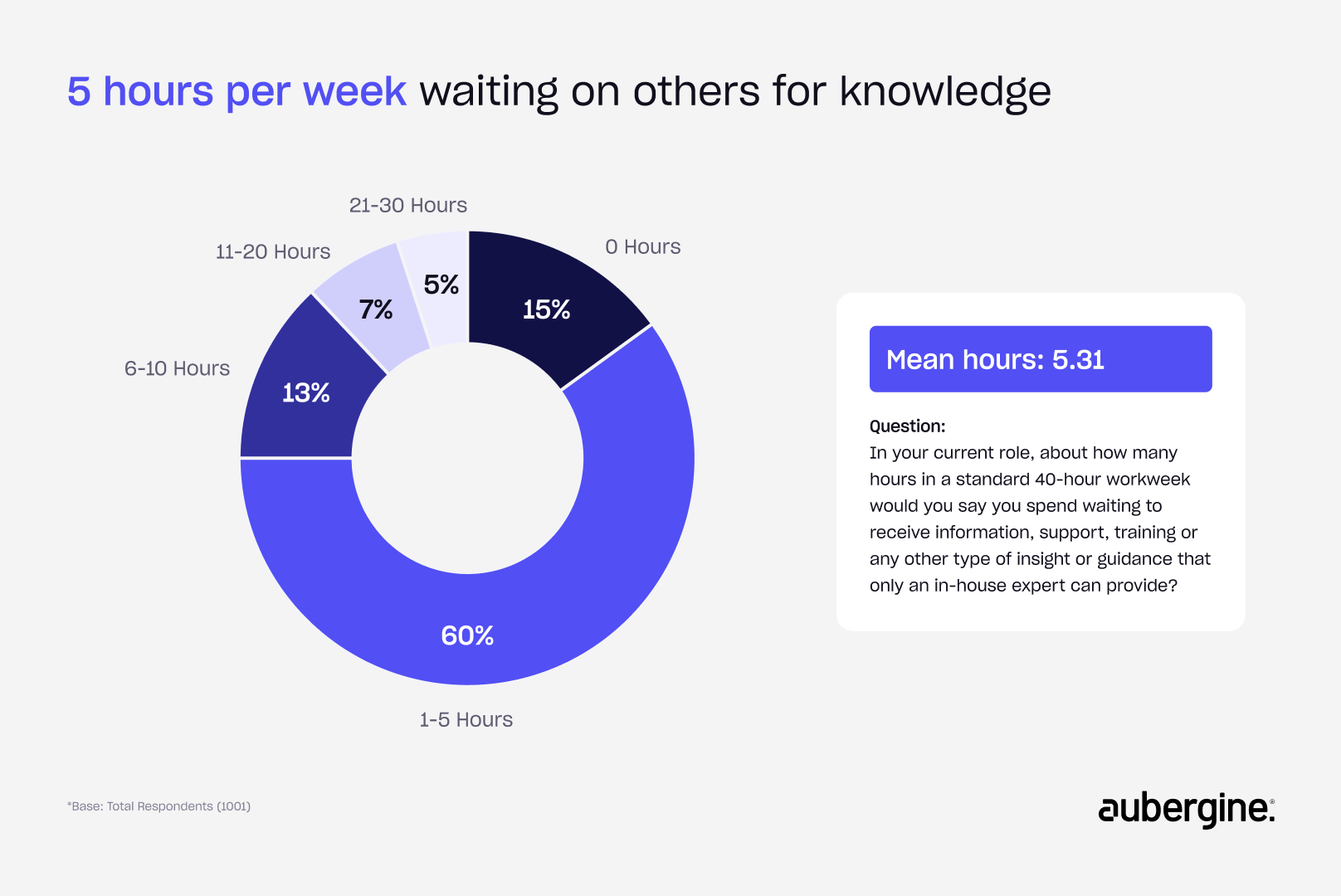
Research also shows that companies prioritizing knowledge transfer are 4.5 times more likely to have highly engaged employees and can reduce employee turnover drastically.
Despite this, many engineering organizations still rely on fragmented documentation systems. Knowledge is often scattered across wikis, messaging threads, READMEs, and the informal expertise of senior engineers. As projects grow more complex, this fragmented model becomes harder to maintain and increasingly risky.
The challenge is not simply missing documentation. The deeper issue is the absence of a structured system that evolves alongside the codebase.
Why traditional knowledge transfer breaks down
Returning to the example of the eight-person engineering team, the incoming developer begins exploring the project repository.
There are READMEs in several folders, but some are outdated. The internal wiki contains architectural diagrams created months earlier. Slack conversations reference implementation details that are difficult to reconstruct. A few senior engineers remember why certain design decisions were made, but those explanations exist only in conversations.
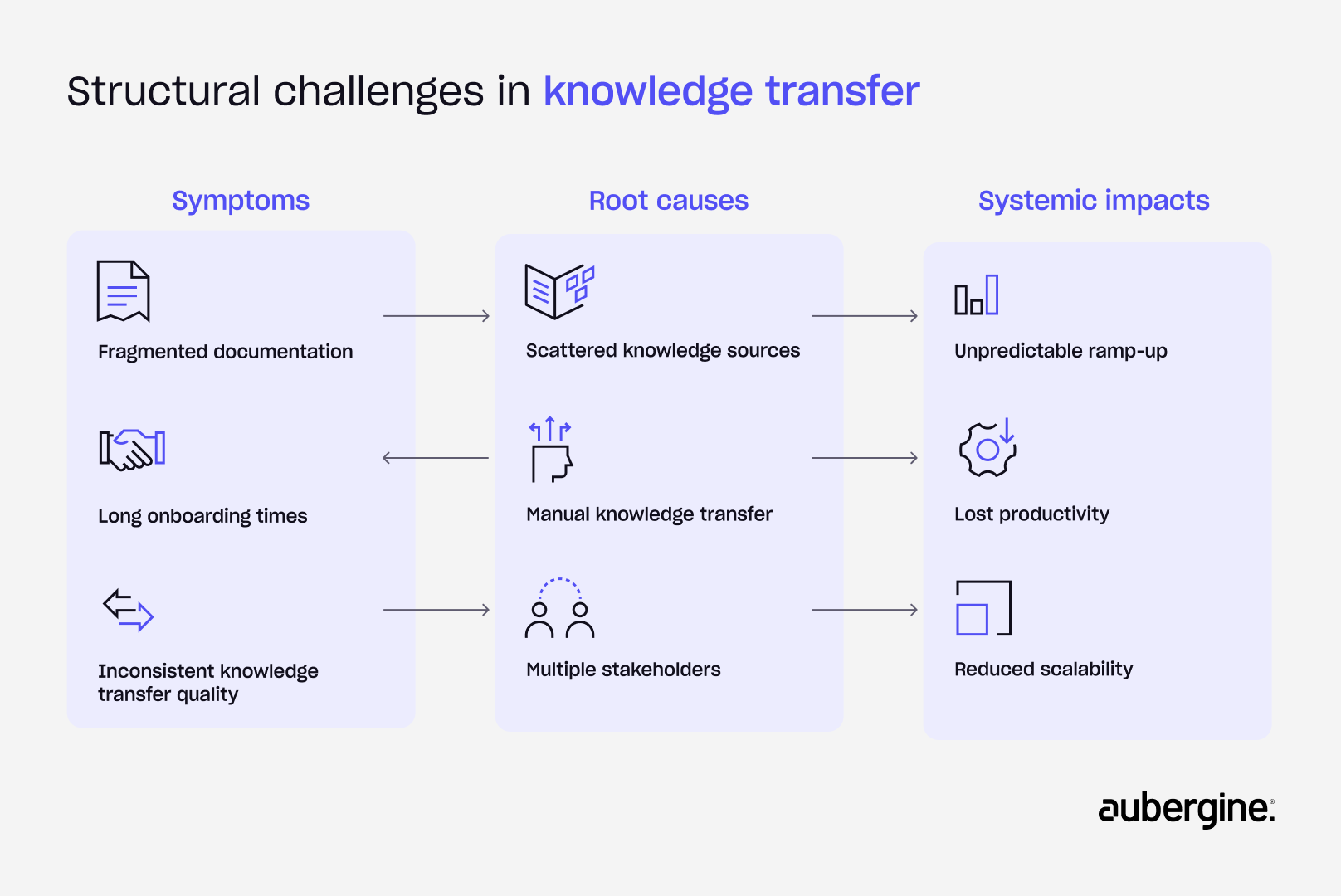
This is a familiar experience across many engineering teams.
Most organizations rely on internal wikis, scattered documentation, and informal walkthroughs. These resources may exist, but they rarely form a cohesive system.
As software evolves, documentation gradually drifts away from the codebase it was meant to explain. New developers then spend significant time reconstructing system logic by reading code, tracing dependencies, and asking senior engineers for context.
If onboarding takes seven working days before a developer reaches basic productivity, that time includes both the new engineer’s ramp-up effort and the hours senior developers spend explaining architectural decisions.
Another challenge is contextual understanding. Traditional documentation explains what the code does but rarely explains why specific architectural decisions were made, how services interact, or what trade-offs shaped the system’s design.
Without that context, developers may understand the code yet still struggle to contribute effectively.
The AI-driven knowledge transfer framework
To solve this challenge, the eight-person team introduces a structured knowledge transfer framework supported by AI.
The goal is to create a centralized, continuously updated source of truth that evolves with the codebase rather than relying on documentation written once and forgotten.
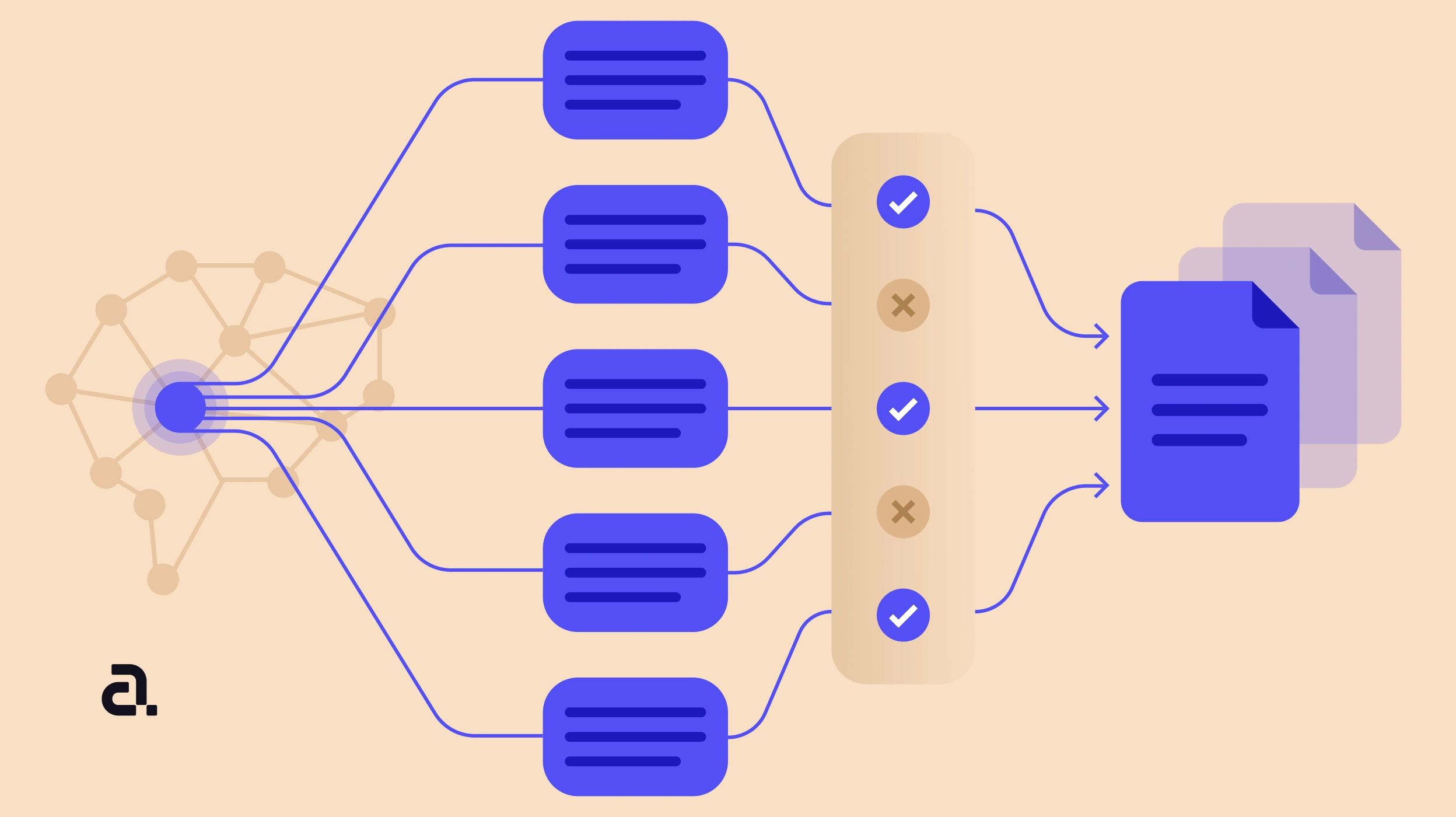
Instead of manually maintaining documentation, AI systems analyze repositories, commit histories, and architectural dependencies to keep technical knowledge synchronized with the software itself.
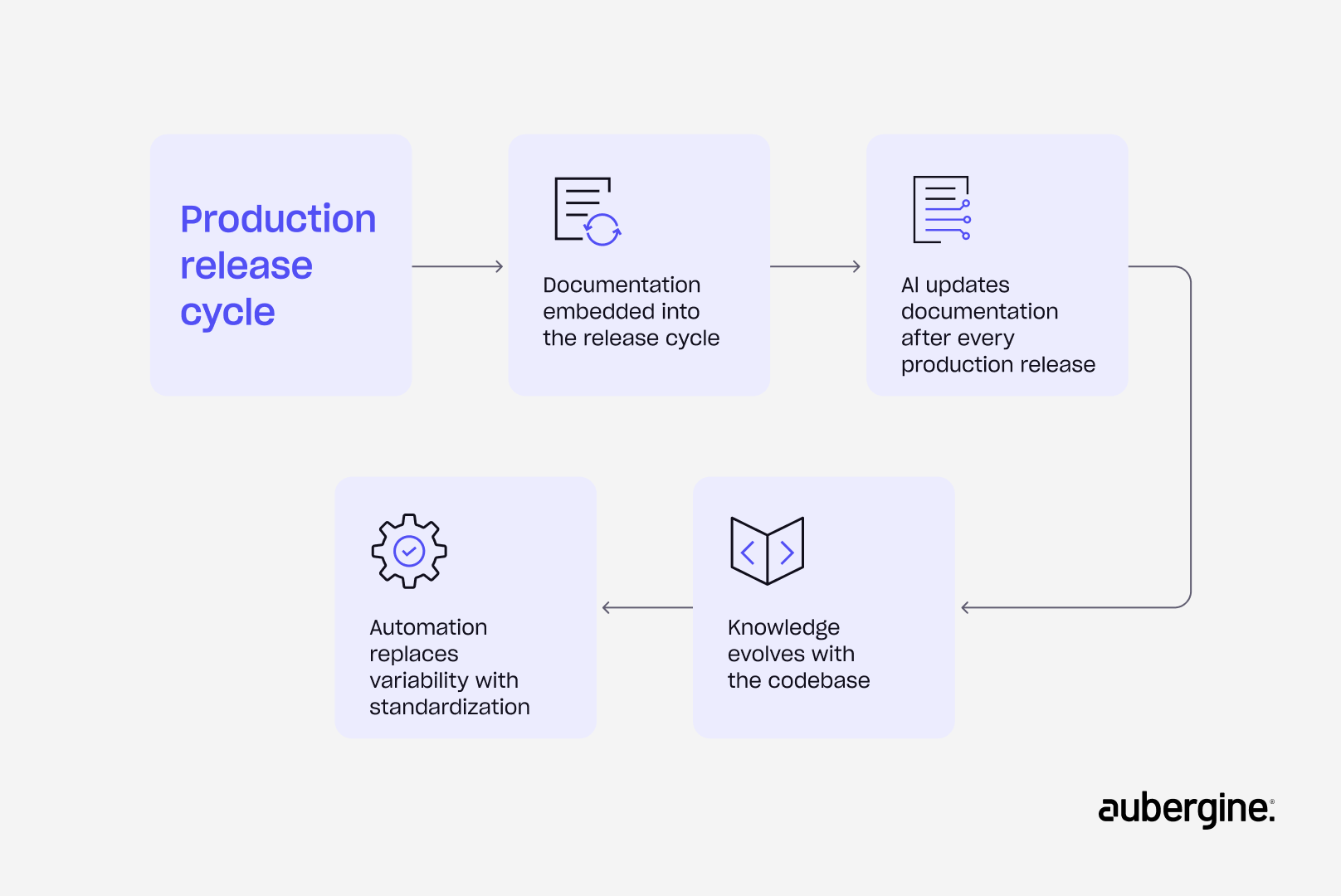
The framework consists of five practical steps.
1. Generate baseline documentation from the codebase
The process begins by creating a documentation baseline using AI. Modern AI tools can scan repositories and automatically produce structured documentation that explains the system architecture, module structure, and service relationships. Instead of manually writing extensive documentation, teams generate an initial technical map directly from the codebase.
This baseline typically includes:
- Architecture summaries
- Module and service descriptions
- API workflows
- Dependency mapping
- Environment setup instructions
For the engineering team in our example, this immediately provides the new developer with a structured overview of the system. Rather than exploring the repository blindly, the developer can understand how components interact before diving into implementation details.
2. Validate the documentation once
AI-generated documentation should undergo one structured review by the engineering team. During this step, developers confirm that architectural explanations are correct, module relationships are accurately described, and operational workflows reflect how the system actually functions.
Once validated, the documentation becomes the official knowledge baseline for the project. The key idea is that teams perform a single structured verification, after which AI maintains accuracy as the system evolves. For the team that recently transitioned developers, this validation step ensures that the documentation accurately reflects the system the departing engineer once understood intuitively.
3. Establish a single source of truth
For documentation to be effective, it must be centralized and integrated into developer workflows. Within this framework, documentation becomes a project rulebook stored close to the codebase. Typically, this codebase resides within the repository or inside a tightly integrated developer portal. Instead of scattered notes across multiple tools, the documentation organizes critical project knowledge in one place. This knowledge base typically covers:
- Project overview and system architecture
- Coding standards and development conventions
- Folder structure explanations
- Environment configuration and setup
- API and service workflows
- Feature development guidelines
For a new developer joining the team, this structure removes much of the uncertainty that usually accompanies onboarding.
4. Automate documentation updates
Automation is perhaps one of the most critical elements of the framework. AI systems monitor repository activity and update documentation whenever the system changes. By analyzing commit histories and repository differences, AI can detect structural modifications and refresh relevant documentation sections automatically.
This automated process can include architectural change detection, dependency updates, regenerated module summaries, and changelog generation. Since updates are tied directly to repository activity, documentation evolves alongside the codebase instead of becoming outdated. Over time, this builds trust in the documentation because developers know it reflects the current state of the system.
5. Integrate documentation governance into development
Automation works best when paired with disciplined engineering practices. In this framework, documentation becomes part of the development lifecycle rather than a separate activity. Teams introduce lightweight governance practices that ensure new features and system changes remain aligned with the knowledge base.
Examples include documentation checks in CI pipelines, AI-assisted code reviews, and standardized coding conventions that improve the quality of generated documentation. Over time, documentation shifts from being an occasional maintenance task into a natural extension of the development workflow.
The operational impact of AI-driven knowledge transfer
When the engineering team fully implements this framework, the onboarding experience changes significantly.
Instead of searching through Slack threads or relying on repeated walkthrough sessions, the new developer can explore the system through a structured knowledge base that reflects the current architecture. AI-powered documentation also allows engineers to query the system directly and retrieve contextual explanations without manually searching through code. This reduces the need for repeated explanations from senior engineers and distributes knowledge more evenly across the team.
Onboarding time that previously took about seven days can drop to one or two days. Knowledge that once lived in individual heads becomes accessible across the organization. For engineering teams, the result is faster onboarding, stronger operational resilience, and more predictable scalability.
Rethinking knowledge management in the AI era
AI-driven development is gradually transforming how engineering teams manage information and collaboration. Tasks that previously required manual effort, such as documentation updates and system explanations, can now be automated. This allows developers to focus more on architecture, product development, and complex problem solving.
Research suggests that AI-driven development practices can improve engineering productivity by as much as 30 percent, but achieving that potential requires structured knowledge systems and continuous learning. Organizations that treat knowledge transfer as infrastructure and support it with AI automation are better positioned to scale engineering teams without sacrificing clarity or velocity.
In this environment, documentation is no longer a static artifact created after development. It becomes a living system that evolves alongside the codebase and ensures that knowledge remains accessible, accurate, and actionable for every engineer working on the project.
FAQs
How can AI reduce developer onboarding time?

AI reduces developer onboarding time by automatically generating, organizing, and maintaining technical documentation directly from the codebase. Instead of relying on scattered documentation or repeated walkthroughs from senior engineers, new developers gain access to a centralized knowledge base that explains the system architecture, dependencies, workflows, and coding conventions in a structured and up-to-date manner.
Why is knowledge transfer a challenge for engineering teams?
Knowledge transfer becomes difficult as software systems grow because important information is often spread across documentation, code repositories, messaging platforms, and the experience of senior developers. When this knowledge is fragmented or outdated, new engineers spend significant time searching for answers instead of contributing to product development.
What role does AI play in software documentation?
AI can continuously analyze source code, repositories, commit history, and architectural dependencies to generate and update technical documentation automatically. This helps ensure that documentation evolves alongside the codebase, making it more accurate, searchable, and useful for both new and existing developers.
Can AI completely replace human knowledge transfer?
No. AI can automate documentation generation and provide contextual explanations, but experienced engineers are still needed to validate information, capture architectural decisions, and guide complex technical discussions. The most effective approach combines AI automation with human expertise to create a reliable and trustworthy knowledge system.
How does AI improve developer productivity beyond onboarding?
AI improves developer productivity by reducing the time spent searching for documentation, answering repetitive technical questions, and understanding unfamiliar parts of the codebase. With easier access to project knowledge, developers can focus more on building features, solving technical problems, and delivering product value.
What should an AI-powered knowledge base include?
An effective AI-powered knowledge base should explain the project's architecture, service interactions, coding standards, environment setup, APIs, development workflows, and the reasoning behind important technical decisions. Providing both implementation details and architectural context enables developers to understand not only how the system works but also why it was designed that way
Why is keeping documentation up to date so important?
Outdated documentation creates confusion, slows onboarding, and increases dependency on senior engineers for clarification. By automatically updating documentation whenever the codebase changes, AI helps teams maintain a trusted source of truth that reflects the current state of the system and reduces the risk of knowledge becoming obsolete.
How does AI reduce dependency on senior developers?
AI captures and organizes technical knowledge that would otherwise remain with individual engineers. This allows new team members to access contextual explanations independently, reducing interruptions for senior developers and enabling them to spend more time on architecture, innovation, and complex engineering challenges.
Which organizations benefit the most from AI-driven knowledge transfer?
AI-driven knowledge transfer is particularly valuable for organizations with large or rapidly growing engineering teams, complex software systems, distributed development environments, or frequent onboarding. These organizations benefit from faster knowledge sharing, more consistent documentation, and improved engineering scalability.
What makes AI-driven knowledge transfer successful?
Successful AI-driven knowledge transfer depends on treating documentation as a living system rather than a one-time activity. When AI continuously updates documentation, engineering teams validate important architectural knowledge, and documentation becomes part of the development workflow, organizations can significantly reduce onboarding time while improving collaboration, productivity, and long-term maintainability.


Authors

Antony Francis

More ways to listen


Podcast Transcript