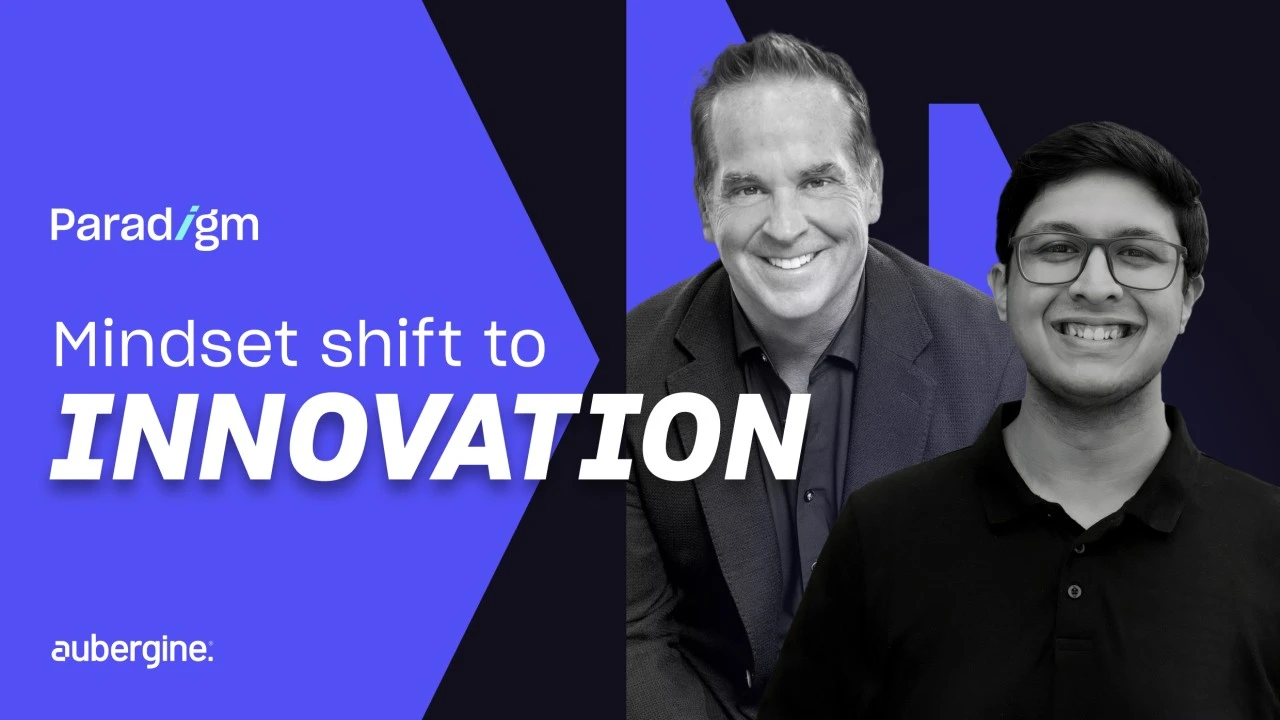

In this podcast episode of Paradigm, we sit down with Brendan P. Keegan, six-time CEO, award-winning leader, best-selling author, and one of the most influential voices in logistics and technology. From starting his career as a COBOL programmer in the Pentagon to leading multi-billion-dollar transformations, Brendan shares an unfiltered look into what it takes to scale companies, reinvent legacy industries, and build high-performing teams.
Going from 90% to 98% accuracy is a game-changer, but you only get there by starting. Don’t let the pursuit of perfection slow your momentum.
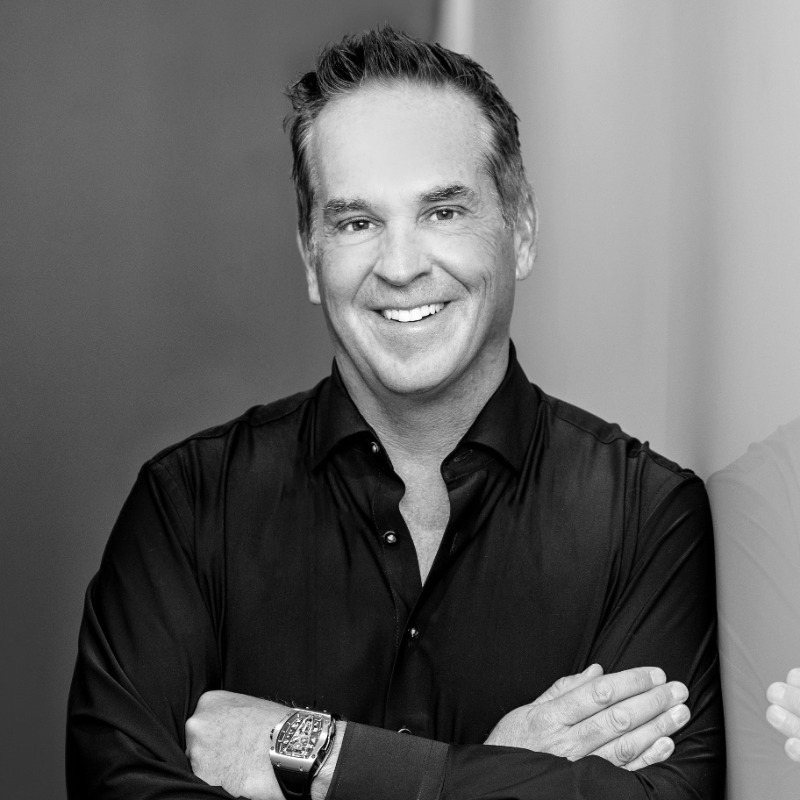
Brendan P. Keegan, 6X CEO, Fleet and Logistics Innovator
He talks about how a young programmer accidentally grew a Fortune 100 account, why entrepreneurial leadership inside established companies creates outsized impact, and his seven-pillar system for disruption and transformation. He also breaks down the FUD Factor and how leaders can neutralize it. The conversation dives into the future of supply chain through AI pilots, cost-per-mile obsession, and real-world automation examples, along with how to build technology cultures that embrace change rather than fear it.
Packed with practical frameworks, real business metrics, and decades of hard-earned wisdom, this is a masterclass for leaders navigating complexity, scale, and the AI-powered future.
About Paradigm
Paradigm is a podcast by Aubergine that explores transformative journeys where technology impacts human lives.Through candid conversations with visionary founders, product leaders, and innovators, we uncover stories of bringing ideas to life.


More ways to listen


Podcast Transcript

[00:00.0]
Thank you Brendan for joining us today on this podcast. And we are very, very excited to, or four years ago to be as productive as a single host you and to learn from you. And I think all our audience will also be, very excited to hear from you. person or even a small team can be using the tools You're a man who needs no introduction at all.
[00:16.7]
that are now at our fingertips, whether that's generative AI and I was just talking to Shivani earlier and I told her that, you know, if anything that you LLM models, to help do what in the past would have put your hands into turns into gold. So just looking at the body of work that you have, a six time CEO, an award winning taken an entire team of, you know, junior associates at an leader, a best selling author, so many companies that agency writing press releases or social media posts or those sorts you've helped build, so much employment that you've helped of things and then passing them up the chain to be, create, the impact of your work is amazing.
[00:39.7]
you know, reviewed by the strategists and the mid level and And we just wanted to sort of leverage senior folks. some of those insights that you've had firsthand. Well, now at least some of that, that groundwork, Because we believe that a lot that first pen sort of groundwork can be done of this cannot be really taught. It has to be learned. quickly by, you know, utilizing your own material that It has to be learned, it has to be imbibed.
[00:57.4]
Which is why this podcast session. So we want to start with this introduction. you've been creating from the beginning so that it, We want to sort of go into your journey till now. it maintains some level of tone and, and clarity. We know you started from coding. And then it's then stepping into that senior role and How did that go and how did you end up in today's position? Let's start with that. Absolutely. Yeah.
[01:13.1]
doing the, you know, proofreading and the, the fine tuning So I started as a programmer in DBASE 4 and COBOL. and the wordsmithing and all of that sort of thing. But it significantly increases the volume So back when, COBOL was that you're able to do. Right? a significant language on mainframes. Like, if you had a full communications team at a And what's interesting is I actually company, even a small company, you'd have, you know, someone worked, at a company called EDS.
[01:31.3]
We had 120,000 employees, 86 on the who's focused, at least someone, if not a team of Fortune 100, so a pretty big company. people that focused only on social media and planning and And they had me coding for the US Department of Defense. So I used to work at the Pentagon. strategy and content creation and all of those sorts of And I was a young guy, I was 21, 22. elements, and another team and, or person entirely that's focused And I'd bring my lunch every day, and just sit in the cafeteria and I would meet with, on media engagement and press release writing and all of and I'd usually sit with my clients.
[01:54.2]
And all the time what I learned is at lunch those sorts of things. And then still others that are looking at strategy and they would generally complain about work they had to do, like, oh, we just got this new assignment. still others beyond that that are working on, you know, And I would naively go back to my area and say, more visual content and all of those sorts of things. you know, hey, these guys have a deadline coming up. So, thanks to technology, we're able to have a Do we have any more programmers? Do we have any business analysts?
[02:10.4]
Do we have any tech designers? significantly higher volume of material, which, you know, serves And what I didn't realize that I was doing is I was growing our account. And eventually they said, hey, Brendan, the purpose of spreading the message of bot auto. the client really likes you. We're going to put you over the account as an account manager. Got it. And I said, that's great. And then we grew the account more and more. And then they said, hey, we're putting you over in sales. You know, we think you're better with people than technology.
[02:30.8]
Now at 23, 24, when somebody says that to you, you take that as a compliment, like, oh, I'm better with people. You know, now that I'm a little bit older, I'm like, did that mean I wasn't a good programmer? But that never crossed my mind at the time. So, you know, I think I was a good programmer, not a great programmer.
[02:50.7]
But I do think that what I, what they were right is, you know, I was, I was good at problem solving, I was good at listening to clients, I was good at having empathy for the clients and then ultimately coming up with ways to solve their problems. And, based on that, they said, hey, your technology background is probably better on the client side driving growth than it is, you know, sitting there and programming as an individual.
[03:15.2]
But I did enjoy, I did enjoy the programming. Got it. Interesting. And I'm curious, a large part of your body of work is in the, logistics and supply chain industry. How did you end up there? Was it from your first job, was it organic or was it more strategic? You planned for it.
[03:31.9]
That's the problem that you like to solve. How did you end up going into that? Yeah, so what I'd say it was probably more organic in that, I was at a company where we had 10,000 technicians around the globe that would go and fix things.
[03:50.1]
They would, servers, mainframes, large LCD, LED format TVs. And we had to. You know, what's interesting is when I go back to when I was doing that, our number one challenge that we had was getting the right parts to the right technician at the right time and then mapping their day out.
[04:13.3]
Now when I first started doing that, our drivers would actually print out MapQuest every day. Now, a lot of your members, that are listening to this or audience members don't even know what MapQuest is. But it was interesting. So I got a chance to see when we went from paper to building it into technology, to routing software to logistics management and, and then I was the largest company of a.
[04:39.7]
Largest, client of a fleet management company. And I joined their board and I actually joined their board as their technology advisor. So even though I was running companies now as a CEO, I was really still seen as kind of a technology leader. And in doing that, I kept pushing on the company.
[04:57.3]
You can become, you can drive better service throughout your logistics network by automating things. And I say things. And these were little things from picking up vehicles to dropping off vehicles to managing parts and inventory and maintenance.
[05:13.7]
And I wound up after a few years, sitting on the board, actually joining that company. And it was Merchants Fleet and being the CEO of that. And we eventually sold it in year five to Bain Capital and the Abu Dhabi Investment Authority. And what was great about that is as we embrace technology faster than our competitors, we grew faster.
[05:37.5]
So the market was growing about 5% annually. And over four years we grew organically from 500 million in assets to two and a half billion. And I accredit almost all of that to innovative, out of the box thinking, leveraging technology across the entire logistics and supply chain.
[05:57.4]
Interesting. That's amazing. I do want to come to the technology bit, but I remembered something that we spoke earlier in the, earlier last week when we had a call which was you said, hey, the kind of entrepreneur you are, you are not the entrepreneur who's sitting outside of somebody's garage and starting out.
[06:13.8]
You're the kind of entrepreneur who comes in late into the equation and helps you build the business reach its full potential, which you were not able to do after say 30 years of doing business together. Talk a little bit about that. That is super interesting to me as a concept. Yeah.
[06:28.8]
So every once in a while somebody will say, oh Brandon, you're such a good entrepreneur. And I'll be like, I'm actually not a true entrepreneur. I think if I started a business in my house and I did once and it was successful, but like it's not, that's not what I'm good at. What I am better at is going into a steady state organization and making that organization entrepreneurial.
[06:51.3]
So I went into merchants, which was 56 years old. 56 years. It grew from zero to 500 million. So you know, 56 years to get to there. And four years later, on our 60 year anniversary, we were two and a half billion. So I'm better at going into an existing company.
[07:08.1]
And we started eight businesses. So we started eight new businesses when I was there over the course of seven years. Most of them were started in years one, two and three and six were successful, two were epic failures. But that's fine, you know, if you get six right and you get two wrong, you're doing better than average.
[07:26.2]
So I'm better at going into like what's what I call a platform company and bringing entrepreneurial culture, mindset, innovation, mindset to it in the leadership that allows it to do things that maybe it hadn't done in merchants gates 56 years and the company before that, very similar, you know, was a 40 year old company and it was actually in decline.
[07:48.8]
And you know, I spent the first year kind of stopping the decline and then the second, third and fourth year, you know, growing it. We didn't grow that one as dramatically. We grew at 50%, but again from a decline to 50% growth in three years. And that was by bringing, you know, new ideas, new new problem, new solutions to bear.
[08:06.8]
So I'm entrepreneurial. I don't think I'm an entrepreneur. Right. That's awesome. And you know, one of the things that, especially in the Silicon Valley where a lot of my customers are today, I keep hearing this battle between great execution and strategy.
[08:24.2]
And I feel that there are so many people who disregard, strategy fairly easily, saying, hey, there's no value for this. You just keep on executing and executing. But from your vantage point, it feels very strategic that you were able to do that plan through all of this. And because especially when you're going into an organization after say 56 year mark, there are systems that are already set.
[08:45.2]
So you need like, were you like a disruptive person where you said, hey, let's do everything from the ground up or did you take that and build a strategy around how to execute that into the newer phase that you were planning? What are your thoughts? Yeah, so, so it starts with a strategy.
[09:01.0]
And what I'll tell you is, you know, I had a chance to be CEO of six different companies, two returnarounds, forward transformations. I'll tell you, most companies don't have a well documented strategy. They have one that's in their head or it's evolving or it's a couple pages, but they don't really have a well documented strategy.
[09:22.7]
I think having a good strategy but also making sure the strategy is executable and everybody in the organization knows their role in the strategy. So if you have a great strategy but you're not able to execute it, or people don't know what their role is in the strategy, then it's not going to help.
[09:42.0]
On the flip side, if you're a great execution company and you're killing it, but you don't have a good strategy. And so maybe you're pursuing markets that aren't the best markets, or you're pursuing markets that are niches or in decline, they then the company's going to follow that.
[09:59.1]
So you really need both. And I think that's when you look at companies that achieve greatness. The definition that Jim Collins uses In good to great is greatness over a period of time. They balance strategy and execution.
[10:15.4]
And so that's one thing I've always tried to be able to do is balance those both. And that starts with and I wrote about this in a book that I released last November called Dare to Disrupt is having a system for disruption and transformation.
[10:34.6]
So you know, I have this system I've used at four companies and each time, you know, I honed my system and each time quite honestly I made it a little bit better because I had the experience from the previous one. And I talk about seven pillars in it and, and the pillars are, you know, first of all, you have to have the leadership That can transform.
[10:54.3]
And one of the things that I espouse in leadership is you should have a third of your leaders that come from the company that know the ins and outs in the institution. You should have a third that come from your competitors and you should have a third that come from outside your industry.
[11:10.2]
And, and that's what, that's what I've done at each of my companies. And what I've found is a, your meetings are longer because you have more disruptive thinking. But what I find is you have one group that says, hey, here's how we do it and you have another group that says, hey, I was at your biggest competitor and we used to beat you and here's how we did it, and we did it a little bit better.
[11:32.5]
And then you have a third person in the room say why do you guys do it that way at all? Like, you know, I come from a totally different industry and we automated that a decade ago. And I find that if you can stack that together, you always wind up with a better client solution and a better solution internally for your employees.
[11:54.9]
So that's like the first pillar is how do you build a leadership team that is going to allow your company to transform? Interesting. Very, very interesting. You mentioned about one of your books, whereas I was going to bring up the FUD Factor, another book which became an instant bestseller.
[12:14.4]
And the interesting thing is I think both of them solve for different problems. I thought that the FUD Factor solved a lot for the human problem within larger. Yes, talk a little bit about the FUD Factor because I think it's relevant for organizations whether they're small, large, regardless of any industry.
[12:33.0]
It's very, very relevant to what the leaders want to, leaders face in today's world. Yeah, so, so in that third book there, the FUD Factor Is it FUD stands for Fear, Uncertainty and doubt. And as humans, we have natural fear, uncertainty and doubt for a lot of things.
[12:50.8]
And, you know, like, for instance, when I joined my last company and I said, let's start two new businesses this year. You know, initially people like, what do you mean? Like, how are we going to do that? And you, you already have people that were doubting we could start two new businesses.
[13:07.1]
I actually had the board say, hey, Bernard, you know, it's taken us 56 years to build the three businesses that we have. Why do you think you can? So there's that uncertainty. And then you had people that were fear, like, well, what if they're successful? Like, we're not going to have enough people. And it's like, great.
[13:23.5]
That's a first world problem. What if they're successful? So I think as humans, you know, we tend to have that fear, uncertainty and doubt that creeps in. And I think as a leader, one of your jobs, one of your major jobs as a leader is create an environment that, that motivates as opposed to creates fear, where someone would say, you know, Brendan, if we start these two new businesses, you know, what if they fail?
[13:49.3]
And I'm like, we failed trying. What if they fail? It's okay if they fail. So all of a sudden you're saying, so you're saying someone's going, but they could fail. And I'm going, you're right, they could fail. But what I do know is if we don't start something new, there's no reason we're going to grow faster than 5%.
[14:08.0]
Right. So as a leader, your job is to take some of that fear, uncertainty and doubt away. But coming to what you mentioned, that book, it really is targeted at the individual. Like, I look at high school juniors and seniors right now, they're like, take seniors right now, it's September 16th, and they're sitting there going, oh, I got to apply to 20 schools because I'm probably going to get rejected from 15 of them.
[14:33.8]
And the school I want to go to isn't going to accept me. So they've got all this fear, uncertainty and doubt going around their head. And what I'd say is, you're right. Yeah, you're right. You're going to get rejected by a bunch. Yep. No problem. Let's focus on how you're going to get into three or four that you really, really, really like, and what are you going to do to make yourself stand out for that particular school or whatever.
[15:00.5]
But, but our fears Are now can become paralyzing. On the flip side, you know, we can flip it around and have it be a motivator. So, you know, whether it's high, school senior, like about applying to college, whether it's a college freshman that's like, oh my God, I'm on campus now. Like everyone, my roommate's smarter than me, everyone's smarter than me.
[15:19.1]
Like, I'm lucky to get in here. How am I going to keep up to, you know, a first time vice president who's like, oh, wow, I'm the youngest vice president at my company. Like, everyone has more experience than me and they're already starting to doubt their ability. Yet somebody had faith in them and believed in them and put them in the role.
[15:37.3]
So you know what the book's premise is, is helping individuals overcome their own fear, uncertainty and doubt. Right. And I want to leverage that with one point that I see, fairly often right now. What happens when that fear, uncertainty and doubt transcends, beyond the individual to a business.
[15:58.6]
Because. So, for example, if you look at the tariff situation that is happening right now across the globe, there's a lot of fear, uncertainty and doubt about how business will survive, how business will run, how things are going to get moving. When there are factors, the tariffs are just an example.
[16:15.6]
But when there are factors that you don't have control over, how do you deal with that and don't let the whole organization get demoralized because of that? Or how do you plan for business in a way where you don't really have to? So for example, in supply chain, there are so many moving pieces that if one thing gets affected, the whole supply chain is affected.
[16:35.4]
So how do you plan for this in advance? How do you strategize and how do you keep the team morale, up in such times? Yeah, so I'm gonna go, I'm gonna use, I'm gonna use a Covid example because I think, I think that might be really timely. So when Covid hit, there were, there were companies that did really well and there were companies that stayed neutral and there were companies that didn't do well.
[16:58.2]
And I'm not talking about, you know, like, hand cleanser companies that like, did well because that was because of that. I'm talking about like companies that figured things out. So, you know, the companies that said, okay, the world's changing, how are we going to help it change?
[17:16.7]
How are we going to be an innovator in the change? Those companies did well. Companies That kind of said, okay, we're going to be impacted. How do we hunker down and protect ourselves? Generally stayed neutral or declined. Right. So, you know, I'm going to give you an example.
[17:32.4]
So, you know, Covid hits we immediately have a whole bunch of our clients that say, hey, you know, we had all these new trucks on order. We're not going to need them, we're not going to be able to use them. And we figured out how to take care of them.
[17:47.9]
But we also sat around and said, okay, what industries are going to shrink? Hospitality is going to shrink, right? Limo services, cabs, Uber is going to shrink. Okay, what's going to maintain? Okay, infrastructure is going to maintain, Energy companies are going to maintain.
[18:03.8]
It's not going to matter what companies are going to take off. Well, home delivery is going to take off. Last mile is going to take off. E Commerce is going to take off. So then we said, okay, let's go focus on Last mile and home delivery and E Commerce. So let's go find all the vans in the country we can have for the Amazons, FedEx's UPSs, postal services.
[18:28.1]
And we took people that were in other parts of the company and moved them over to our last Mile team. And that grew tremendously during that time. And I remember, you know, somebody at Amazon calling me up and saying, hey, we just have one question. We're super happy with you. Don't be nervous, but how do you have vans when nobody else, no other supplier has them?
[18:51.0]
Okay, well, you're renting them from us, right? And he goes, yeah, yeah, no, but like. But you keep saying yes. Everybody else says no. I said, well, our industry does something where we all order new vans, we buy new vans, and then we rent them. There's no new vans in the world.
[19:06.7]
There's not one new van in the world we can buy. We're out buying every used van in the United States. But, like, that had never been done. No fleet management companies ever were out buying used vans. That wasn't the business model. But if we sat there and said, we want to help our clients, our clients need vans.
[19:26.9]
There are no vans. And I remember in a room going, of course there is. Like, well, where are they? And people would be like, they're used. I go, right now, Amazon doesn't care if they're white, blue, tan, red. They don't care if they're new or old. We were all sitting at home ordering so much more.
[19:46.0]
They just needed vans and pickups and various trucks, box trucks. So our instead of looking at fearful because we had industries, like, we had a summer camp business, we did zero revenue that had been one of the company's major engines before, you know, our Uber business. Zero.
[20:04.1]
Like, like, just. But we. So you've got to. You. If you sit back and say, okay, this is getting done to me, you're going to lose if you play offense and you say, how can we go help people? How can we go solve problems? You're going to do well.
[20:21.4]
And there's a lot of companies that did exceedingly well during COVID Now, you. You. If you were in certain industries, it didn't matter how creative you were or how innovative, you weren't going to do well. But. But like, even if you take an industry like hospitality, which really took a hit, but the ones that did well completely reinvented how they did takeout.
[20:44.8]
Right. And I know a few restaurants that actually now have more takeout than they do in dining. And Covid changed how they totally approach the market. And a few I know have actually shrunk their dining room size and have a bigger takeout.
[21:03.2]
So I think it comes back to, are you embracing the possibilities and opportunities or are you scared of the consequences? Right, Interesting. I want to touch base on one of the things that you are widely known for and you have been in throughout your career, I think, which is, you just mentioned something which is interesting, which is how can you go out and help people?
[21:28.1]
And typically when you do that at a very large scale, you need technology as the aid to be able to do that. And you have proactively been talking about technology for a very long time. Can you tell us how technology comes into the picture and where it can really. How should people. How, should supply chain leaders think about technology?
[21:46.4]
Because I know a lot of them are still operating as though, you know, technology is something to be afraid of or it keeps changing quite often. So how would you, how would you advise or how. What is your message to people? How should they look at technology? Yeah.
[22:01.5]
So, you know, I know one. One of the things I talk about is, you know, evolve or die. And I intentionally use the word die to be dramatic. And as opposed to evolve or stay stagnant, that's not as interesting to listen to.
[22:18.5]
So I say evolve or die. And if you're evolving in 2025, technology just has to play a very big part. And I can remember in 2020 talking about Machine learning. And I don't think in 2020 I was actually using the word AI.
[22:36.0]
I was using much more machine learning where I'm like, hey, like, why can't we do predictive analytics? Why can't we do machine learning? Why? You know, like, like I'll give you, I'll give you the smallest example. When somebody would turn a band in, a human being would walk around the van with a little notebook and write down all the damage and then they'd give an assessment and you'd get that few weeks.
[22:57.8]
And by the way, like, I remember sitting there saying, like, that's really cumbersome. We, I said, why can't at the time, machine learning and predictive analytics. Why can't we, why can't the, the renter do a video of the van themselves, right?
[23:14.0]
And why can't we feed that into a database that says, okay, the bumper has a 2 inch nick on it. That's $800. You know, the rim got got dinged, that's $400. And we did that. And what we found is our clients liked it much better because they participated in it.
[23:32.3]
When someone walks around the car, they always felt like, oh, well, they're going to charge me too much. All of a sudden they felt like, no, I'm walking around the car and I'm going to get a real estimate. But that was 2021 when we did that.
[23:49.7]
And I don't think it was until what, 22, maybe late 2122 when we started using AI as a term. More. By the way, artificial intelligence has been around forever. I can remember in college doing artificial intelligence programming and neural languages. So it's been around, but not in, not in our daily monikers.
[24:08.3]
But I remember some people sitting there saying, oh, are we going to trust that software to do that over people? And I was sitting there going, absolutely. Like, I think it's very tough for like a thousand different people walking around a thousand different bands to get it right.
[24:24.2]
I think that's very tough. I think putting it in where a machine's going, it's 4 inches, it's 8 inches, it's 12 inches, it's whatever. So I think that if you embrace it, you have a bright future. If you don't, I don't think you have a bright future.
[24:41.5]
And I know what we did is we did a lot of retraining. And what people saw was they went from being afraid, am, I going to lose my job to technology to my job is going to be more enriched through technology.
[24:56.8]
You know, like, we have people do basic data entry, right? I don't think anybody Actually comes into the office going, I love data entry. Like they just don't. But when we're able to automate things through batch processing, which has been around for 50 years, 100 years, but be able to bring technology to it, and they go, something that used to take me four hours now takes me five minutes.
[25:18.2]
And now I can have a greater impact on the business. But here's the catch. We can actually pay you more money now because when you were doing data entry for those eight hours, that's worth, pick a number, $15 an hour. If you're doing that data entry in 30 minutes through batch processing, in the other seven and a half hours, you're doing higher level skill things.
[25:41.2]
We can now pay you $20 an hour, $25 an hour, $30 an hour. So I think once people realized technology is an enabler, it's not trying to take my job from me and if I can have a greater impact on the company, I can make more money.
[25:57.2]
I think people really came along well. But that's the job of leadership, is to create that narrative. This kind of goes back to that fear. If a leader saying, hey, we're going to bring in technology, it's going to take jobs away. It's a fear monger. Like, we aren't going to need all of you.
[26:14.6]
Like, you know, I was in a meeting recently and somebody said, hey, AI is going to replace all of our first year analysts in the future. And I'm like, why would you say that? Why would you say that? Because it's not true. How about it's going to make our first year analysts appear to be third year analysts by the end of their first year, you know, because you're never not going to need those people, but you're going to.
[26:35.4]
Maybe you need less of them or maybe you can do more deals because you're able to analyze more, you know, who knows? But I think leaders can have a tremendous impact on their organizations and how technology is perceived. And I have, and maybe it's because I started my career in technology, I've always viewed it as a great enabler, and not something that's going to take things away from us. Right.
[27:00.5]
Very interesting. Actually, that touches upon an interesting point, which is, when you typically have a lot of stakeholders, as a, say a CTO of a company, right? In supply chain, you typically have a lot of stakeholders because there's just so many people handling so many different things.
[27:18.7]
What do you think are typical inhibitions that you can think of? I'm asking you this question because you've been a CEO of many supply chain companies and you understand the tech. So what are things that people typically hesitate to do, with technology, where they should go out and disrupt using technology, but they're just hesitant, because they don't know how technology will evolve over a certain amount of time.
[27:39.7]
So what are those inhibitions that you think are problems? I guess what I would start with is, I think the biggest mistake I see ctos make is they don't break things down into pilots and small projects. They come in saying, we want to revolutionize how we do customer service and we're going to implement XYZ and it's $10 million.
[27:59.8]
And I think that automatically puts your CFO or your head of operations or like on the defensive as opposed to, hey, we want to go run a pilot with our European customer service team and see if we can achieve higher level satisfaction scores.
[28:18.6]
And so I think a lot of times, you know, it usually happens around this time when you're starting to look at 26 budgets, you throw these projects at it. And I think it's huge human nature to look at a new project with all the inherent risks.
[28:35.6]
Right now, hopefully you have an organization that looks at the risks and opportunities, but a lot of people look at the risks and certainly your CFO is going to look at the risks and your head of operations are going to look at the risks. Your head of sales is going to tell you, that's great, we're going to be able to provide better service. I'm all for that, but I, I often say, like, why don't you chunk that down, go run a pilot know, go give me some metrics and then let's, let's inchworm into it as opposed to now.
[29:01.5]
When I look at the CTOs that are more successful, they're very, they're very good at running proof of comm concepts. They embrace AI early when they didn't know what it was and they started with little things and they go, wow, we used AI to make our employees more productive here.
[29:20.7]
We used an AI bot in our customer service. We're now using an AI bot in our finance area to find discrepancies and expense reports. And next thing you know, the company started to say, oh, this AI thing is working well, as opposed to somebody who comes in and says, hey, we're going to put AI across the organization.
[29:37.7]
I'm going to hire a vice president of artificial intelligence. And, and all of a sudden people are like going, whoa, whoa, what's that? So I think people that understand technology impacts your culture and how do you bring the culture along, do much better.
[29:55.7]
And I think those CTOs are rarer and fewer that understand and take into account the old term change management. And I don't like using change management as much because I think when you have to talk about change management usually means you're running a big project as opposed to you ran a pilot. Yeah.
[30:16.8]
And by the way, if you run the pilot and it makes people's lives better and your customers lives better, you've got your advocates in the organization that are going to push for it. So, the ctos that I've seen do better are ones that are more culturally aligned with the organization.
[30:35.2]
And, just understand how to start small and build. Right. Could we take a live example of what might be the use case of AI right now? The last time we spoke, you said, hey, organizations have started using, using ChatGPT, but they've, not really integrated AI into the process.
[30:54.8]
Can we look at some. Can we look at an example from any logistics use case that you can think of where, AI would make a big dent, but people are not really doing that yet or they're still getting to it. Yeah. So, you know, the example that I use, and I'll build off of it, where we built AI into this phone app.
[31:13.1]
So you would rent the vehicle from us, you would then get the phone app, you'd walk around the car, you do that. We then built out that entire app from the front end of. You could reserve, you could rent, it would give you directions.
[31:29.8]
You could actually, if you had an issue with it, say, where should I get this maintained? And what we do is we wouldn't direct you to the closest place. We would actually use AI to direct you to the closest, least expensive place. So if all of a sudden you're driving the van down the road and you go, oh, I need an oil change, and you go to pull into Jiffy Lube.
[31:50.3]
If you use the app, it would say, okay, we know where you are. And the AI would say, don't go to that Jiffy Lube. Go to Valvoline a mile away. We have a contract with them and it's $5 cheaper. Right. Then when you brought your car in for maintenance checkup, check.
[32:08.6]
Engine light comes on and, and you go in. And by the way, the mechanic comes back and says, you need these seven things. We would run that through the app that would have an ASE certified technician review it, and we would find about 12 to 18% of the work that was getting told that you were getting told needed to be done, did not need to be done.
[32:31.4]
So if you were getting told, hey, your van's going to require $1,000 worth of work, we were saying on average it was 820 to $880. That wasn't getting done by human beings.
[32:47.6]
That was getting done by taking the 200,000 vehicles that we had. We poured that into a database, and it would say, the mechanic is telling you you need a transmission flush. I'm trying to make this super tangible. And AI would say, a transmission flush is only needed every 30,000 miles.
[33:07.6]
Your vehicle has 15,000 miles on it. Don't do the transmission flush. And that wasn't getting done by a person, because by the way, you're driving this van today, you might be driving a different van tomorrow. And so when you got told this is what the car needed, you were like, sure, I don't know.
[33:26.7]
And I would even argue if it was your vehicle, you still might not know. But that's where we built in. So the use case was if you allow your drivers to use our software and our technology and our apps, you will save 15% on average just on maintenance, just for stuff that you don't need to be doing.
[33:47.0]
You will then save 5% by going to the right places where there's preferred pricing or a relationship that gives incentives back. But all that wasn't done by you calling into a help desk and me saying, okay, where are you?
[34:05.0]
Okay, you're just outside Tulsa. Here's where you are. And directing you to it. Cause by the way, you probably wouldn't call in. You'd probably just go, screw it. I'm just gonna go over to this Jiffy Lube. You actually, we put the power, we enabled the driver themselves to be able to make the best possible decisions and in the end save nearly 20% of, of the cost of vehicles.
[34:28.3]
And that's, you know, you think to, an Amazon or to a Terminix, you know, the big bug company, like when you have 10,000 vans running around, 10,000 pickups running around, and you're saving 20%. That's a really big number. Interesting.
[34:44.1]
You know, one of the interesting things that I've observed you do, which I think very, a lot of leaders lack, is you're very specific with your examples and you're giving really big, you know, actual business use cases. So, for example, one of the earlier examples that you gave was around, you know, how CTO should Start, typically they come up with like a $10 million project and instead they should go with a smaller pilot.
[35:05.9]
Even when you were explaining that pilot, you gave a very specific example of customer support. And that will. So there was an objective, there's a specific team or a specific customer who will get impacted. And there's a metric that you are going for at the end. Even right now you're talking about metrics, very openly.
[35:21.3]
And thank you for that by the way, because that really helps us visualize how business impact is created through technology and your strategic decisions. So the question is, what are the key metrics that you would recommend a, logistics leader to look at?
[35:37.1]
It can be again an example, say from shipping, because you used a couple of examples from a last mile delivery, but I know you have a, shipping. Yeah. So the one that I honed in on and you know, keep in mind this was, is my experience and my experience is different than many of your audience experience.
[35:56.2]
It's cost per mile. Right. And the reason I cost per mile, you can neutralize that. You know, you know, it could be an airplane, it could be a train, it could be a box truck, it could be a van. I happen to be in New York City. It could be a guy on a bike, you know, like doing a door dash or an Amazon has the little E bikes running around the city.
[36:16.4]
So I think, I think it's cost per mile because you want to drive everything to the most efficient cost per mile. And I can tell you, some of our bigger clients, we would actually specifically tell them, I'm going to give you a great example.
[36:33.1]
We would say you order all wheel drive vehicles and they're like, absolutely, we want them. I go, but 72% of your vehicles are not in all wheel drive territories. But you want all wheel drive vehicles because like, it's better.
[36:51.3]
But like if you have, if you have a pickup truck in Florida, you don't need all wheel drive. If you have it in New Hampshire, you need that all wheel drive. Right. And I say this as an example of, well, if that's $3,000 less and oh, by the way, the two wheel drive gets better mileage.
[37:10.2]
It's less to maintain. You're now bringing down your cost per mile. And so we would always look at how do you most efficiently get the cost per mile. And I'll use another example. Everyone would say, oh, we need vans.
[37:25.4]
And a lot of times we'd say like, well, what are you shipping? And they would walk us through. We'd say you don't need bands, you don't need vans, you have small products. What you need is, you know, I'm blanking on like the Ford Transit, the small Ford Transit, the Ram cargo.
[37:45.3]
Like you need smaller ones or oftentimes you need pickups or sometimes you need crossover SUVs, you know, because we would sit there and say, you know, you're not carrying anything over £400, £500. You're carrying packages. You know, let's put down the second seat and let's do.
[38:02.4]
But there was this mindset of, but we're a courier company and we're like, yes, you are, but you're currying small things. And so we always looked for cost per mile. And that's why you see companies like Amazon, really get on board with like, again, I happen to be New York City and all over the city and I take my dogs out at 5:30 in the morning, I take them on a walk and all over the city you see, you see E Bikes, Amazon E bikes, where it's a bike with a big box on the back.
[38:34.1]
And they've said, you know, to get to various buildings, that's, that's way cheaper than a van. But also it's way more efficient because that person can go through traffic if it's a van, it's going to be very tough throughout the day. So I think Amazon's a leader at the cost per mile.
[38:50.7]
Thankfully they are that, because when we hit prime, we all want it the next day. I always use cost per mile. And again, I think that was the great neutralizer. Like, for instance, we had clients in Alaska and we knew cost per mile was going to be much higher.
[39:06.0]
We just knew that like for, you know, everything from, from shipping to getting it to the acquisition price was going to be higher. But we could still see once we're in Alaska, how are we going to drive that cost per mile down. Right, right.
[39:22.4]
You know, one of the interesting things that, I ended up talking to one of our clients earlier was they mentioned the same thing that cost per mile becomes. They're a trucking company. And they mentioned that, hey, cost per mile is an, is an important thing for us. And they were talking about how they went from a very high cost per mile as they started and eventually over three or four years reduced that substantially to market standards.
[39:47.7]
The interesting piece was that, they said that it was very difficult to decipher cost per mile because of the constant moving, fluctuating things. Do you think it's A difficult metric to obtain as a.
[40:05.2]
No, I think that's an excuse. Sorry. I think if you have a good finance team and you have a good modeling team, you can do it. And when you do it, like, be okay with being 98%. Right.
[40:21.8]
Right. If you're 2 or 3% off and you gotta throw some assumptions and keep in mind the good thing about AI is as you get more data, maybe you start off at 90% accurate, but, you know, a year later you'll be 96% and two years later you'll be 98%.
[40:39.3]
But that goes to. What I'd say is if someone's like, oh, that's really tough to track, I would say that's their FUD kicking in. It's, like, just, just go do it. And oh, by the way, let's say like someone says, oh, that's wrong. Maybe it is, maybe it is, but fix it.
[40:55.7]
But like, if. I would say if you, if you're a logistics company and you can't track cost per mile, there's. You shouldn't be a logistics company. Correct. How about that? I think with AI coming in and so many things happening, I think it's going to be fairly easy.
[41:12.9]
You're going to find a tool that allows you, that just gathers everything from your data and if it is modeled right, it will give you fair accuracy over time. Yeah, absolutely. Yeah. Awesome. I'm going to move on to two ending, pieces of the session.
[41:30.5]
One is an extension to the metrics thing, which is typically leaders, say 10 years ago, probably leaders did this on an Excel sheet. But if you were to design a custom dashboard for yourself to view the visibility and the health of your logistics company, whatever, whatever company that could be, what are things that you would put on the dashboard?
[41:51.0]
What are things that you would wake up every day and be like, hey, these are the six things that I need to know. The health and the visibility of my company. Yep. The first, none of them would be financial because all, all financial metrics are lagging indicators. You know, like, did you make money? So everything I would have be leading indicators.
[42:09.4]
Now, depending on what you do as a logistics company, leading indicators. You know, I'll give some different examples that I've had as leading indicators. You know, I had like, you know, how many service calls did we do per day per technician? So when you have 10,000 technicians, and here's what I, here's what I could tell you.
[42:29.9]
And I had a executive dashboard. So it would say 4.5 and I'd say, okay, at 4.5 per day, we didn't make a dollar. At 4.51, we made money. By the way, I could then drill down and say at four or five, and I could go, New York City, oh, six, six calls per day.
[42:50.6]
Okay, Tulsa, Oklahoma, two calls per day. So, but that's a leading indicator. Like, if I said to my cfo, did we make money yesterday? Their answer would be like, I can't tell you on a daily basis if we made. It's impossible. But I knew from modeling, four and a half calls per technician per day was break even.
[43:11.8]
4, 4 was a bad day. 4, 5 was not a good day. 4, 6 was a good day. And then, by the way, as everybody knew that and watched it, we eventually got that number, by the way, to five point. But we also, we also incented people that.
[43:27.4]
But right next to it, we had our surveys that we got in daily. So we didn't want, we didn't want it to go 5.6 calls per day and surveys from 85% to 70%. Because people were doing the service call, throwing the package, like, at the door and running because, you know, yes, you did more, but you're, you're not going to have client retention.
[43:48.1]
So everyone that I would have would be a leading indicator, client satisfaction, service calls per day. You know, depending on your logistics company, it could be miles transported, packages transported, miles served, clients served. But.
[44:05.5]
And by the way, if you have those leading indicators and you don't know what they mean, what I'd say is you don't understand your business. And that's where you know, if you knew, okay, I'll use the example.
[44:20.7]
4.5 calls was break even. An industry average was 82%. Customer service, 80%. We were behind customer. We were behind the industry. 84. We were ahead. And by the way, then when you could drill in and say, hey, we've been hovering at 84, what's going on?
[44:35.8]
You could go in and you could say, you know, give me every city below 80, and it would give you 2012 cities. You could then say, you know, at 7 in the morning, to those 12 city managers, hey, guys, where's it going to take for us to get above 80? Right?
[44:50.9]
You know, by the way, different people would say different things. Some people would say, hey, I work in an environment where it's really difficult. We have this particular client, they're never going to give us 80. Somebody else says, we just don't have enough people. Great, let's get Them more people. Right. So you have to know your business by leading indicators.
[45:09.2]
So, you know, I would joke with my cfo, you know, he'd come in and it'd say, you know, any, you know, the joke would be, it's a, you know, guesses on revenue and, profit this month. And he used to jokingly say, oh, you're so good at math. I'm like, no, I'm good at leading indicators. I could nail our revenue and our profit off of the leading indicators because they were telling me on a daily basis how we were doing. Right.
[45:31.6]
And then, by the way, you know, if you use a dashboard, you can then click on daily, weekly, monthly, quarterly, month to date, and you can see how you're doing when you're doing that. That allows you to make adjustments on, September 15th, September 16th, September 17th.
[45:48.0]
You're not waiting till October 9th to say, oh, what changes should I have made in September now that I get the financials? But people want. People think the financials are the holy grail. And I would tell you the exact opposite. Financials are not interesting.
[46:06.0]
So you were talking a lot about the data that is being modeled to make decisions of the future. Do you think with AI forecasting and prediction and that sort of a layer will help you look at the future as well? Or do you. Would you? Oh, absolutely. What I love about AI is let's say you're at 4.6 calls per technician, and you're at A$17 per mile.
[46:24.6]
Whatever it is, AI can actually help you generate. How can we. How can we make that better? What, and you can run scenarios through AI? Right. What if I increase my labor force so we could have higher client satisfaction? And it will actually help you model.
[46:40.8]
And you can throw scenarios at it, by the way. When you do that, then you start to run it and you run it and you run it and you run it and you run it. Then you actually say, okay, now let's go do a pilot based on that, you know, versus, like that iterative nature that AI allows us to do, allows us to iterate and do pilots faster than ever before. Got it.
[47:04.0]
Awesome. So you're starting with financial data, with leading indicators, and then you have, customer success metrics. And then you have, you mentioned a, metric specific to your, logistics field. So, per mile, cost, or whatever, those are the three things that you would want in your dashboard.
[47:20.8]
That's awesome. Thank you for sharing the final piece. We are moving into this very exciting final piece. Which is, which is a rapid fire round where I will ask you some questions which are fairly simple and you can answer in one sentence or one word, one phrase and then sort of give a justification to why you think that way.
[47:40.4]
At the end, or it could be at the end of the question according to you. Okay. When you're starting out, would you build in house tech capabilities or would you get capabilities with a partner? Both. Both. Okay. One innovation you wish.
[47:56.1]
Logistics companies adopted faster, AI. To make a business impact, not a productivity impact. Okay. If you have a magic wand, what one tech or data problem would you want to be fixed tomorrow across all the companies that you have?
[48:16.3]
Data integrity, single source of data. I think that's a challenge companies have is they have three, four data streams that conflict. Got it. I had one, but you sort of already answered that, which is the one KPI that you obsess over. Now we know your secret, KPI that you sort of obsess over.
[48:36.1]
Okay, let's look at what else we can have.
[48:44.3]
Mmm. Actually a lot of these that I have we sort of covered in the conversation, so that's fine. That, this was just amazing as a, as a session in general. Good, I'm glad. Awesome. Great.
Host

Sarvottam Kulkarni

Guests