
AI-driven workflow automation is rising; so why do product teams still struggle?
AI-driven workflow automation is becoming a standard capability across modern product teams. Adoption of AI in software development continues to grow rapidly, and many teams already use AI for developers to improve productivity across coding and testing.
However, over 90% of organizations plan to increase their AI investments in the coming years, yet only a small fraction report maturity in how AI integrates into end-to-end workflows. This gap explains why teams continue to struggle despite widespread adoption.
Delivery still slows down at critical handoffs, largely because of how work moves between systems. Most teams continue to rely on manual ticket creation as the bridge between design, planning, and development, with product managers converting Figma designs into tickets, translating PRDs into user stories, and documenting test notes as bugs. These tasks demand a level of technical depth that product managers do not always operate within, which introduces gaps early in the workflow.
As a result, tickets often miss technical context, lack clear acceptance criteria, and leave room for interpretation. Developers reinterpret requirements, teams go back and forth for clarification, and QA surfaces gaps late in the cycle. The challenge is structural rather than operational.
The reason behind AI failing in software development at workflow boundaries
AI in software development improves execution within individual tasks, but it does not solve coordination across workflows. Research from McKinsey shows that developers can complete certain tasks up to twice as fast2 using AI, but these gains reduce significantly when requirements lack clarity or structure.
AI for developers works well within defined environments, but product development depends on coordination across roles and tools. Product managers define scope but do not always translate requirements at implementation depth. Developers rely on tickets that may lack clarity, which leads to repeated clarification cycles. Updates happen across multiple systems, and alignment becomes harder to maintain.

These gaps become visible during testing. QA teams encounter missing edge cases, incomplete flows, and unclear expected outcomes. The friction consistently appears at workflow boundaries such as design to development, requirements to implementation, and testing to debugging.
A small gap in ticket creation creates a domino effect, expanding into repeated inefficiencies across the delivery cycle. Consequently, workflow failures occur between systems, not within individual teams.
if you’re exploring this further, you might also find our perspective on Why AI alone won’t fix product execution useful; it dives deeper into why capability alone isn’t enough without structured workflows.
AI-driven workflow automation: our secret sauce to accelerating ticket creation by 70-90%
At Aubergine, we do not build in autopilot mode. We spend time understanding how teams actually work, where things slow down, and what gets lost between steps. This mindset shaped how we approached this problem. Instead of starting with a solution, we listened to product teams, observed their day-to-day workflows, and identified where execution consistently broke down.
Project Trio was a result of this process. It is an AI-driven workflow automation system designed for product teams. More importantly, it is a response to a real, repeated problem. This is not just a tool or a better prompting interface; it connects AI assistants with the tools teams already use, including:
- Figma
- Jira
- Azure
- DevOps
- ClickUp
- Linear
The goal was not to generate smarter outputs in isolation. It was to ensure that work moves forward reliably, without losing context at every handoff. Project Trio enables structured automation across key stages of product development, including design to tickets, PRD to stories, stories to development tasks, test documentation to bugs, and tasks to code.
What makes the difference is not the automation itself, but how it fits into the way teams operate. Instead of forcing a new way of working, it supports existing workflows while removing the friction that slows teams down. The result is a system that helps teams improve their day-to-day execution in a way that feels natural, consistent, and dependable.
How we automated workflows without breaking existing systems
We designed the system to integrate with existing tools instead of replacing them. To make this possible, we use the Model Context Protocol (MCP) to bridge the gap between AI systems and product development tools.
Each workflow follows a structured sequence:
- An AI trigger initiates the workflow
- The workflow breaks into smaller steps
- Each step connects to a specific tool
- Outputs are validated before progressing
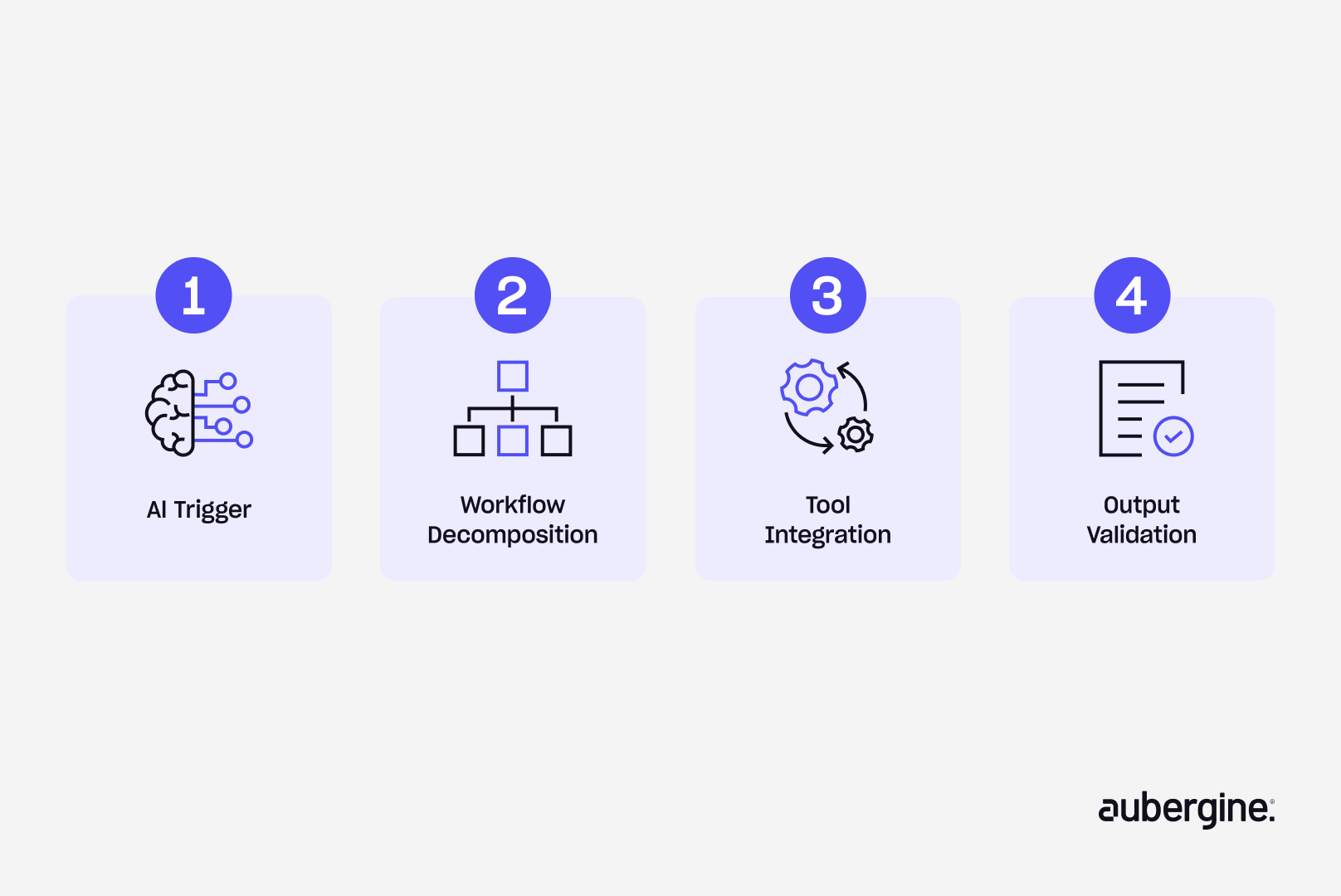
This structure ensures that automation remains predictable and reliable. Teams interact with a guided system rather than a generic chatbot, which improves both usability and trust.
The shift: from AI assistance to AI-driven workflow automation
Moving from AI assistance to AI-driven workflow automation required a shift toward structured execution. As we worked through real workflows, it became clear that relying on flexible prompting alone introduced too much variability. Reliable automation, on the other hand, depends on clearly defined processes that guide how work moves from one step to the next.
Based on this, we built the system around a few core principles:
- Sequential execution ensures that each step builds on the previous one
- Atomic operations keep actions precise and unambiguous
- Validation checkpoints maintain quality at every stage
- Human confirmation gates allow oversight where needed
- Error recovery paths handle failures without breaking workflows
This structure improves reliability and consistency across workflows. AI systems perform better when execution paths are clearly defined.
Real use cases of AI-driven workflow automation in product development

Design to development workflow
Teams often spend significant time manually breaking down designs into tickets. This process introduces variability and interpretation gaps. We automated design-to-ticket conversion to generate structured outputs with clear requirements and acceptance criteria. This improved alignment between design and development while reducing back-and-forth communication.
PRD to story workflow
Clarity often gets lost when translating PRDs into user stories. We automated PRD processing to generate structured stories that retain intent while adding implementation detail. This reduced ambiguity and improved consistency across teams.
QA and bug workflow
Bug reporting often lacks structure, which slows down debugging. We standardized bug creation by converting test outputs into clearly defined issues with reproduction steps and expected outcomes. This improved debugging efficiency and reduced resolution time.
Developer acceleration workflow
Developers often spend time on setup and scaffolding before starting actual work. We enabled task-to-code automation to reduce this overhead. Developers can begin with a structured starting point and focus more on solving core problems.
When workflow automation becomes a magic wand in product development
The benefits of workflow automation extend across time, quality, and developer experience.
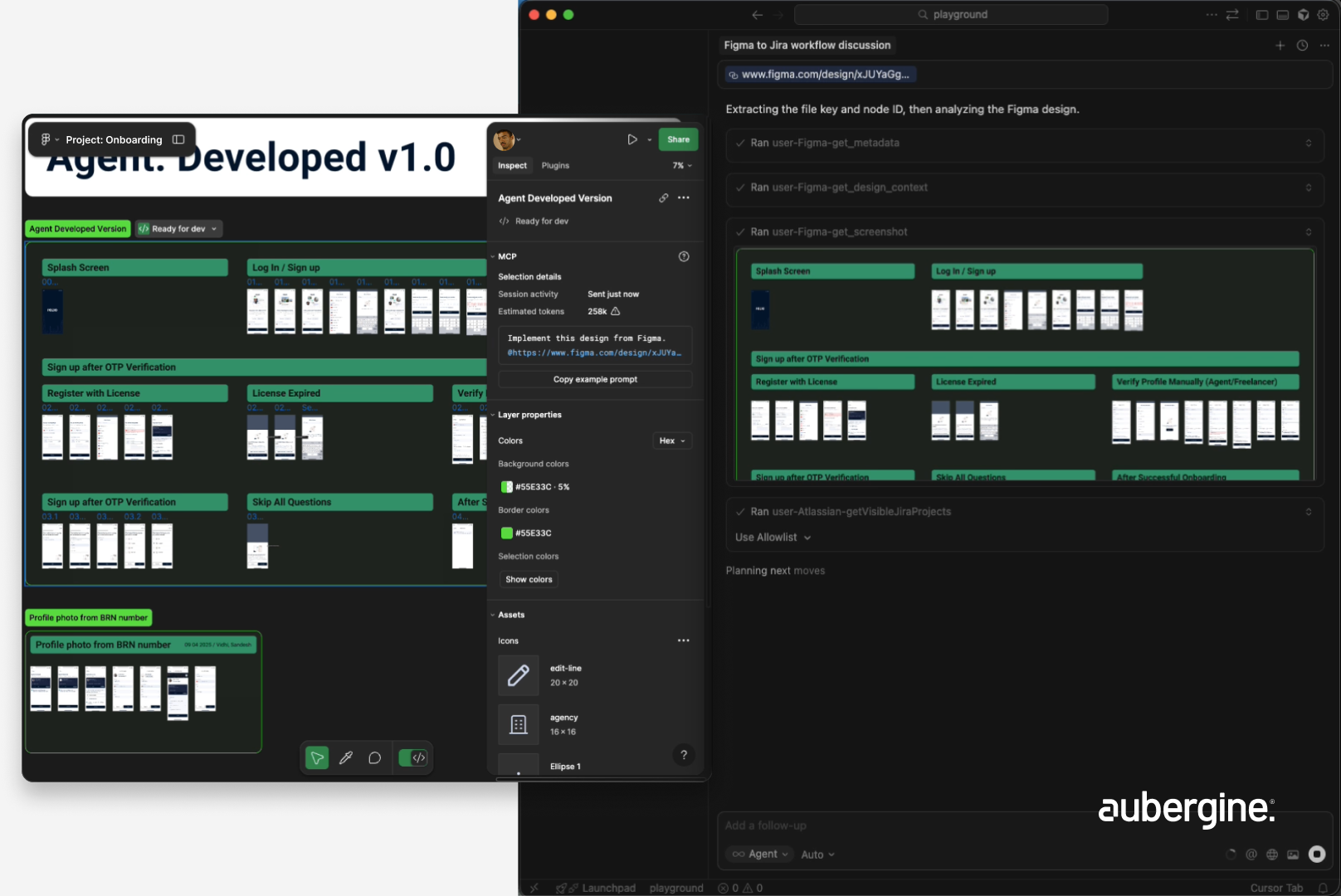
Teams see significant time savings as workflows that previously took hours now complete in minutes. Quality improves through consistent ticket structures, clearer acceptance criteria, and stronger traceability. According to Deloitte3, organizations that implement structured automation report up to 30-40% improvements in operational efficiency, which aligns with what we observed in product workflows.
At the same time, developer experience also improves drastically. Reduced context switching and clearer requirements allow developers to focus on meaningful work rather than coordination overhead.
Manual vs AI vs AI-driven workflow automation: what actually works
The difference comes down to structured execution versus variability.
How this changes everything for teams and clients
For teams, this approach improves day-to-day execution by reducing manual workflows and removing ambiguity at handoffs. Structured, implementation-ready tickets cut down back-and-forth between product, engineering, and QA, while built-in validation reduces defects and late-stage surprises. As a result, teams spend less time coordinating and more time building, with more consistent and predictable delivery across cycles.
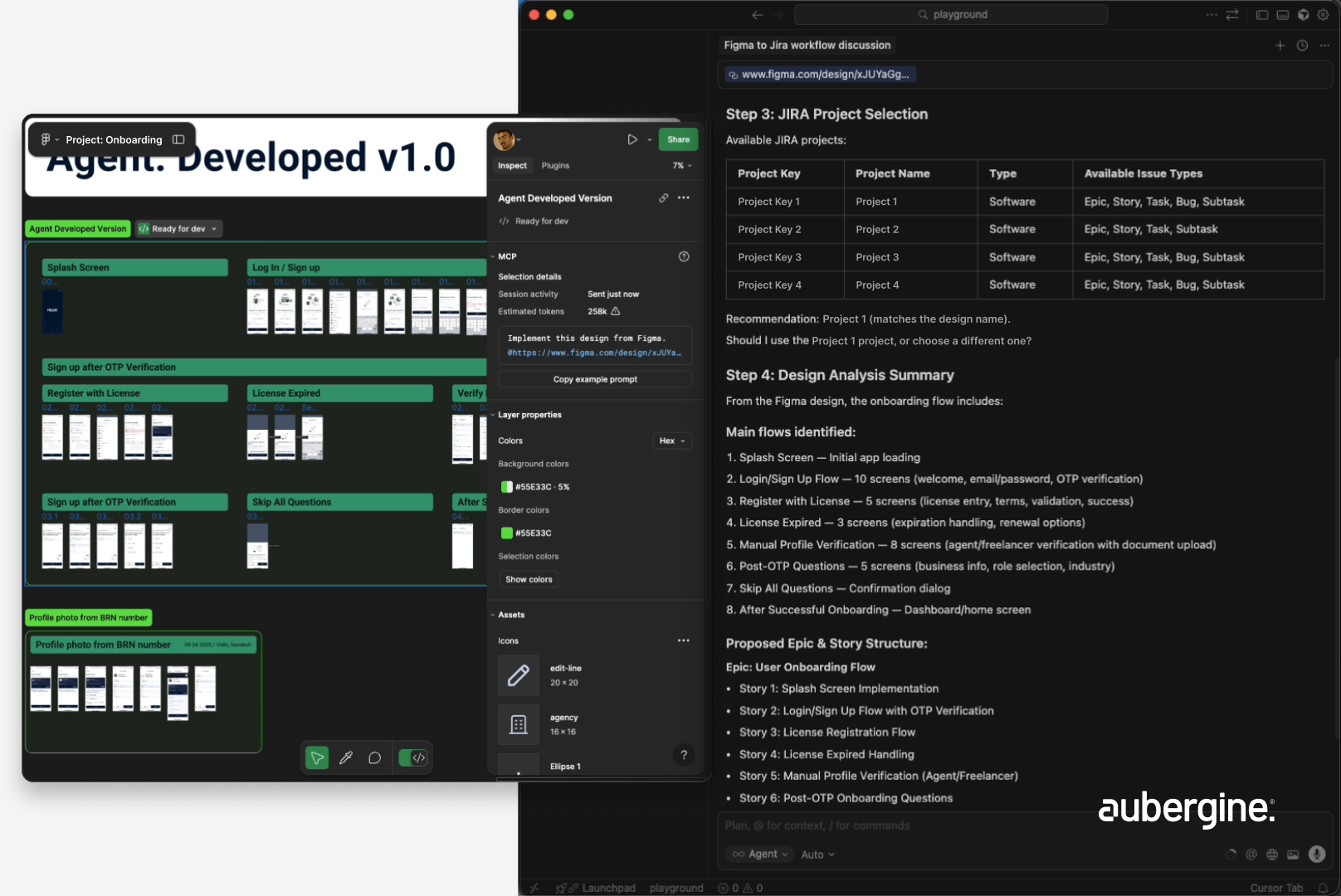
For clients, this translates into faster, more reliable delivery without added overhead. Clearer requirements and standardized workflows reduce iteration cycles, improve output quality from the start, and make timelines more predictable. With less time spent on clarification and rework, client teams stay focused on decisions and outcomes rather than coordination.
Our “Eureka” learnings from AI-driven workflow automation
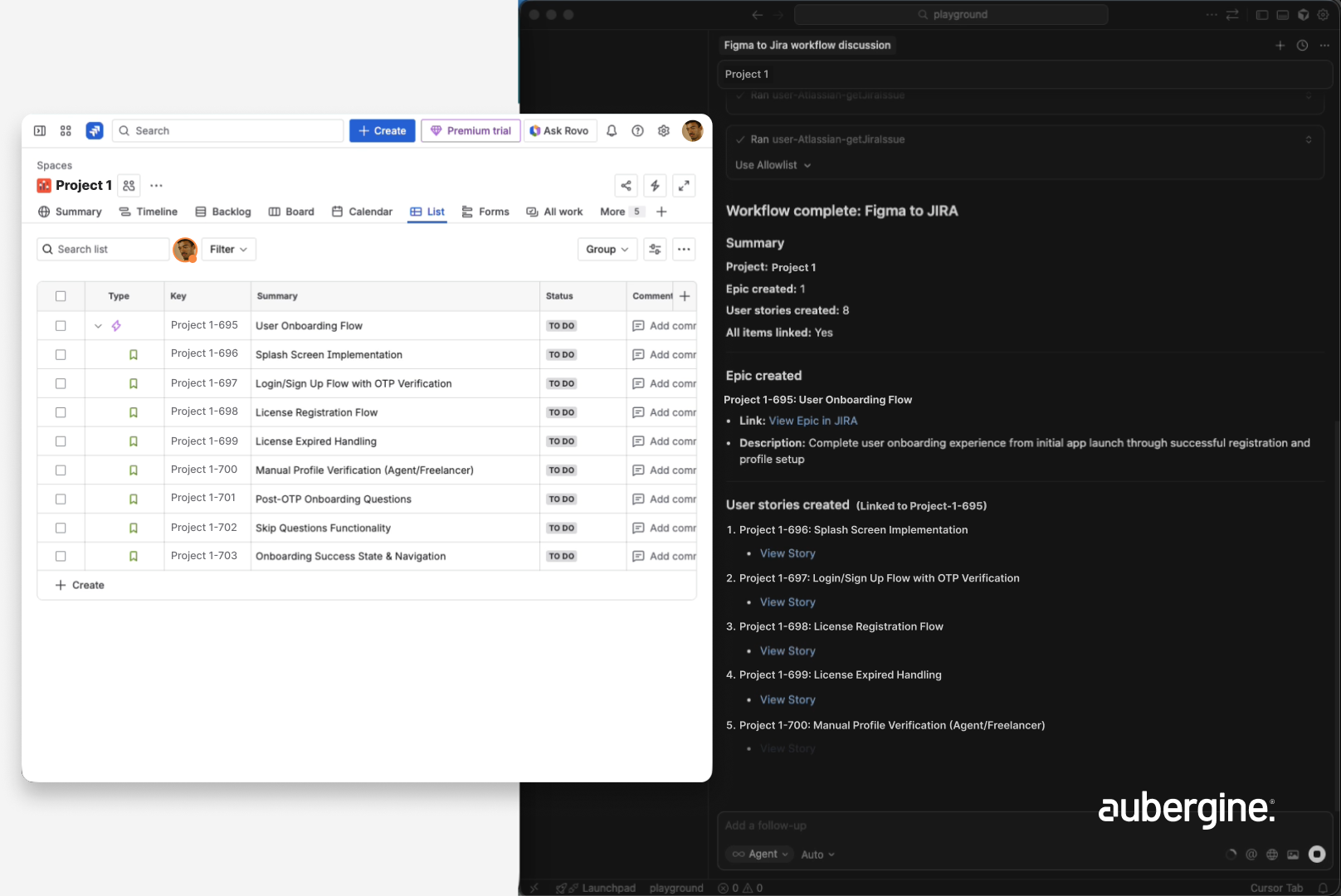
Our experience revealed a set of consistent patterns that shaped how we think about building reliable systems. Over time, it became clear that success did not come from better prompts alone, but from how well workflows were structured, validated, and integrated into existing ways of working.
- Structure matters more than prompts: Clearly defined workflows consistently outperform ad hoc prompting, especially at scale
- Validation is critical: Built-in checkpoints help catch gaps early and maintain quality across each step
- Human-in-the-loop builds trust: Thoughtful approval stages ensure accountability without slowing teams down
- Modularity enables scalability: Breaking workflows into smaller components makes them easier to reuse and adapt across teams
- Integration works better than replacement: Supporting existing tools and systems leads to higher adoption and smoother transitions
These learnings reinforced a simple idea: reliable AI-driven workflow automation depends on how well execution is designed, not just how intelligently outputs are generated.
Takeaway: structured workflows are the soul of AI in software development
AI in software development continues to evolve, but it does not solve workflow challenges on its own. Real impact comes from how well teams structure execution across systems and processes.

AI-driven workflow automation shifts the focus from isolated productivity gains to end-to-end reliability. The teams that succeed will not rely only on AI capabilities. They will build structured workflows that ensure consistency, clarity, and predictable outcomes across the product lifecycle.
The future of AI in software development will not just be intelligent. It will be structured, reliable, and workflow-driven.
Explore how our structured AI workflows can improve your product delivery for your organization.
FAQs
What is AI-driven workflow automation?

AI-driven workflow automation uses AI to orchestrate and automate multi-step business or product workflows across different tools and teams. Unlike traditional automation, it can understand context, generate outputs, validate information, and support human decision-making throughout the workflow.
How is AI-driven workflow automation different from AI coding assistants?
AI coding assistants help developers complete individual tasks like writing code or generating tests. AI-driven workflow automation goes a step further by connecting product, design, engineering, and QA workflows, ensuring work moves consistently across systems with minimal manual intervention.
Which product development workflows can be automated with AI?
AI can automate several repetitive product workflows, including: Converting Figma designs into development tickets, Transforming PRDs into user stories, Generating development tasks, Converting test reports into structured bug reports, Creating implementation-ready code scaffolds. The goal is to reduce manual effort while preserving context across every stage of product development.
Why do many AI initiatives fail to improve product delivery?
Many AI initiatives focus on accelerating individual tasks rather than improving the workflow between teams. Delays often occur during handoffs between design, product, engineering, and QA, where information is lost or requires repeated clarification. Structured workflow automation addresses these gaps by standardizing execution across the entire delivery lifecycle.
How does AI workflow automation improve software development?
AI workflow automation improves software development by: Reducing manual documentation, Standardizing tickets and user stories, Preserving product context, Minimizing back-and-forth communication, Improving traceability across tools, Accelerating delivery while maintaining quality. This allows teams to spend more time building products instead of managing coordination.
Does AI workflow automation replace human decision-making?
No. The most effective AI workflow automation systems keep humans involved at key decision points. Validation checkpoints and approval gates ensure quality, accountability, and trust while allowing AI to handle repetitive execution tasks.
What should companies consider before implementing AI workflow automation?
Before implementing AI workflow automation, organizations should: Map existing workflows Identify repetitive bottlenecks, Define clear validation steps Integrate, AI with existing tools, Establish measurable success metrics, Keep human oversight for critical decisions. A workflow-first approach typically delivers better adoption and more predictable outcomes than isolated AI implementations.
What business benefits does AI-driven workflow automation deliver?
When implemented effectively, AI-driven workflow automation can: Reduce manual effort, Accelerate product delivery, Improve requirement quality, Reduce defects caused by unclear handoffs, Increase developer productivity, Create more predictable delivery timelines. The biggest gains come from improving workflow consistency rather than simply generating content faster.
Can AI workflow automation work with existing product management tools?
Yes. Modern AI workflow automation platforms are designed to integrate with tools like Figma, Jira, Azure DevOps, ClickUp, Linear, and other product development systems. This enables teams to improve workflows without replacing their existing technology stack.
What makes AI workflow automation successful?
Successful AI workflow automation is built on structured execution rather than better prompts alone. Clearly defined workflows, validation checkpoints, modular processes, seamless integrations, and human oversight create reliable systems that scale across teams and products.


Authors

Pradip Sutariya

More ways to listen


Podcast Transcript