
Without a strong digital layer, your connected device will fail
The failure doesn’t happen in manufacturing
Most modern connected devices already have prototyping, certification, and manufacturing figured out. These devices fail months after launch, when users stop engaging with them because the digital experience never becomes valuable enough to remain part of their daily lives.
The connected device market has shifted significantly over the past few years. Hardware innovation still matters, but today, companies are increasingly valued not just for the devices they build, but for their ability to keep users engaged over time through recurring usage and ecosystem-driven experiences. Hardware may attract customers initially, but long-term success depends on whether the experience continues delivering value after the first few interactions.
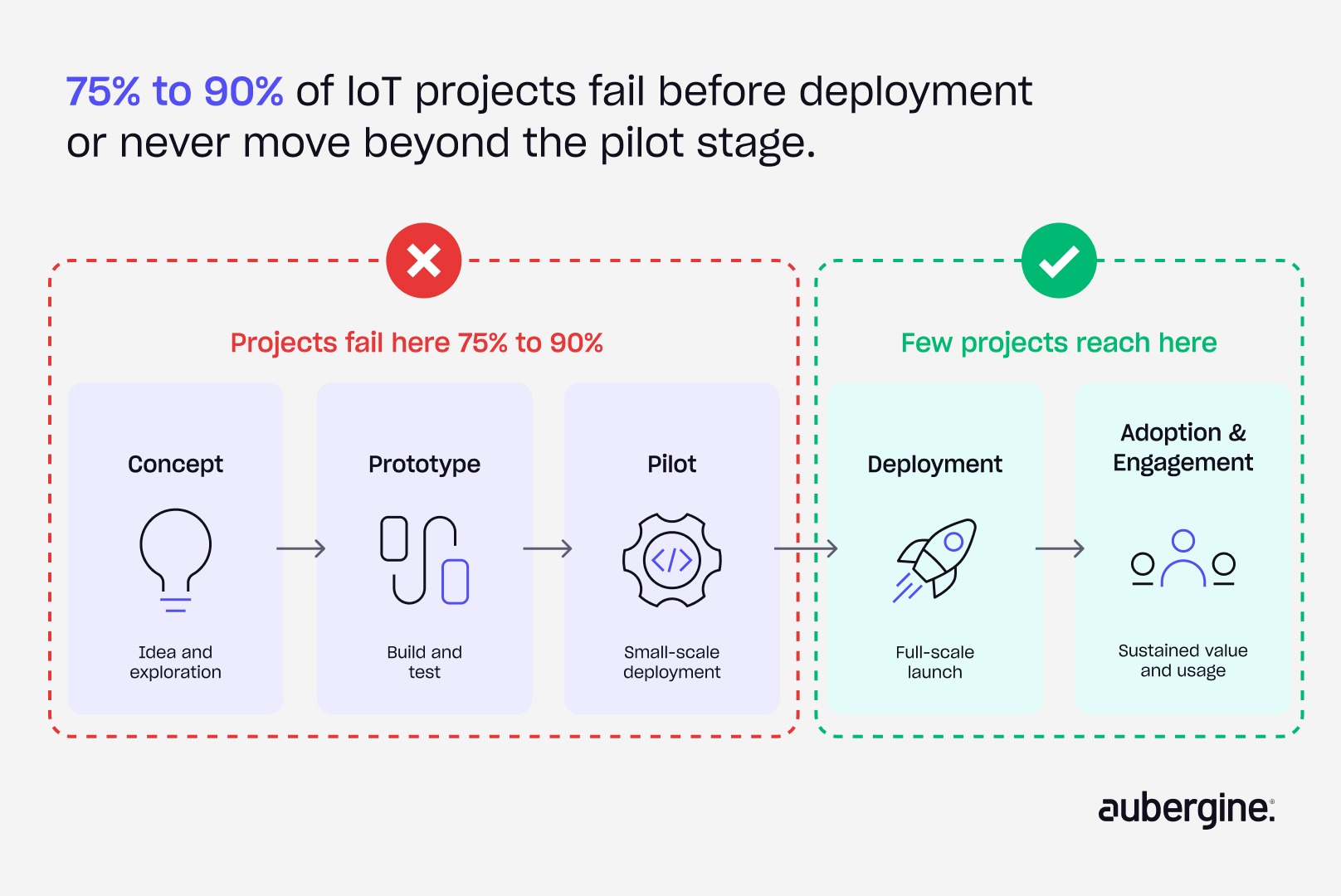
Industry data reinforces how fragile this transition can be. Reports suggest that nearly 75% to 90% of IoT projects fail before deployment or never move beyond the pilot stage, often because the ecosystem around the device fails to create sustainable adoption and engagement.
Peloton offers a strong example of this shift. Despite broader contractions in the hardware market, the company ended Q2 2026 with approximately 2.7 million paid connected fitness subscriptions. The business continues to rely heavily on its subscription ecosystem rather than hardware sales alone, which highlights how recurring digital engagement ultimately sustains connected products over time.
The companies building successful phygital experiences understand that users do not separate hardware from software. They experience the entire system as one product.
Hardware is becoming easier to replicate
The barrier to building Bluetooth devices and BLE devices has reduced significantly. BLE modules, sensors, embedded systems, and reference architectures have become increasingly accessible, while manufacturing ecosystems continue to mature globally. Teams can now move from concept to production faster than ever before.
This accessibility has accelerated innovation, but it has also reduced differentiation at the hardware layer. Competing purely on features or specifications is becoming increasingly difficult because many of those capabilities are now widely available.
As a result, differentiation is shifting toward:
- UX design
- Ecosystem experience
- Personalization
- Service layers
- Data intelligence
In summation; the real moat comes from digital experiences that accompany the device. Simply building a product doesn’t suffice any more. The real moat comes from making that product indispensable within a user’s routine.
This shift is especially visible in the phygital space, where physical products increasingly depend on digital systems to create continuous engagement. A physical device without a strong digital layer quickly becomes interchangeable with competing products offering similar hardware capabilities.
The UX layer decides whether customers stay
Users experience connected devices as a single ecosystem rather than separate hardware and software layers. The quality of onboarding, syncing, permissions, feedback systems, and engagement flows directly shapes how reliable the device feels in everyday use.
Even technically stable BLE devices can appear unreliable if the digital experience introduces friction. Pairing fatigue, Bluetooth permission confusion, delayed syncing, and unclear notifications often create frustration and deplete trust long before users evaluate the hardware itself.
Some of the most common friction points include:
- Onboarding complexity
- Bluetooth and notification permission confusion
- Repeated pairing flows
- Inconsistent syncing
- Unclear feedback loops
- Habit disruption
Research around connected experiences shows how significant this problem has become. Studies suggest that up to 37% of users abandon connected or assistive technologies shortly after adoption when onboarding and interface experiences fail to align with their routines and habits.
Strong UX design changes these outcomes because it improves activation, engagement, and retention simultaneously. Better onboarding flows reduce support burden, while clearer interaction systems help users build trust and consistency around the product.
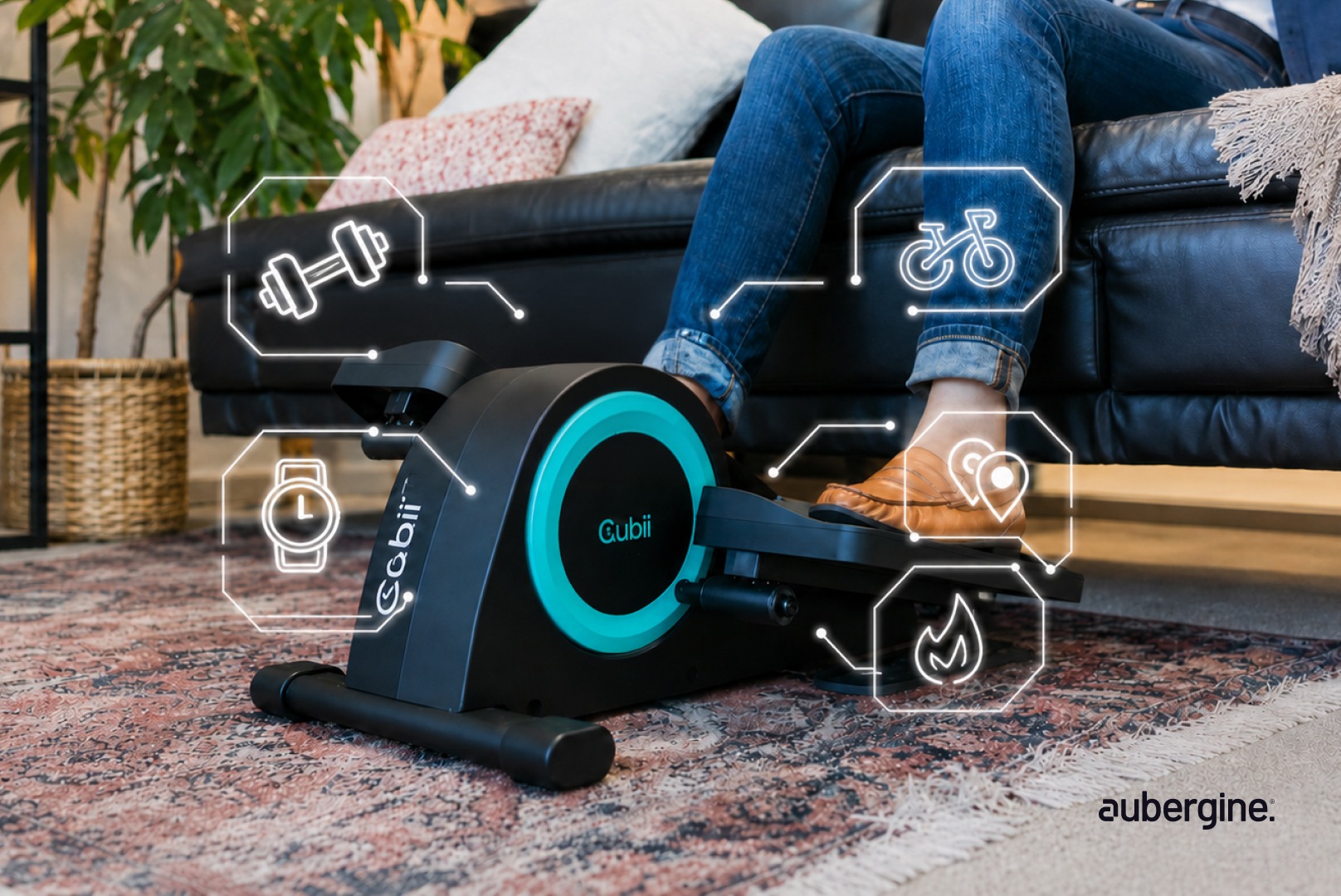
Cubii demonstrates this particularly well. Instead of positioning its connected fitness hardware as a standalone product, the company built a broader engagement ecosystem through its mobile application layer. The app tracks user activity, introduces wellness challenges, and creates lightweight community participation that integrates naturally into users’ daily workflows. This transforms the device from a simple fitness tool into a recurring behavioral experience.
The most successful connected devices rarely succeed because of hardware alone. They succeed because the digital layer continuously reinforces habit formation and engagement.
We explored a related aspect of this earlier in Why most BLE products fail in the real world (even after passing QA), where post-launch experience gaps often mattered more than hardware reliability itself.
Data is the real long-term asset
For many connected device companies, data initially appears as a supporting capability for dashboards and analytics. In reality, it becomes the foundation for entirely new business models over time.
Connected devices increasingly function as behavioral intelligence platforms. Every interaction, usage pattern, habit cycle, and engagement signal contributes to a growing layer of contextual understanding around users.
This creates strategic opportunities across areas such as:
- Behavioral insights
- Remote care
- Insurance partnerships
- Enterprise wellness programs
- Predictive maintenance
- AI-driven personalization
- Usage-based business models

The value of this data compounds over time because long-term behavioral understanding becomes increasingly difficult for competitors to replicate. Personalization systems improve, retention loops strengthen, and new monetization opportunities emerge as engagement data grows.
Research around AI-driven personalization supports this trend. Organizations implementing behavior-driven personalization systems have reported up to 35% improvements in long-term customer retention compared to non-personalized experiences.
This is where the digital layer becomes strategically important. The device may initiate the relationship, but data and engagement systems determine whether that relationship deepens over time.
Recurring revenue changes hardware economics
The economics of connected devices have changed significantly. Hardware margins continue shrinking while acquisition, logistics, and support costs rise. Businesses built entirely around one-time hardware purchases often struggle to maintain sustainable growth.
Digital ecosystems fundamentally change this equation by enabling recurring revenue models that extend far beyond the initial device purchase.
Connected ecosystems now support:
- Subscription models
- Premium digital services
- Coaching ecosystems
- Enterprise dashboards
- Member experiences
This transition allows companies to:
- Build SaaS-style economics
- Expand customer lifetime value
- Create cross-sell opportunities
- Improve retention loops
- Reduce dependence on hardware margins alone
Oura provides one of the clearest examples of this model. Its subscription ecosystem reportedly scaled to nearly $1 billion in annual revenue in 2025 and continues tracking toward even larger growth projections ahead of its anticipated IPO activity.
Peloton reflects the same dynamic at a broader ecosystem level. Financial analysis shows that subscriptions contribute a disproportionately high percentage of the company’s gross profit, demonstrating that the hardware increasingly acts as an entry point into a much larger recurring engagement system.
The long-term economics of connected devices now depend less on selling hardware units and more on sustaining ongoing digital relationships.
The real product is the ecosystem
Winning connected devices are no longer standalone products with companion apps attached afterward. The strongest companies now operate ecosystem businesses where hardware functions as one touchpoint inside a continuously evolving digital experience.
This evolution often follows a recognizable maturity curve:
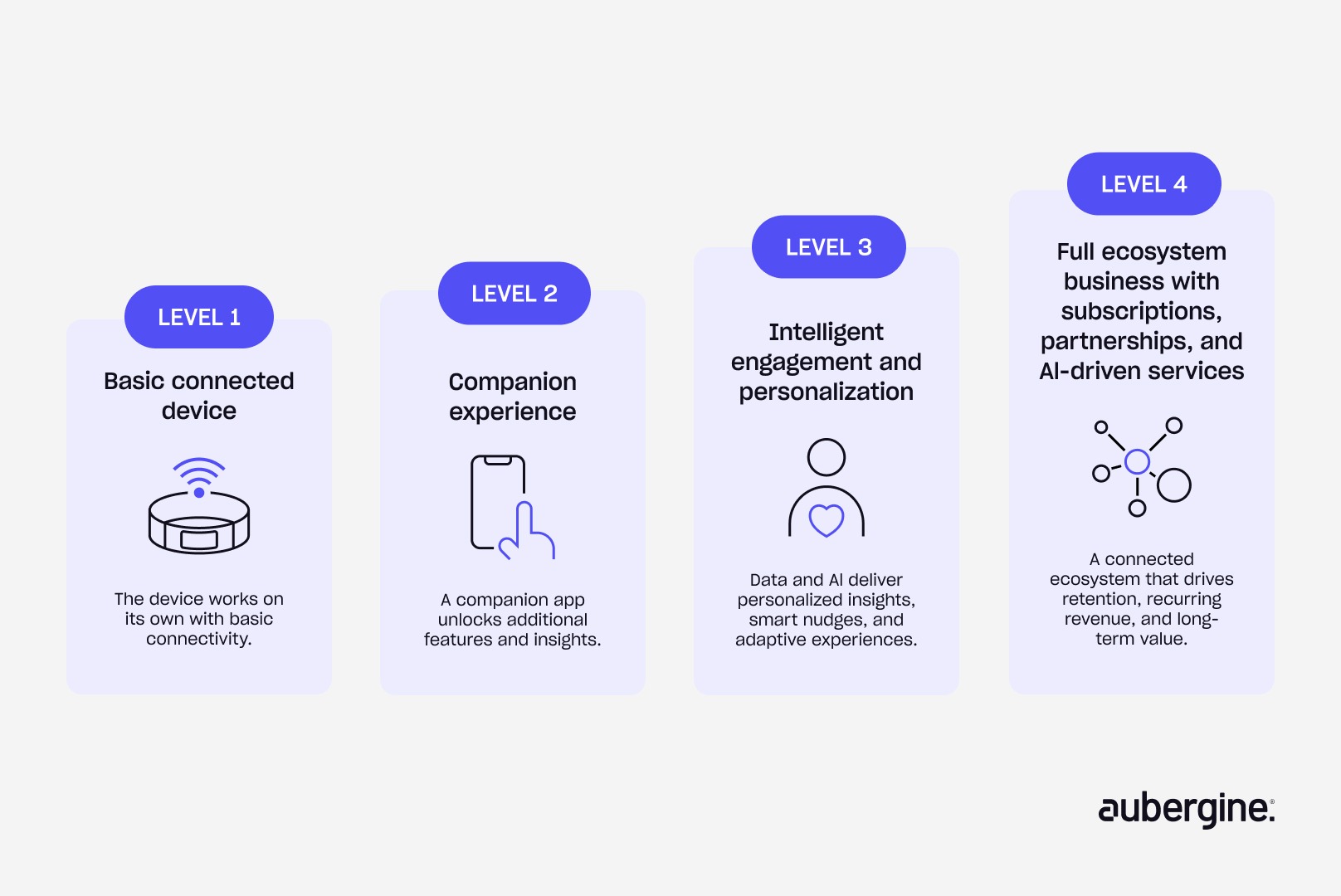
At higher maturity levels, the value of the ecosystem compounds continuously. Engagement systems improve, behavioral insights deepen, personalization becomes stronger, and recurring relationships become more valuable over time.
The companies most likely to survive long term will not necessarily have the most advanced hardware. They will have:
- Stronger engagement systems
- Deeper behavioral insights
- Higher retention
- More valuable recurring customer relationships
This is where phygital ecosystems create defensibility. Physical hardware may become easier to replicate, but ecosystem intelligence, engagement patterns, and behavioral data become increasingly difficult to copy at scale.
Conclusion: Hardware gets copied, ecosystems compound
Hardware differentiation across Bluetooth devices and BLE devices continues shrinking as manufacturing access, embedded systems, and connectivity stacks become increasingly commoditized.
Long-term success now depends on ecosystem strength rather than device features alone. Companies that invest in UX design, engagement systems, personalization, and recurring value creation position themselves far more effectively for sustainable growth.
The future of connected devices belongs to businesses that move beyond selling hardware and focus instead on building ecosystems users continue returning to long after the initial purchase.
Looking to go beyond hardware and towards building an irresistible ecosystem? Let’s talk.


Authors
.jpg)
Sarthak Dudhara

More ways to listen


Podcast Transcript